
Abstract:
Today, the Gates Foundation invested US$1 billion in artificial intelligence and announced that it will spend heavily in the next two years to promote this cutting-edge technology not only to serve the rich, but also to help the poorest people change their lives. During the exchange, Gates not only spoke highly of "the outstanding performance of China's large models" and analyzed the importance of open source technology to poor areas around the world, but also shared his views on hot topics such as "data center power consumption and environmental anxiety", "AI's impact on the job market" and "the development of humanoid robots in China" that are of concern to the outside world.
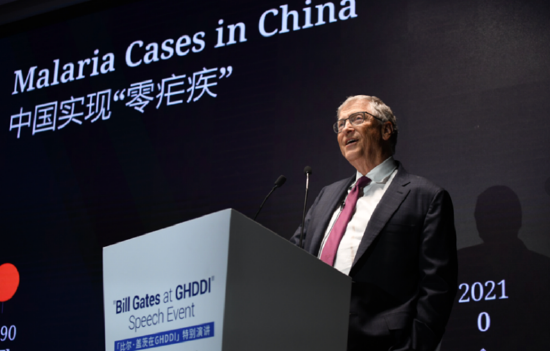
He once bluntly said that commercial capital tends to ignore market failures and social risks. "AI will either become the most powerful tool for promoting equality in human history, or it will become the biggest source of aggravating injustice." He also called for the establishment of a global management framework to rebalance the relationship between labor and capital. AI dividends should benefit everyone, not just a few rich people.
He also mentioned China many times during this dialogue. For example, when commenting on the Humanoid Robot Games just held in China, he expressed his amazement at the success of the event, "I find it very interesting and well-run. The event itself is incredible." At the same time, China's artificial intelligence was mentioned, believing that it "performed very well" and it is expected that the capabilities of China and the United States' cutting-edge large models will reach "more than double today's" in six months.
When Sina Technology asked for a specific assessment of China's open source large models, he said, "According to different measurement methods, both China and the United States have four or even more institutions' models that can maintain the most advanced level. The gap between the model with the highest score and the other seven leading models is actually not large." However, it did not disclose the specific names of the four large models.
“Calling on some technologically advanced countries to devote 5% of their computing power to aid poor countries”
During the exchange, Gates took the initiative to mention that he was concerned about China's "very good performance" in artificial intelligence, and expected that the capabilities of China and the United States' cutting-edge large models would be "more than twice what they are today" in six months.
When asked for a specific assessment of China's large open source models, he said, "According to different measurement methods, both China and the United States have four or even more institutions' models that can maintain the most advanced level. The gap between the highest-scoring model and the other seven leading models is actually not large."
In his view, the performance of the eight top models in the world has exceeded the best level four months ago. China and the United States have entered a "super competition" in this field for talent and computing power. Competition between China and the United States in the field of AI is a "good thing" for users, including those in Africa, which means that low-income countries such as Africa "can obtain many options with good performance and lower prices."
For open source models, he commented that they "have great flexibility" and that African countries are "very happy to be able to use these models" and can also focus their limited resources on links that really need localization.
Gates mentioned that African models are currently running remotely on servers from Chinese partners, and communication delays are completely acceptable.
He suggested that some technologically advanced countries may wish to use 5% of their data center computing power as a kind of "digital aid" to provide free of charge to poor countries for use in humanitarian fields such as medical care, agriculture, and education.
“If you just answer questions about health or farming, not many Tokens are consumed.” He believes that the world should draw a bottom line to ensure that everyone on the planet can enjoy minimum AI services. This year's "Guardian Report" mentioned that artificial intelligence services may become a key variable in rewriting the destiny of the world's poorest regions.
Gates also noticed that the computing power competition in the global artificial intelligence industry has virtually raised the threshold for low-income countries to access AI. "It is a pity that the price of low-priced smartphones is currently rising because artificial intelligence data centers require a lot of memory." He hopes that prices can come down again. "Smartphones are not yet popular in Africa, and truly excellent artificial intelligence applications cannot run on feature phones."
"The United States has increased carbon emissions, which is regrettable"
The outside world is also becoming increasingly anxious about whether AI is "draining the earth's energy" and questioning whether it is destroying humanity's vision of carbon neutrality.
Faced with doubts, Gates did not avoid the issue of carbon emissions from the US AI industry.
“Many data centers in the United States are powered by natural gas, which increases carbon emissions, which is indeed very, very regrettable. Proportionally speaking, this will bring about a 3% to 4% increase in carbon emissions. When our goal is to reduce carbon emissions to zero, we don’t want to see any increase.” But he also remains optimistic about the future: In the long term, the impact of artificial intelligence on global climate will be greater than the negative (Net Positive).
"Currently, most new data centers adopt a so-called 'closed water cycle' design, which means that water will not be discharged." Gates believes that concerns about water resources can basically be resolved. He also gave an example that artificial intelligence itself is also feeding back the energy revolution. "For example, my nuclear fission company TerraPower is using artificial intelligence models extensively to study how to reduce costs and plan construction well, so that project construction can be completed faster than imagined."
At the same time, the power gap caused by artificial intelligence is forcing technology giants to pay for cutting-edge clean energy at an unprecedented speed.
In fact, in the field of clean energy, Gates' venture capital firm is also deeply involved in many innovative companies, including geothermal energy company Fervo, nuclear fusion company CFS, etc. Public information shows that in early September 2026, the American technology giant Google just signed a contract with Fervo for 400 megawatts of clean power for a data center in Utah, USA. In his view, the short-term pressure on the power grid caused by data centers can allow technology giants to accelerate their exploration of the commercialization of the next generation of clean energy.
It is worth mentioning that Gates also specifically mentioned the results of China's energy transformation, "There is impressive news recently that China's installed photovoltaic power generation capacity has exceeded coal power for the first time. This is a very good milestone."
"China holds the Humanoid Robot Games, which is very interesting"
When asked about the impact of this round of AI surge on the employment of ordinary people, Gates said frankly that one day AI and robots will be so powerful that we will discuss "whether we need to work two days less a week" or "retire early." "But before that moment comes, we will probably have to go through a turbulent transformation period of 20 years. AI There is no way for humans to achieve unconditional prosperity immediately. Everyone still has to work in order to make money. Moreover, the social structure is built around work. Work is not only about receiving a salary, but also about social circles, a sense of self-worth and the pace of life."
Not long ago, Gates suggested that positions that require "human warmth" such as "artificial care" should be classified as "exclusive for humans." He even proposed to impose a "Token tax" on AI, allowing technology companies to pay to subsidize ordinary people whose jobs have been taken away by AI.
At the same time, he also talked with great interest about the "Humanoid Robot Games" just held in China, "I think it is very interesting and it was very well run. The event itself is incredible."
"Compared to other countries, Chinese people pay more attention to humanoid robots. I once visited a company in Shanghai that specializes in developing robot hand technology. Hand dexterity is still the most difficult problem at present. If in a few years, humanoid robots can be cheap enough to reach human levels to engage in construction and manufacturing, and even work 24 hours a day, this will be a good thing in terms of productivity."
Subsequently, Gates turned serious and took precautions against the problems caused by technological development, "However, the entire society needs to think about: How should we make adjustments so that people currently engaged in these manual and manufacturing jobs feel that they can receive proper care and support, and this support cannot be just financial."
As a long-term promoter of the technological wave, Gates is still full of expectations for the future of AI. However, he repeatedly emphasized that it is not a matter of course for AI to be good, and it requires the joint efforts of all parties.
It is worth noting that the Gates Foundation has set a "countdown to closure" early, planning to exhaust all its estimated funding of up to 200 billion US dollars and officially close before 2045, putting all its bullets into solving the world's most difficult problems. Faced with the current AI trend that is comprehensively reshaping society, Gates once again spoke out to governments, technology giants and peers around the world, hoping to enter the game with a sense of mission and jointly invest resources, voice and expertise to make this cutting-edge technology truly more "practical, affordable and accessible", and not to let anyone be left behind in this technological change.
Comments