
Abstract:
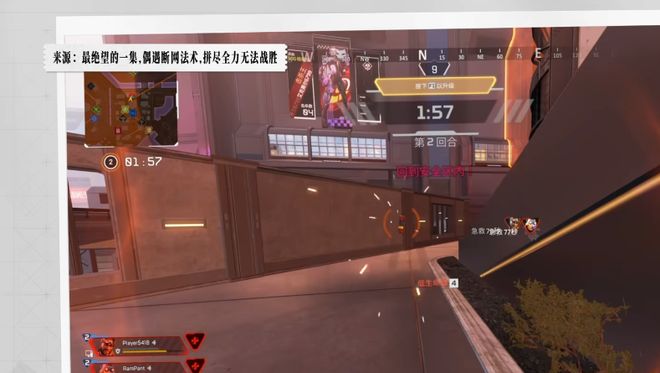
I believe many of you have experienced in-game fights in the corridors, when the gun got stuck inexplicably, and by the time you reacted, you had already returned to the lobby. After an exasperated review, I still couldn’t figure out whether it was the network or the game that was stuck?
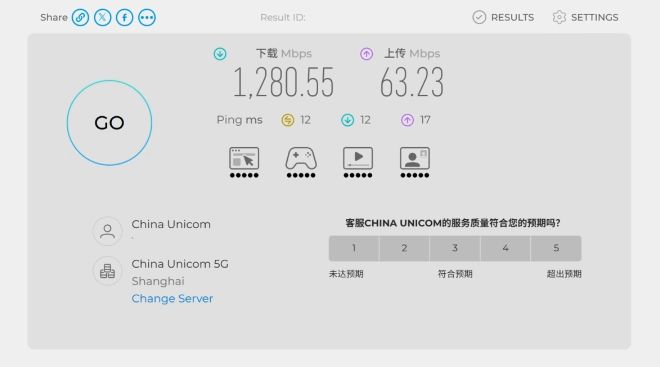
At this time, experienced missionaries will usually open this called
Speedtest
gadget.Click the "GO" in the middle and wait for tens of seconds to know the upload speed, download speed and ping value.
No membership, no need to subscribe, click, and then test the speed, that’s all its functions.
But have you ever thought about how much such a simple website is worth?
Just in March this year, consulting giant Accenture announced that it had acquired Ookla, which makes Speedtest, for US$1.2 billion.
1.2 billion, or dollars?
Why is a free speed measuring software so expensive? What did Accenture buy for its $1.2 billion?
Why are speed test codes worthless?
From a code perspective, Speedtest definitely doesn’t look like a software worth 1.2 billion.
The principle of its speed measurement is very simple. When testing download speed, the server keeps sending data to the device. When testing the upload speed, the device continues to send data to the server.
The upload speed and download speed can be calculated by dividing the amount of data transferred by the time.
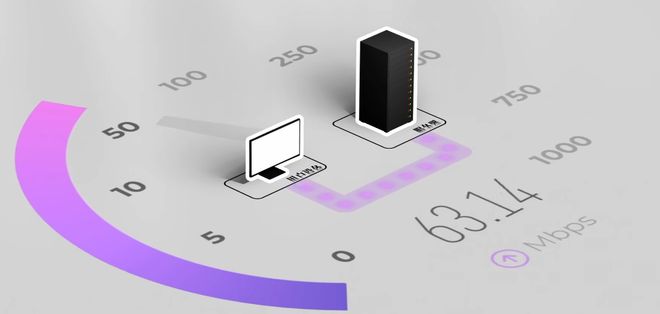
The round-trip time between sending a message to the server and returning the information to the server is the Ping value.
For anything that needs to access the Internet, this is a basic communication function that cannot be more basic. On Github, a speed test website based on this principle can even be compressed to 9kb.
The founder of Speedcheck, another speed testing website
Forcer
I once revealed on the forum that I finished writing the core code for the speed measurement part in just one weekend.Now, if you use large model vibe coding, it is not difficult to create a usable speed measurement tool in ten minutes.
So,
Why did Accenture pay a sky-high price of US$1.2 billion to buy a website with almost no technical barriers?
What’s the point of purchasing speed measuring software at a sky-high price?
In fact, for Accenture, the important thing is not the code, but the database behind it.
As a consulting company, one of Accenture's traditional businesses is to provide transformation solutions for enterprises. After entering the AI era, the main line of this business has naturally become helping companies design new AI workflows.
According to the financial report, Accenture’s new artificial intelligence orders reached US$2.2 billion in the first quarter of fiscal year 2026, doubling compared with the same period last year.
According to Accenture's own statement, the most important purpose of buying Ookla
is to use its database to provide customers with "end-to-end network services required for AI transformation" in the consulting business.
This sentence sounds quite bluffing, but translated into vernacular, it is actually:
Understand how to connect the network from the large cloud model to the terminal equipment in stores, factories and offices.
As a simple example, suppose you are the owner of a national supermarket chain and want to install AI cameras in your stores to monitor customer flow and shelf conditions.
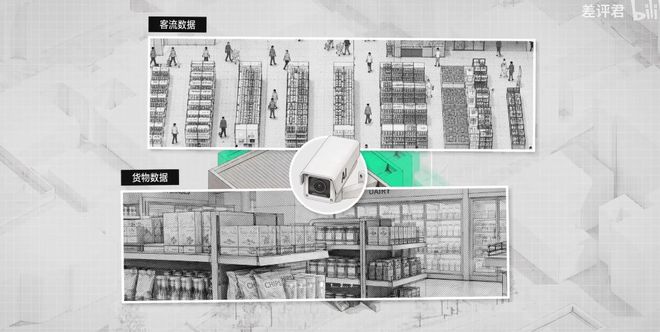
The most trouble-free solution is, of course, to transfer all the collected data to the cloud and hand it over to the large model for unified processing.
This makes deployment simple, and you can also directly call models with stronger performance.But the reality is that not all store networks can meet the requirements for deploying cloud solutions.
The same operator may be quite stable in the city center, but it will not be able to operate well in suburbs where there are few base stations.
If the whole country follows a plan and moves all data to the cloud, the final result will be that only stores in the city center can operate normally, and the three-ring system will become a decoration. It means that AI will not go to the countryside.
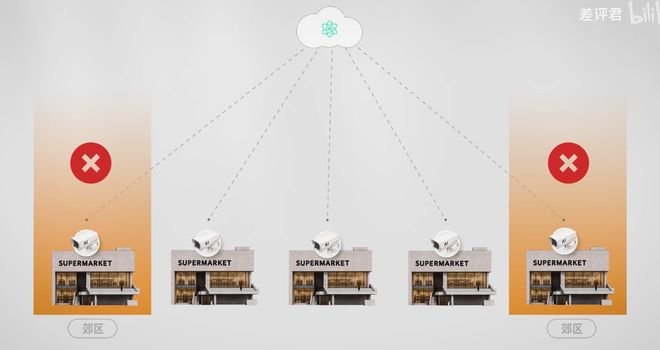
So, before formulating a plan, companies must first understand the network conditions of each store, and then decide which operator each store should use, and whether the data should be transmitted to the cloud, handed over to edge devices, or left for local processing.
Of course, it is not difficult to find a list of operators to list which broadband each store provides and what package it offers.
But obtaining these data does not mean that we have a grasp of the actual network situation.
A Gigabit broadband that appears to be running normally in the operator's background is connected to the router along the old network cable, and then the signal is transmitted to the mobile phone in the bedroom through the load-bearing wall of the living room. There may be only one or two hundred Mbits left.
The most direct way to bypass this chaotic system is to start from the terminal device and transmit data to the server.
But, for operators, this matter is really not easy to handle.
The speed test needs to cover the line as much as possible. If the operator inserts a permanent speed measurement background into the user's device, it means that the device is constantly uploading and downloading at full load.
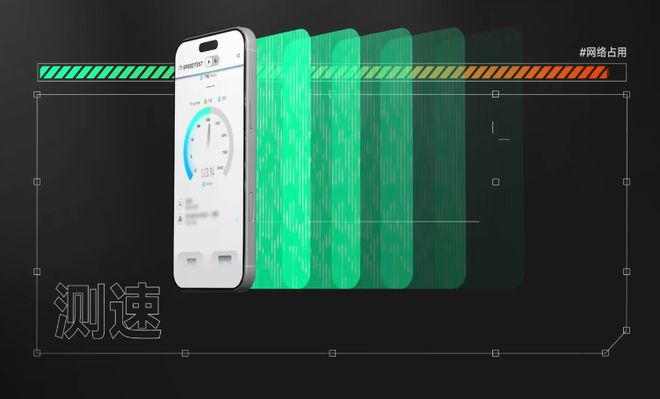
This will not only consume extra traffic, but also greatly increase the burden on the local network. During peak periods, the network that is not stuck will also be tormented.
Both cost and user experience are completely negative optimizations.
So,
to know the network status of the client, the only way is for the user to actively click on the speed test.
Under this premise, in order to obtain results with reference value, it is necessary
to have enough people to test repeatedly in different regions, at different times and under different networks.
This is where Speedtest comes in handy.
As the absolute Goat in the niche track of speed testing, Ookla, the parent company of Speedtest, has accumulated tens of billions of such test records in the two decades since its establishment.
Every time someone tests their speed on Speedtest, more than 1,000 pieces of information are recorded in the background.
In this information, in addition to the results of upload and download speed and latency, it also includes information about time, location, operator, network type, and even the device itself.
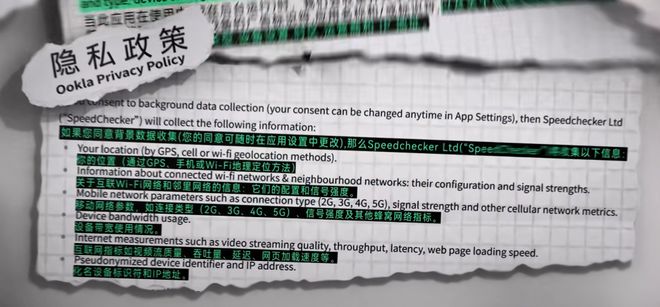
Putting this data together, we get a network status map covering different regions, operators, devices and time periods.
By superimposing the store locations on this map, you can roughly judge the network status of each store, and then choose a more appropriate operator and deployment plan.
This is just part of the Ookla intelligence system.
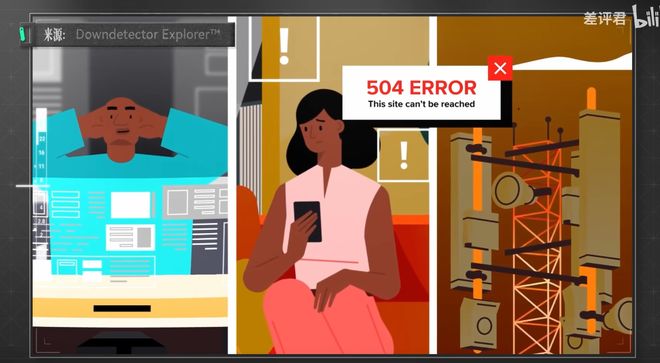
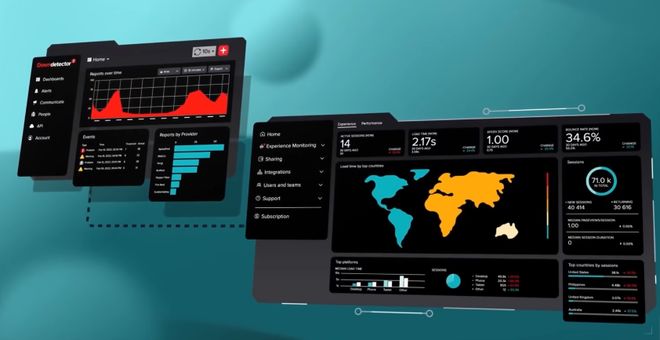
In addition to Speedtest, Ookla also owns Downdetector, which monitors operator service failures, and Ekahau, which troubleshoots signal blind spots.
When these sets of tools are put together, the final result is a network map that starts from the operator's network and extends all the way to the enterprise's indoor Wi-Fi.
Downdetector Explorer
How does speed testing software make money?
However, this network map is not done once and for all. The status of the network may change at any time due to the configuration of the base station, broadband, and operator.
To ensure that this map is effective, there must be a steady stream of "living water."
Every time the speed is measured, the device must perform a round of high-intensity uploading and downloading with the server. The more users, the greater the traffic carried.
More than 10 million active users use Speedtest to measure speed every day.
In order to support the speed testing needs of global users, Speedtest currently has access to more than 15,000 speed testing servers around the world.
Moreover, Speedtest relies on its huge user base to keep the data fresh. If you change the product to a fee, you will undoubtedly lose a large number of active users.
Although Speedtest also accepts pre-roll ads on web pages, it is obvious that this income cannot cover the cost of the server.

So,
as a company whose core product is a free speed test website, how does Ookla support this huge intelligence network?
In fact, contrary to many people’s intuition, Ookla has not only not lost money in the past two decades, but has also made a lot of money.
One year before the acquisition, Ookla's revenue even exceeded US$200 million.
It does not bear the operating costs of this network alone, but adopts a very smart cooperation model:
Involving operators, data centers and network service providers, allowing these companies to provide servers and bandwidth, deploy speed testing nodes, and join Speedtest's global server network.
These companies are willing to provide servers and bandwidth, and they also have their own calculations.
On the one hand, for operators, by placing the speed measurement node in their own computer room, users can directly test the speed from the terminal to the operator's network. When customer service is troubleshooting, they can run a test from the user terminal to determine where the problem lies.
On the other hand, Speedtest can also serve as a relatively neutral "Dragonfly Captain" among operators.
Of course, operators can also make their own speed test websites, but even if they really make a website exactly like Speedtest, it will be difficult to get results that are useful to them.
For operators, the most valuable intelligence is to compare themselves and their competitors in the same place, at the same time period, and under the same set of standards. They can understand in which areas and links their network conditions are inferior to those of their competitors, and then make targeted optimizations.
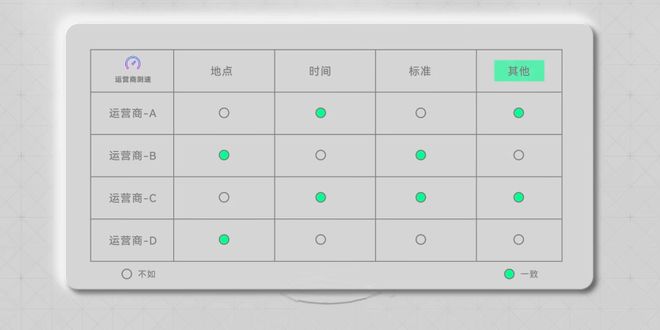
But using the operator's own speed testing platform, it is basically impossible to obtain this kind of information.
The reason is very simple:
You are the one participating in the competition, you are the one who makes the rules, and you are the one who gives the final score
. People who use other operators' networks really have no reason to go to your platform to test the network speed.It's like Apple made a benchmarking software and used it to test Samsung. If it runs high, it looks like it's inferior to others, and if it runs low, it looks like it can't afford to lose.
No matter how many points were scored in the end, it didn’t feel right.
As a relatively objective and independent third party, Ookla can deliver ammunition to every party in the war without any scruples.
On Ookla’s official website, network speed reports for different countries and regions are updated every quarter. In these reports, there are not only the actual network speeds of various operators in the region, but also the network quality rankings of different operators in different regions. There’s even a prize for the best internet speed.
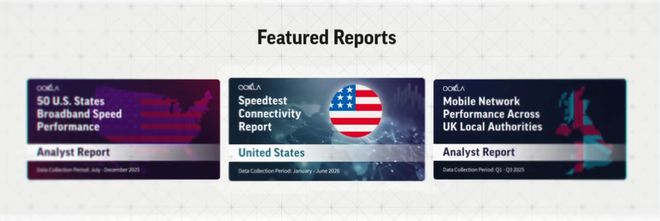
After operators get this report card, they can make more targeted decisions about where to spend their money.
Therefore, operators very much welcome Speedtest access services, and even directly buy Speedtest authorized covers for their own speed measurement software.
Using this cooperation model, Oolka used lower construction costs to build a global speed measurement network, and at the same time started a positive cycle that is getting bigger and bigger:
Operators and data centers provide servers and bandwidth to help Ookla expand coverage; the more nodes there are, the more convenient it is for users to measure speed and the more stable the results are; the more users there are, the more valuable the data accumulated by Ookla is; the more valuable the data, the more willing operators are to purchase its ranking, competitive analysis and network optimization services.
Finally, the credibility accumulated in the cycle has gradually made Ookla's database a recognized benchmark in the industry.
Sometimes, it even gets involved in formulating national policies.
In 2021, the United States launched a US$42.5 billion network infrastructure plan to invest in areas with insufficient network coverage.
The FCC, which holds backend data on national networks, initially planned to use national broadband maps created by carriers to determine where the money should be spent.
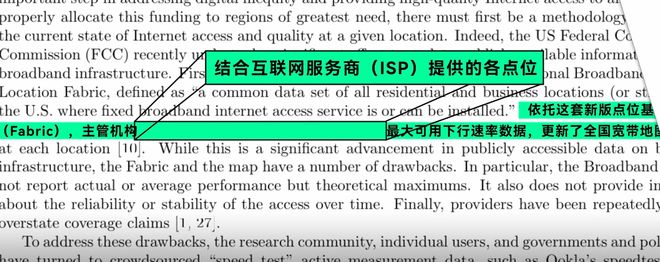
But the FCC soon discovered that the map drawn by the operator not only reflected the theoretical maximum performance of broadband, but also contained many false reports and exaggerations. . So I finally chose Ookla and used Speedtest’s speed map to verify the information reported by the operator.
Of course, this business model is not difficult to say. After passing the Speedtest, there are actually imitators all over the world.
in the country,
there is even a copycat Li Gui with the domain name speedtest.cn
.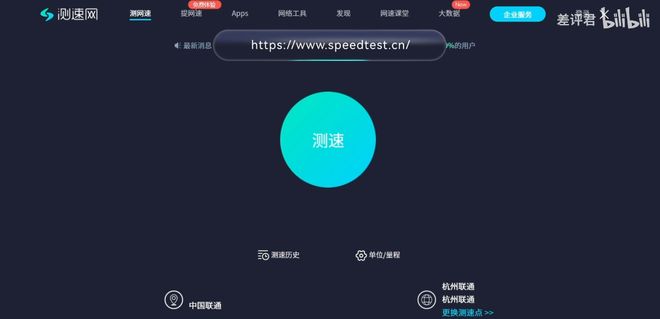
In terms of the core function of speed measurement, they are actually quite similar. There are even websites whose UI and functions are much more complete than Speedtest.
But few of them can truly compete with Speedtest.
As Forcer, the founder of Speedcheck, said,
Speed testing code only accounts for 10% of the total code. If considered from an overall perspective, speed testing code only accounts for 0.01% of the entire workload.
In general
So looking back, what Accenture bought for $1.2 billion was not actually speed measurement software,
but a mature and functioning network intelligence system.
It has user portals all over the world, a distributed speed testing network supported by operators and data centers, and a set of testing standards and a continuously updated network database that are widely recognized by the industry.
It may not be difficult to build a speed testing website.
But it is indeed not an easy task to make this speed test website Speedtest.
Written
:JijiEdit
:Yang Zi & Danbuli Duo & Xiao XinxinVideo post-production
:Xiao Yang & Huni & Hammer & Eleven & AdvanceArt Editor
:HuanyanPictures and data sources
:Speedtest by ookla
html5-speedtest github
Internet Speedtest results going public Reuters
Downdetector and Speedtest sold to Accenture for $1.2 billion The Verge
Accenture to Acquire Ookla to Strengthen Network Intelligence and Experience with Data and AI For Enterprises Accenture official website
Financial Report Accenture official website
Accenture to acquire Ookla Hacker News
Comments