
Abstract:
The resignation of former Nvidia CEO Jensen Huang has once again triggered discussions in the United States around dual-class share structures, focusing on the corporate governance of large technology companies. The dual-class share structure can give founders far greater voting rights than ordinary shareholders. There are clear differences of opinion on whether this system protects management control or weakens the checks and balances between shareholders and the board of directors.
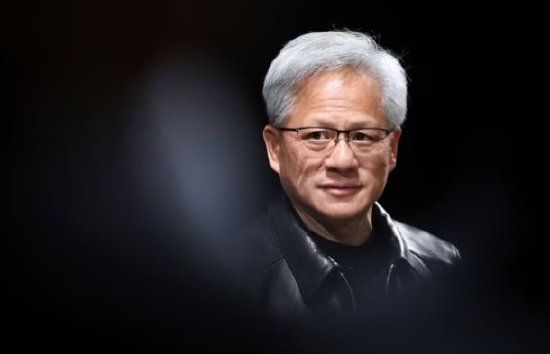
Dual-class equity is an equity mechanism in which shares held by specific shareholders such as founders have higher voting rights than ordinary shares, also known as "super voting shares."
As You Sow, a well-known American shareholder rights organization, issued a statement on the 14th local time saying that Nvidia does not adopt a dual-class share structure, so its board of directors can effectively supervise management. The organization advocates that other companies should also adhere to the "one share, one vote" principle.
As You Sow CEO Andrew Behar said: "The NVIDIA board investigation that ultimately led to Jensen Huang's resignation shows what truly effective supervision looks like." He added: "When the CEO behaves inappropriately, there must be power in the board to hold him accountable."
The organization regards Meta as a typical case of dual-class shares that harms the interests of shareholders. Meta CEO Mark Zuckerberg only holds about 13% of the company's shares, but relies on dual-class shares to control about 60% of the total voting rights.
At Meta's 2020 shareholders' meeting, several proposals were put to a vote, including real-name verification of accounts, removal of bad images, and stopping the push of false political advertisements. 63.1% of independent shareholders supported these proposals, but after factoring in Zuckerberg’s super voting rights and other factors, the final support rate for the proposals was only 19%.
As You Sow believes that if these proposals are passed, Meta may be able to avoid paying up to US$17.1 billion (approximately 23 trillion won) in settlement compensation from lawsuits related to youth social media addiction. The core point is that dual-class equity makes it impossible for shareholders to realize their demands, and ultimately both companies and investors suffer losses.
Purnima Luthra, a professor at Imperial College Business School in the UK, also suggested in a commentary that if Nvidia adopts dual-class shares, the huge power in the hands of Huang Renxun may further worsen the crisis. She said: "As far as NVIDIA is concerned, if Huang Renxun himself is unwilling to resign, the company's existing equity structure makes it possible for him to be removed." She explained: "NVIDIA adopts a single-layer equity structure, and all shareholders, including Huang Renxun, have one share and one vote, so the board of directors' disposal behavior will not bring him much protection."
Comparing companies like Meta and SpaceX where voting rights are concentrated in the hands of founders, she added: "This type of ownership structure will make it difficult for shareholders to hold strong corporate leaders accountable."
However, some people believe that Nvidia’s governance arrangement without dual-class equity makes the founder’s operating control too fragile. This view holds that founders who adhere to long-term strategies can easily be squeezed out due to external pressure or board resolutions.
Jeffrey Sonnenfeld, a professor at the Yale School of Management who has long supported dual-class equity, pointed out in an interview on November 8, local time, that Huang Renxun lacked super voting rights to consolidate his control. He commented that Huang Renxun is one of the few managers who has led Nvidia to great success without dual-class equity support. He also said that if Huang Renxun holds super voting rights, it will be much more difficult for the board of directors to remove him.
Comments