
Abstract:
American technology giant Meta received US$3 billion in financial support from Nvidia after announcing plans to significantly increase investment in artificial intelligence infrastructure. The two parties confirmed on October 27 that they will further deepen the cooperative relationship around the Muse artificial intelligence assistant and related model series, while expanding collaborative development at the hardware and software levels.
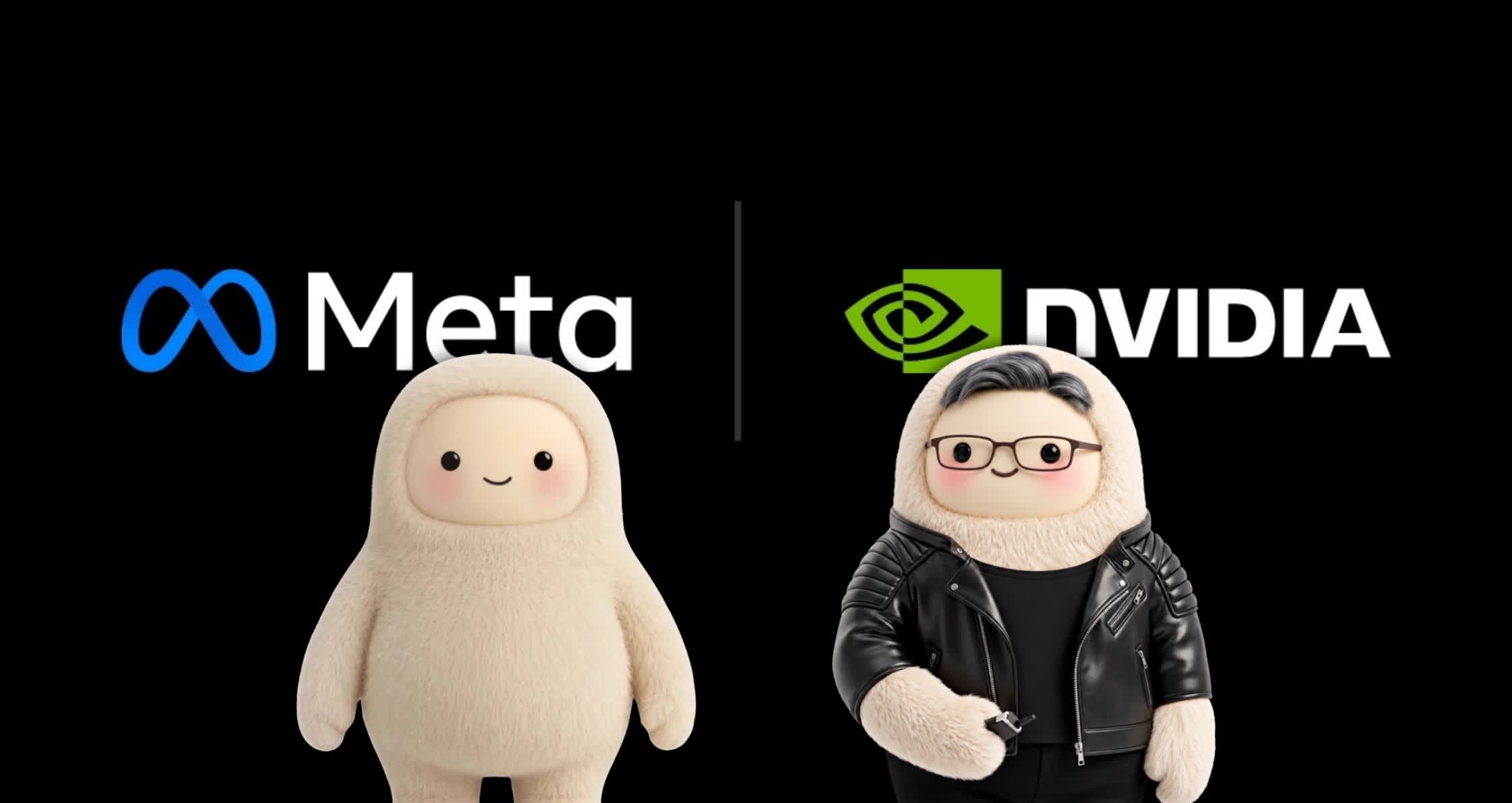
According to information announced by both parties, Nvidia will invest US$3 billion in Meta's stock issuance plan. Meta previously announced plans to raise funds through public offerings and subsequent share sales to accelerate the construction of artificial intelligence infrastructure. Meta subsequently raised its overall financing target from US$95 billion to US$97.5 billion, becoming one of the largest financing plans in the company's history.
Nvidia stated that the focus of this cooperation is to improve the training and inference performance of Muse and its related models, while reducing operating costs. The two parties plan to carry out deeper optimization of artificial intelligence workflows to increase computing efficiency and improve total cost of ownership.
As part of the cooperation, Meta will further expand the deployment scale of NVIDIA's new generation AI infrastructure, including Vera Rubin systems and Vera CPUs, while using Spectrum-X Ethernet network solutions and BlueField-4 data processing technology to improve data transmission efficiency, network throughput and computing performance per unit energy consumption.
In addition to hardware cooperation, the two parties are also evaluating the possibility of further adopting NVIDIA's OpenShell reference architecture. Relevant cooperation will include the use of OpenShell to realize the safe deployment of AI agents, and the use of Sentry tools to monitor and manage the behavior of AI agents, thereby improving the security and controllability of the system.
Nvidia CEO Jensen Huang said that AI agents are representing a new computing paradigm. This type of software not only understands user goals, it can also reason, invoke tools, and complete tasks on the user's behalf. He believes this shift is changing the way people use computers, moving users from operating applications to working with intelligent agents.
Meta CEO Mark Zuckerberg said that Muse is a core component of Meta's strategy to promote "personal superintelligence". The company hopes to use this platform to bring advanced artificial intelligence capabilities to billions of users, and to work with NVIDIA to create future-oriented personal intelligent agents and cutting-edge models.
According to reports, Muse is regarded by Meta as the next generation personal AI assistant. It can access multiple services such as email, calendar, payment services, health applications, shopping platforms, and smart home systems with user authorization, and can perform practical tasks such as sending emails and arranging travel. Users can revoke relevant permissions at any time.
Meta stated that Muse and its model family have achieved leading performance in multiple benchmark tests since its release, while user downloads continue to grow. However, the company did not disclose specific data.
This investment has once again triggered market discussions on the "circular financing" model. As Meta will continue to purchase Nvidia AI hardware on a large scale in the future, outsiders believe that chip suppliers provide financial support to customers, and then customers purchase more chip products, which is becoming an increasingly common business model in the artificial intelligence industry.
Meta expects its capital expenditures this year to be between US$135 billion and US$145 billion, most of which will be used to build artificial intelligence infrastructure. At the same time, the company's latest financial report showed that its quarterly revenue increased by 26% year-on-year to $64.6 billion. Analysts believe that as AI competition continues to heat up, the partnership between Meta and Nvidia will further deepen, and both parties are betting that AI agents will become a new generation of computing platforms after the mobile Internet.
Comments