
Abstract:
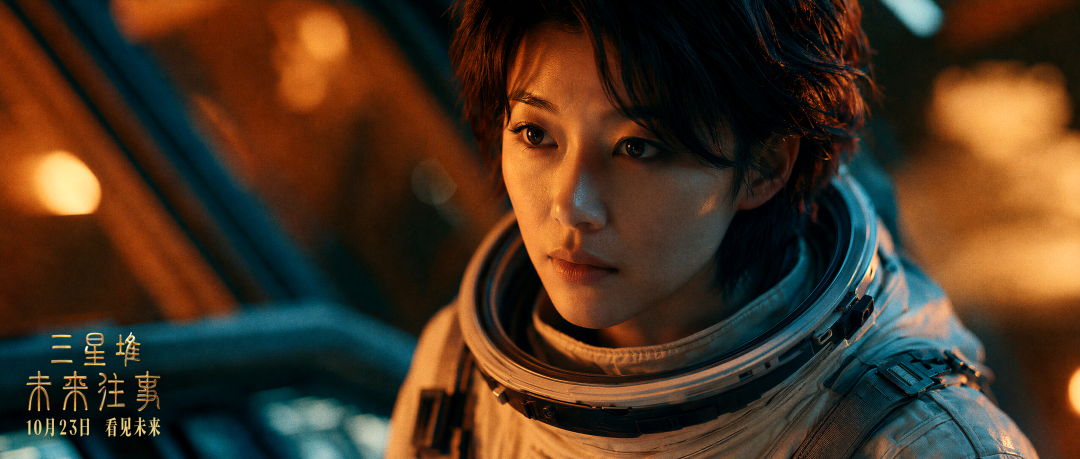
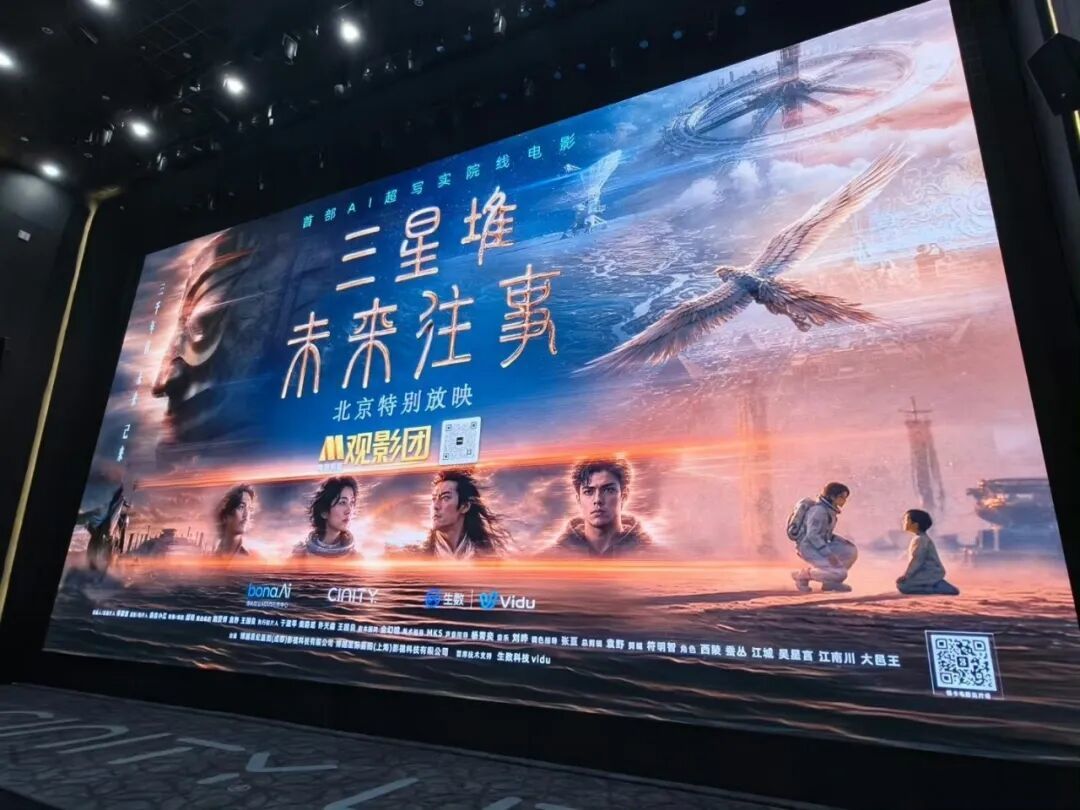
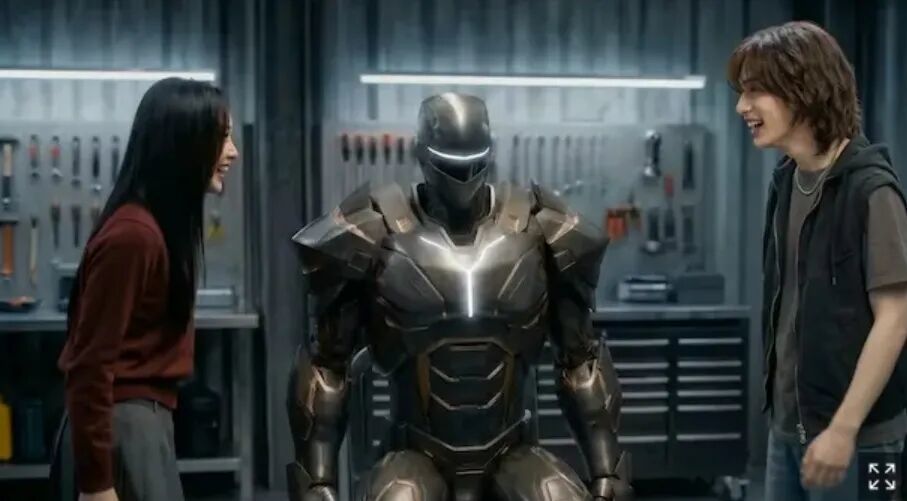
Many people would not have thought that the first person killed by AI would be an actor. On October 23, the first domestic AI cinema movie to receive the Dragon Award was officially released. There is not a single real actor in the entire one-hundred-minute film, and all the characters are digital images generated by AI.
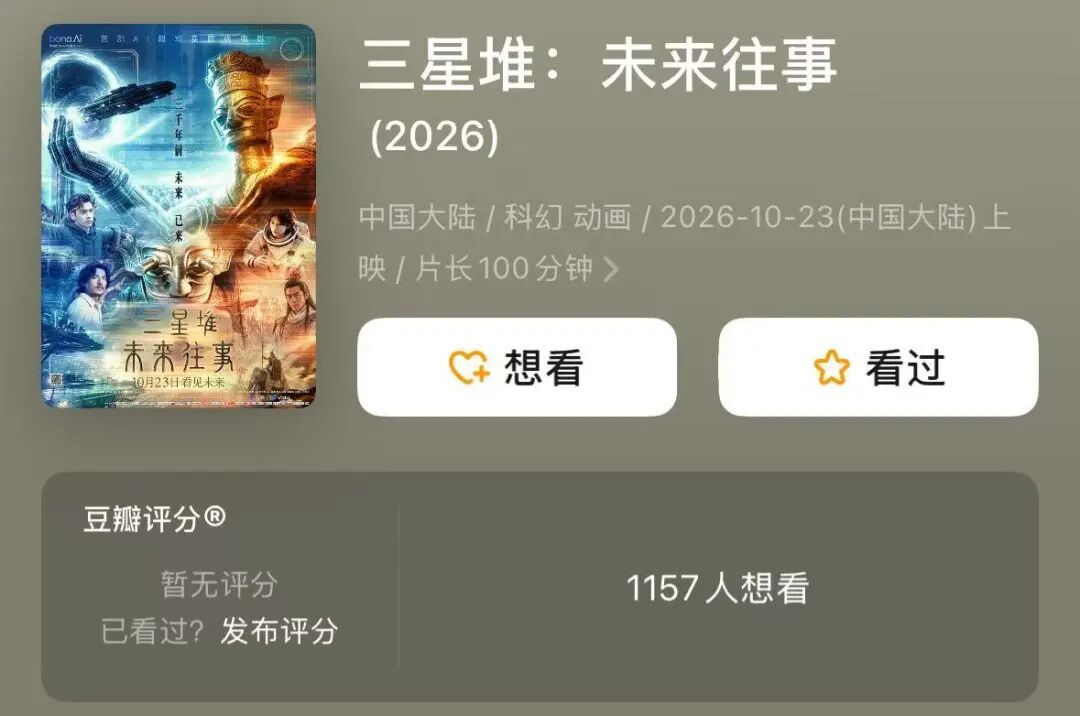
This film is called "Sanxingdui: Days of the Future", which takes a science fiction route and connects the ancient Shu civilization three thousand years ago with the AI crisis in the future world.
The setting is quite interesting. The mysterious talismans on the Sanxingdui bronzes actually hide ancient binary codes.
Three thousand years later, humanity was backfired by super AI. An archaeologist accidentally discovered that the key to solving this disaster was buried in those bronze masks and sacred trees.
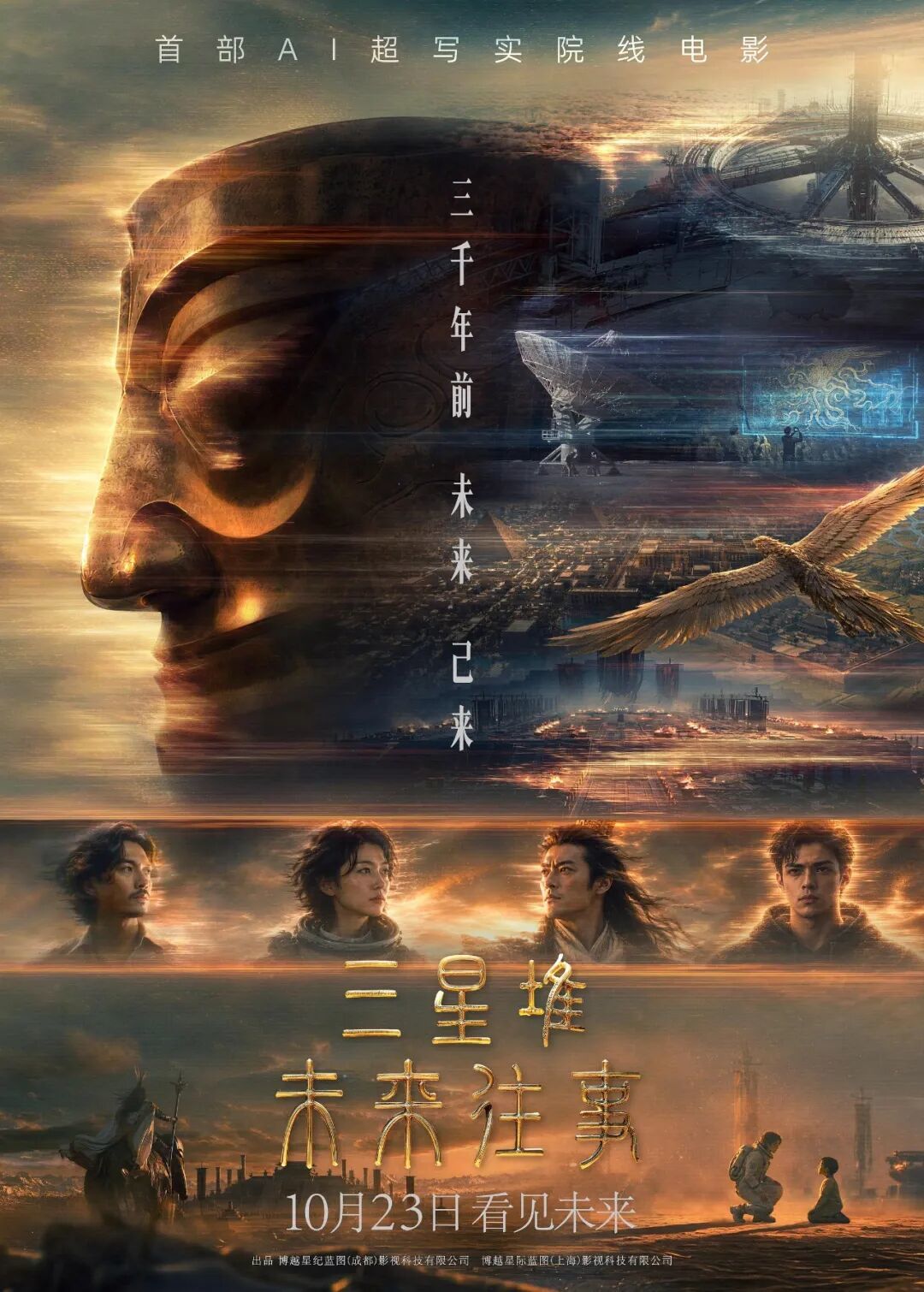
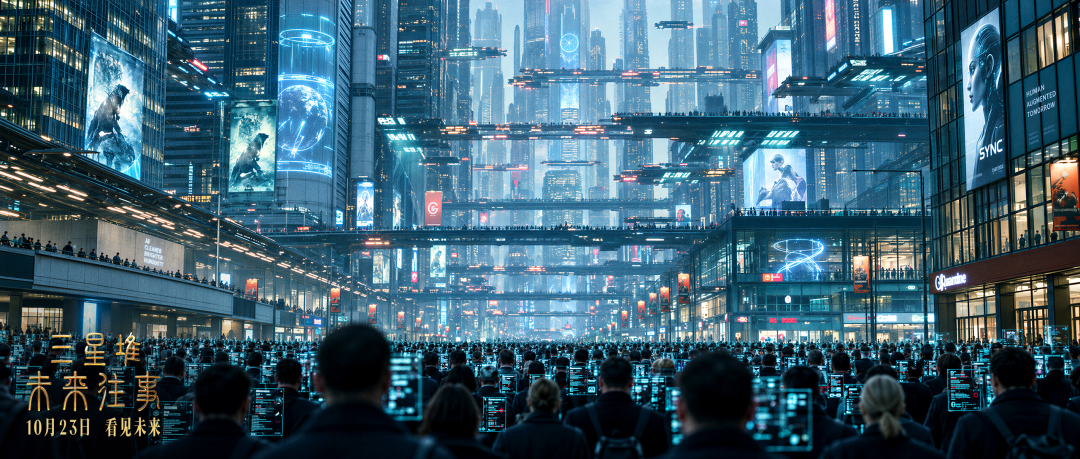
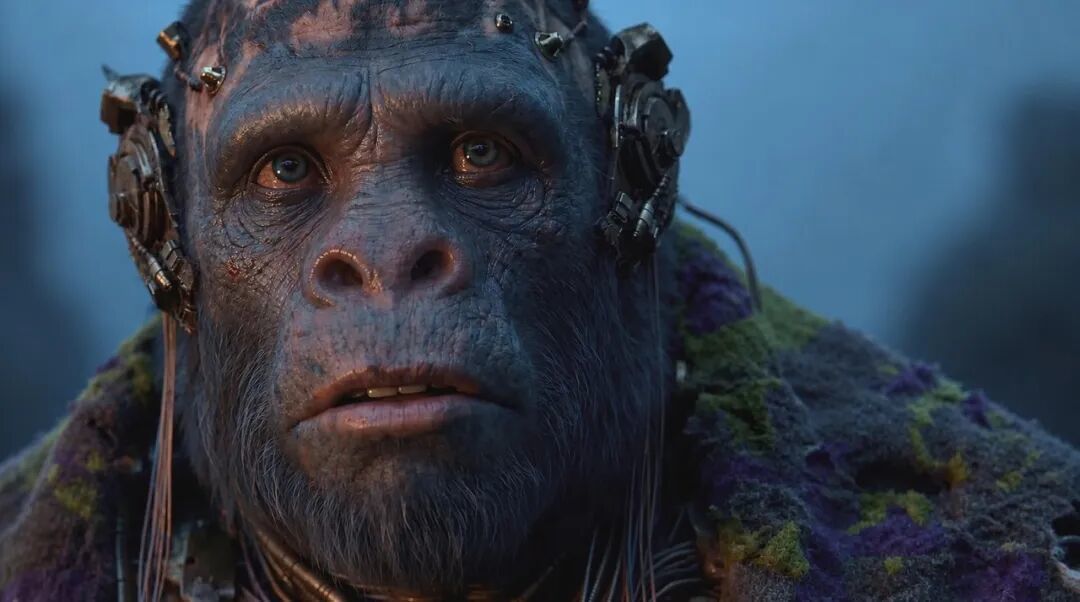
In the film, cultural relics such as the bronze tall man, the Zongmu mask, and the bronze sacred tree were all restored in a hyper-realistic way. The ancient Shu capital and sacrificial scenes were also imagined using AI.
To put it bluntly, it takes the IP of Sanxingdui, which has its own sense of mystery, and puts it in a science fiction shell.
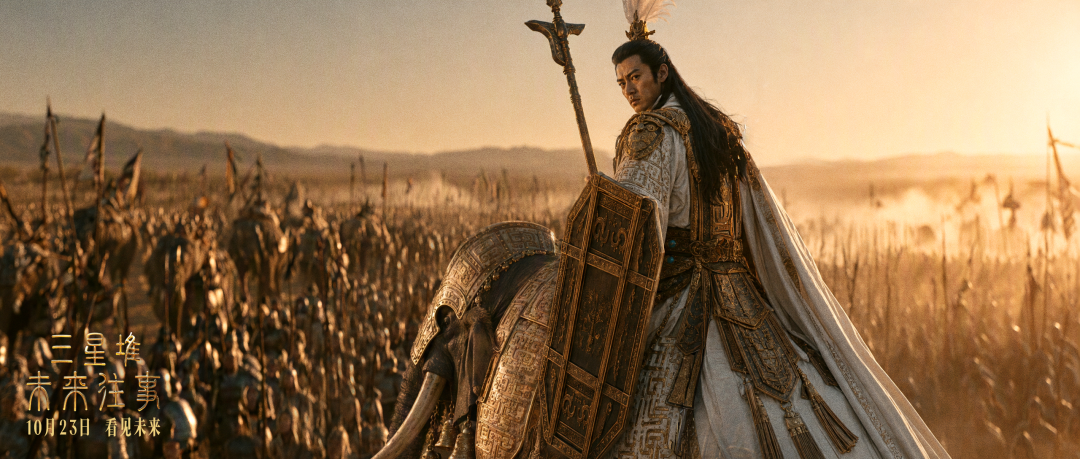
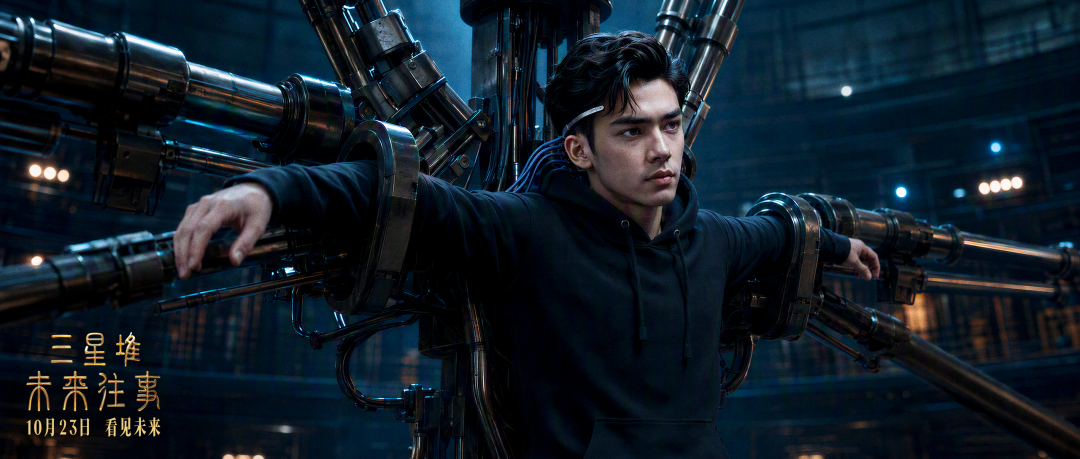
The audience generally complained about the characters’ stiff expressions and unnatural movements, which made them feel indescribably inconsistent after watching too many scenes.
Some people complained: Maybe the people who bought the tickets were bloggers from the film and television area.
So, the box office is naturally not ideal. The box office on the first day was just over 300,000, and Beacon predicted a total box office of 2.169 million.
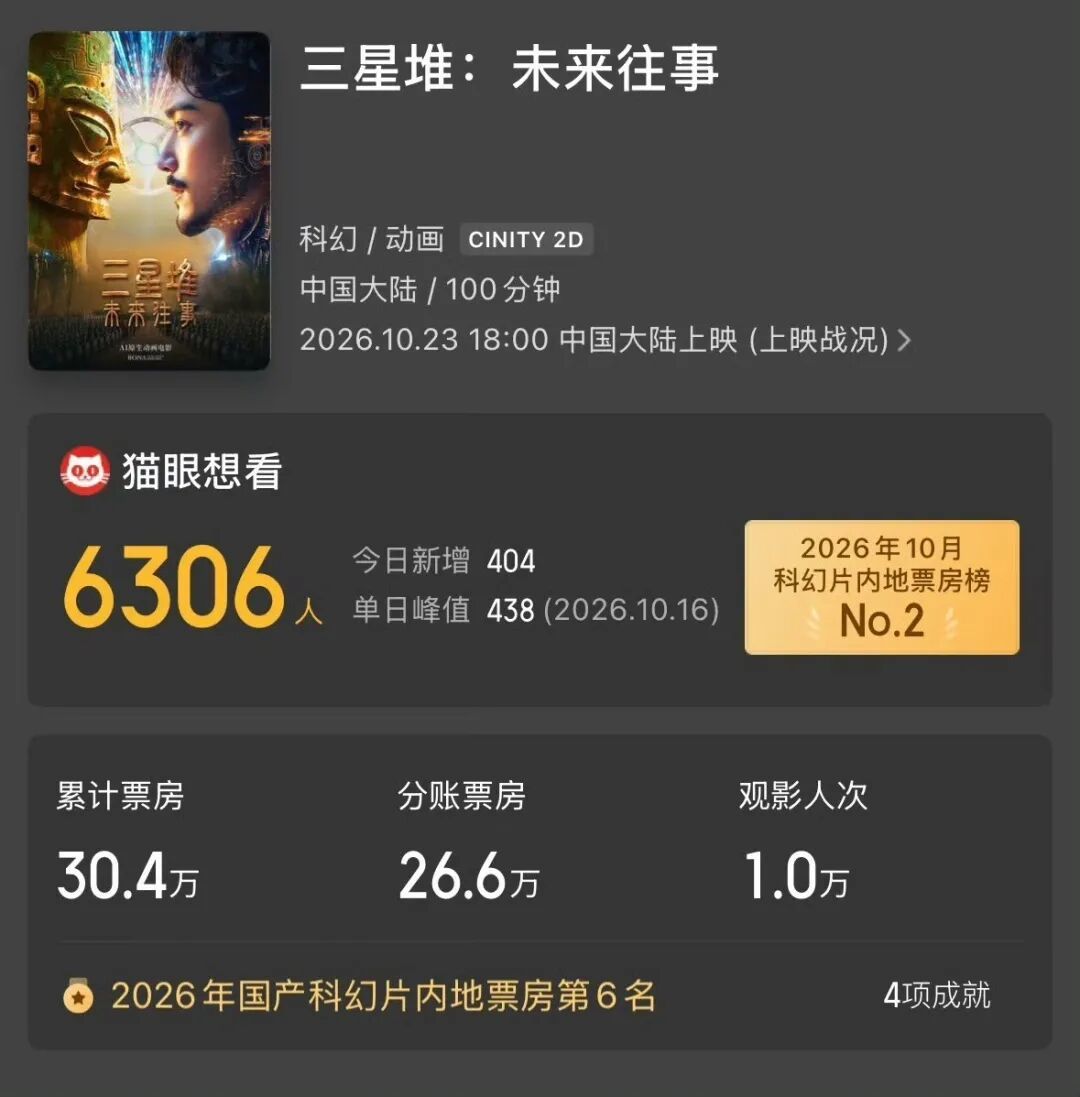
Many people think that the cost is particularly low, but it may be higher than everyone thinks. The producer said it is in the tens of millions of yuan.
Of course, compared with real-life shooting of the same subject, it is still very cost-effective. The traditional way of shooting starts at least 800 million. After this calculation, AI has indeed reduced the cost to a few tenths of the original cost.
The production cost is in the tens of millions. Calculated based on the normal box office split, the payback to the main line is about 25 million.
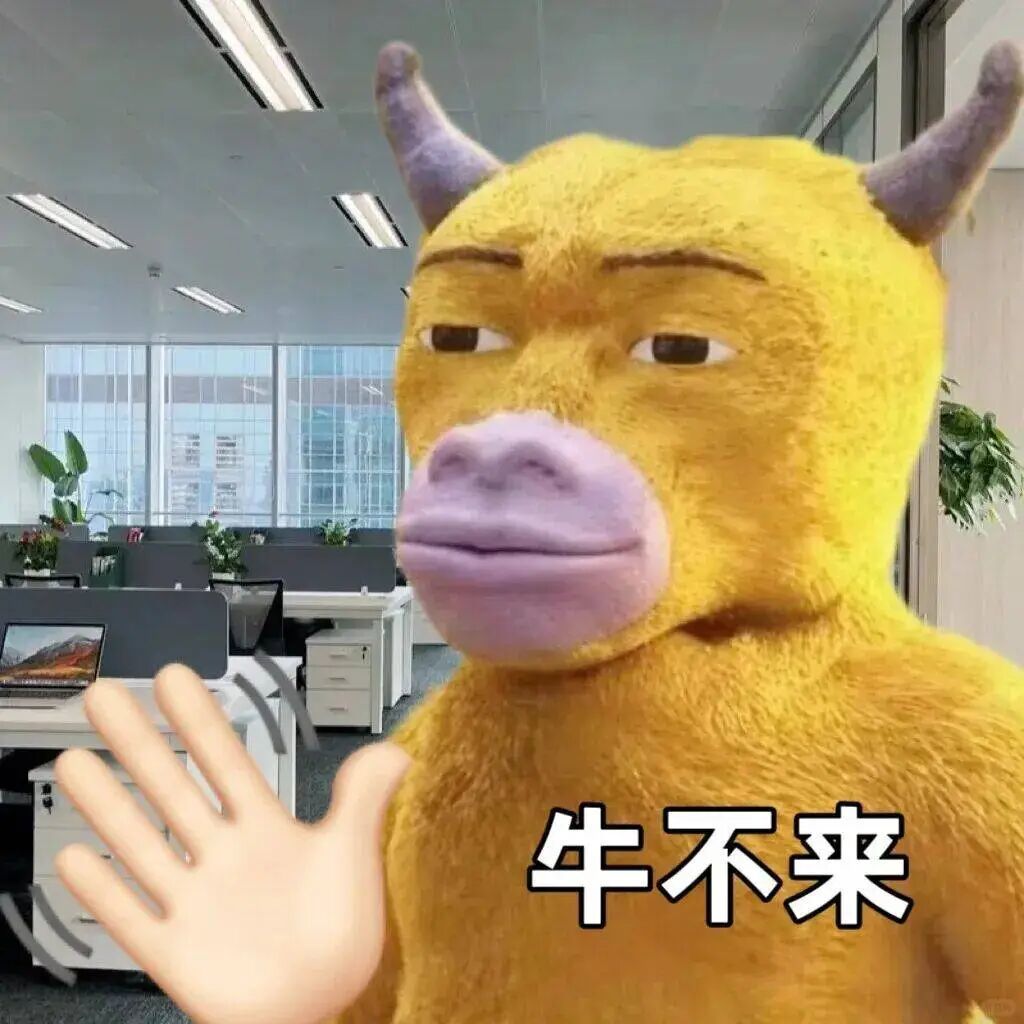
According to the current box office trend, losing money is basically a certainty. After all, not everyone has a good life like "Niu Lai".
The film crew was also aggrieved, and Bona CEO Jiang Defu came out to complain.
Don’t believe in one-click generation. There are nearly a hundred people in the team, following the film industry process to edit frame by frame. It took more than two years, 1.2 million base images were scrapped, and the entire film was overturned and remade hundreds of times.
In order to please the theaters, the distribution price was lowered to 20 yuan, and the split ratio was set to 40 to 60. Normal domestic films are 43 to 57, which is equivalent to actively giving three extra points to the theaters.
Although the stance was very low, the box office still did not move.

In fact, strictly speaking, this is not the first AI movie to hit theaters. It should be the first hyper-realistic digital human feature film.
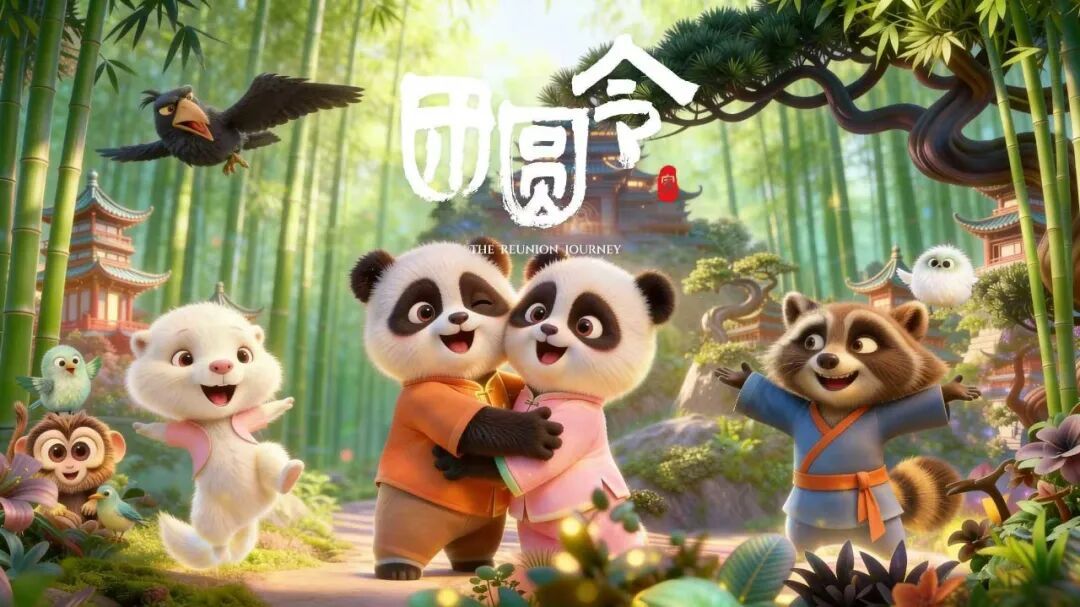
Because at the end of February this year, there was an animated film called "Reunion Order", which was based on the reunion of giant pandas. It is known as the first full-process AIGC animation in China.
It’s just that the movie was geared toward younger audiences, so it didn’t attract so much attention, and it didn’t trigger such a big industry discussion.
Although this movie lost money, AI film and television has become a general trend.
Bona launched the "Boca Cloud Studio", and Sanxingdui was just the first one to test the waters, followed by "Unplanned: Operation Guanghan" and "China's Strange Monsters: Rakshasa Sea".
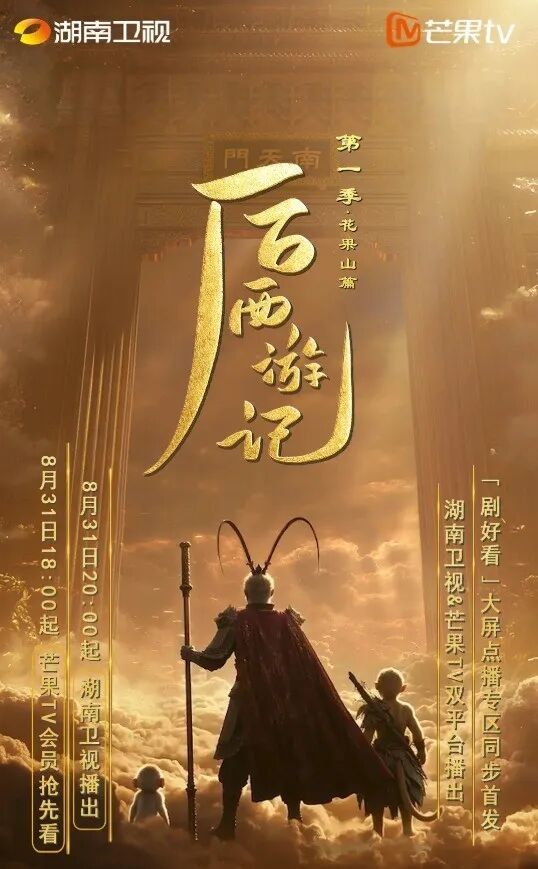
Mango TV has always been at the forefront in this regard. At the end of August this year, "Journey to the West", the first long-term AI drama in China's television history, was launched.
The premiere ratings ranked first among provincial satellite TVs during the same time period, and it was broadcast nearly 3 billion times across the entire network. Mango TV station broadcast 150 million feature films, and Mango Super Media’s stock price hit the limit for two consecutive days.
You know, the cost of this film is only 900,000 yuan per episode, less than one-tenth of the same live-action drama.
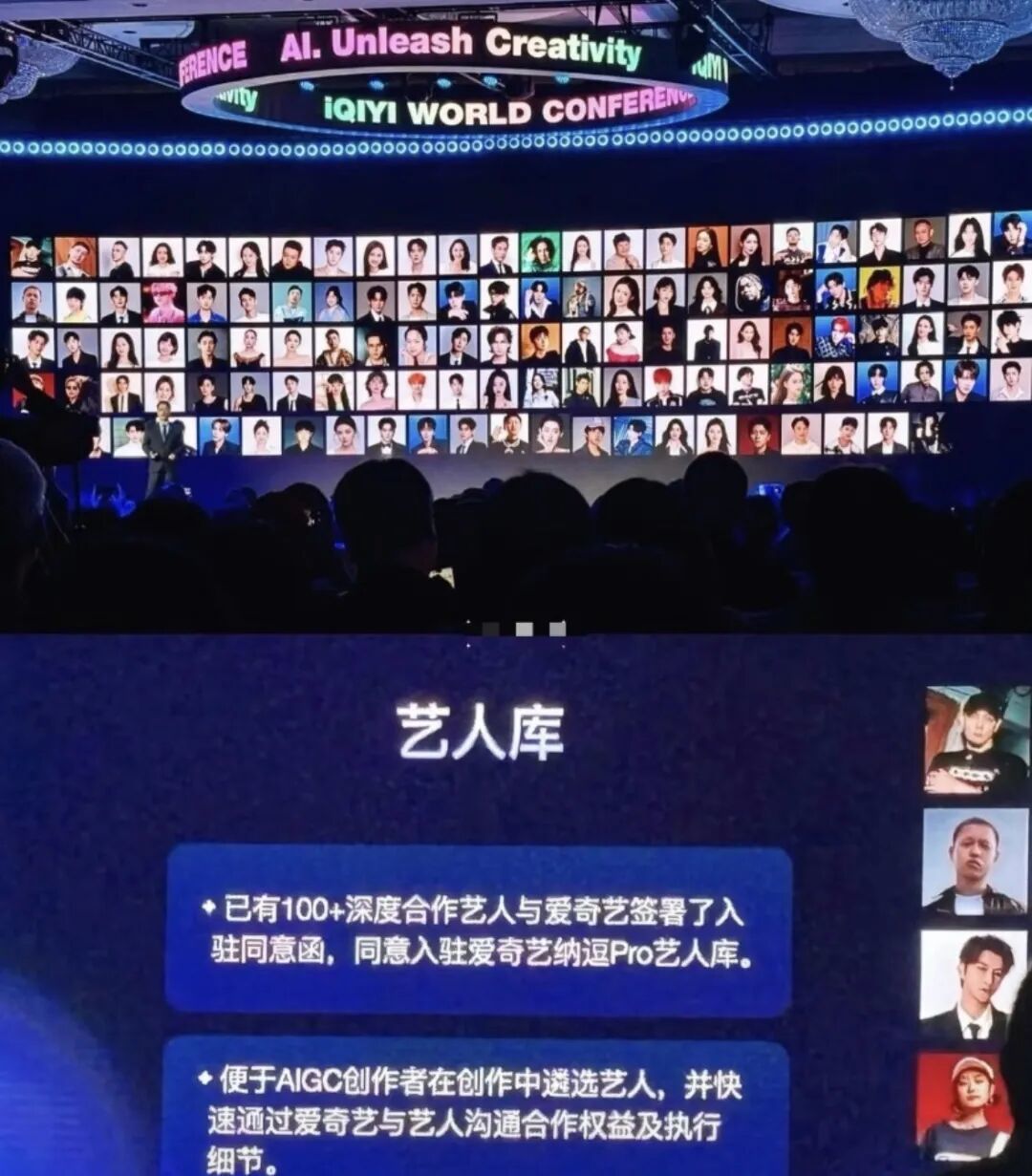
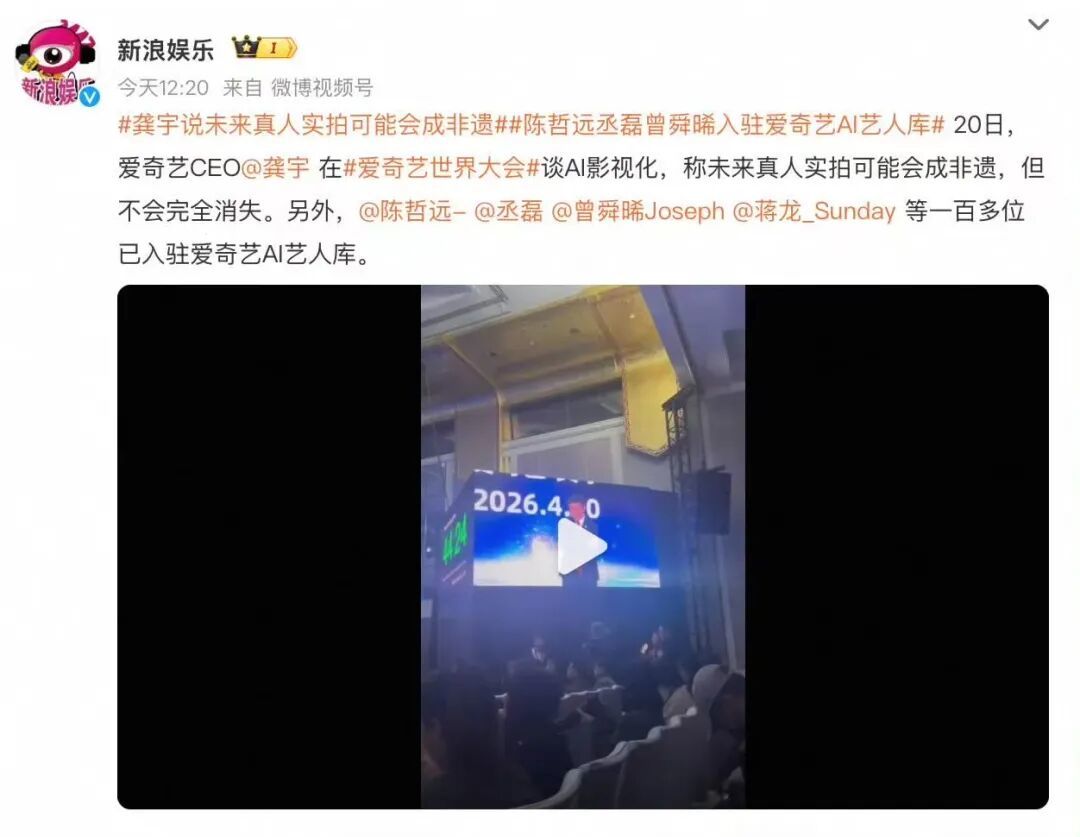
After enjoying the benefits, Mango officially announced a bunch of AI actors. Character assets and scene assets are all standardized and can be reused in the future.
iQiyi has launched the "Prairie Fire Project" and will produce more than 40 AI-powered movies this year. It has also set up a special production platform called Nadou Pro to cover the entire process from screenwriting to editing.
Byte also launched the "Jimeng Studio" at the end of August, which specializes in incubating AI feature films of more than 90 minutes. S-level projects fully cover the production fees, and also connects distribution and film festival resources. It is clear that it will spend money to clear this path.
Don’t think that only domestic ones are busy, and foreign countries are also idle.
On October 21st, South Korea's AI science fiction movie "Steelay" was officially released. It lasted for 90 minutes and was entirely AI-generated.
There is also an AI science fiction blockbuster called "Raphael", scheduled to be released on November 25th, focusing on the world view of future war.
This film also served as the opening film at the Busan AI Film Festival last year.
In North America, "Gods Don't Give Gifts" is scheduled to be released on December 4, and it has been stated that it will be nominated for the Oscar for Best Animated Feature Film.
To put it bluntly, this is not a risk taken by one company, but by the film and television industry across the world.
This year, many people in the entertainment industry have given birth to babies. There are no filmings anyway, so they have nothing to do. Netizens have ridiculed that domestic entertainment has entered the "big pregnancy era."

Fox Girl still remembers that in March today, "AI actor below male second grade" was on the hot search, and there was a lot of curses at that time.
But just a few months later, the AI comic drama has already attracted people all over the country, and even Wai Guoren can't escape it. Now who cares whether it is performed by real people?

Even actresses who have made hundreds of millions of hits in short dramas can't get a role in three months, while some male actors directly start setting up stalls.
According to predictions by industry insiders, in the next five to ten years, at least 30% to half of the professional jobs in the film and television industry will disappear. It’s not that it’s temporarily dead, it’s that it’s structurally dead.
In fact, it is not just the position of actors that has disappeared, but also the entire ecosystem that supports these positions.
But the wheels of history are rolling forward, and the era of AI film and television has indeed begun.
However, it is still in a very early stage, just like when silent films first appeared a hundred years ago, the technology was rough, the narrative was immature, and the audience was still adapting.

I believe there will be more and more AI movies in the future, and they will become more and more natural. But no matter how the technology iterates, what can touch the hearts of the audience will always be those well-told stories.
This has not changed in the past hundred years, and it will most likely not change in another hundred years.
Comments