
Abstract:
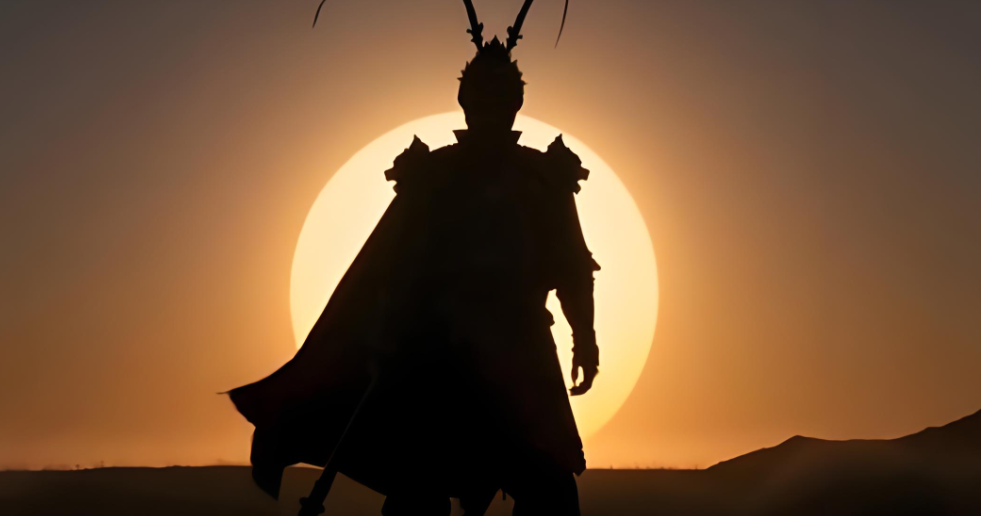
At 8 o'clock in the evening on August 31, 2026, during the prime time of Hunan Satellite TV, a very special TV series was launched. What's special about it? There are no real actors or live sets. Every character and every scene in the shot is all generated by AI. It's called "Journey to the West", and it's the first AIGC drama to be broadcast on stars in China. On the night of the broadcast, the real-time ratings reached the first place among provincial satellite TV in the same period. The capital market has also given sufficient coverage: one of the producers, Mango Super Media, has two 20cm daily limits.
The same week, in theaters across the country thousands of kilometers away, the 2026 summer season came to an end: the total box office was 12.498 billion yuan, and the number of moviegoers was 340 million. The box office has increased for three consecutive years.

The two kinds of content grew simultaneously and set their own records at the same time. This has almost no precedent in the industry narrative of the past ten years. According to popular saying, the rise of AI film and television should be accompanied by the decline of live-action film and television. New technologies will appear and old things will give way. This is how the story should be told.
The facts did not go according to the script.
This article puts AI dramas and live-action dramas into the same picture to see: at which level the impact occurs and at which level it stops. The conclusion after dismantling is: AI is not the killer of traditional film and television, but the only way forward for the industrialization of film and television. It killed someone else.
01
Capital markets: pricing imagination
On the day "Journey to the West" first aired, Mango Super Media closed the 20% daily limit within 16 minutes of the opening. It rose to the daily limit again the next day, closing at 20.38 yuan, with a market value of 38.125 billion yuan.
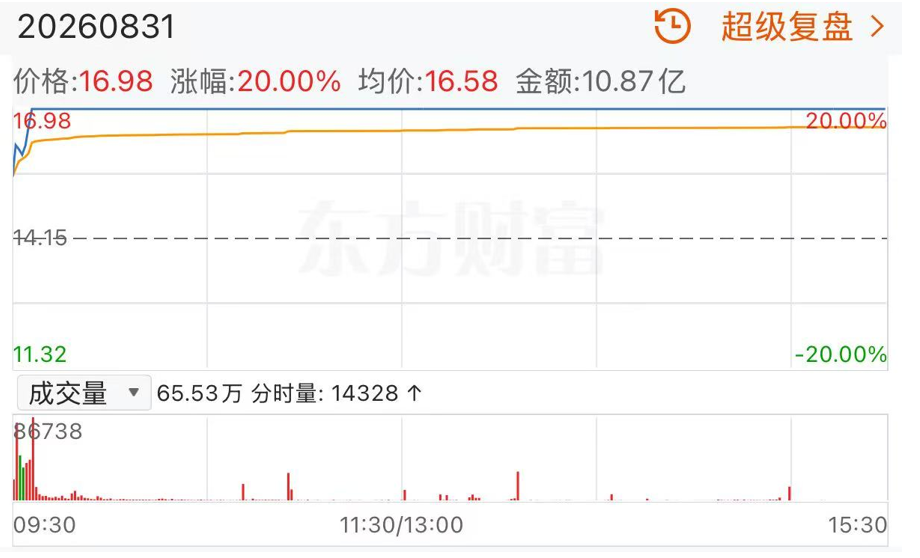
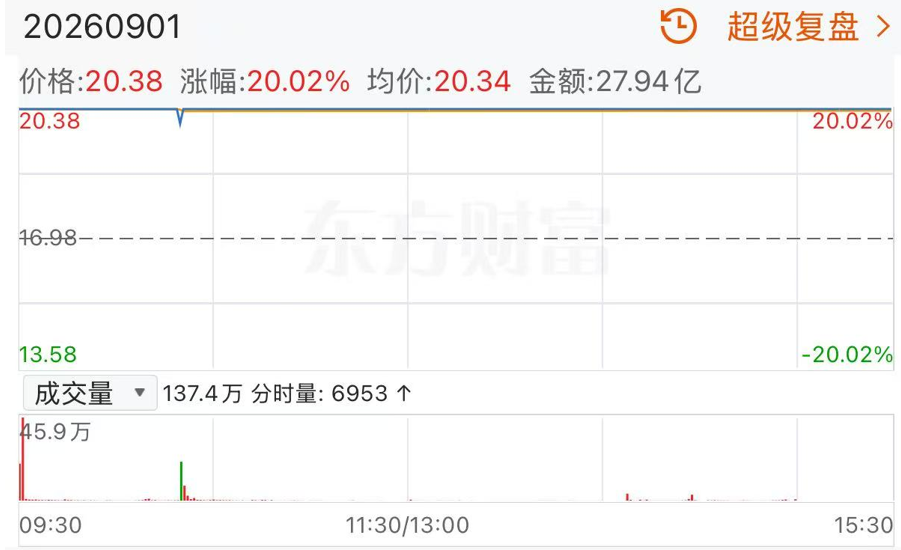
iFinD’s market data recorded the speed of capital influx this week: in the week of August 28, the stock’s closing price was only 14.15 yuan, and more than 70 million shares were traded on the week; during the week of the daily limit, the closing price rose to 20.52 yuan, the weekly trading volume increased to 454 million shares, and the turnover rate increased several times. A long list of film and television stocks such as China Broadcasting Technology, Huanrui Century, Bona Pictures, Zhangyue Technology, and Chinese Online were closed.
Moving your attention from the time-sharing chart to the financial report, cracks appear in the picture.
Ten days before the daily limit, Mango Super Media has just released its semi-annual report: revenue in the first half of the year was 6.194 billion yuan, a year-on-year increase of 3.86%; net profit attributable to the parent company was 202 million yuan, a year-on-year decrease of 73.58%. Huanrui Century made an emergency announcement on the night of the daily limit, indicating that the company's AIGC-related business revenue accounted for a low proportion and would not have a significant impact on short-term operating performance. Bona Pictures followed up and reminded that the proportion of AI film and television drama business revenue in overall revenue is also very low.
Translation: Profits are declining, but the stock price is flat. The company itself admits that AI cannot contribute much revenue, but the market still prices it as an AI leader.
This is not the first time that the capital market has voted for a theme. There was just one show three months ago: the May 1st "Love Letter to Grandma", which cost 14 million, was all amateurs, and 90% of the dialogue was in Chaoshan dialect. With an opening score of 9.0 on Douban, it counterattacked from 1.6% of the first-day schedule, and the box office finally exceeded 1.7 billion. Damai Entertainment, one of the producers, once rose by more than 18% during the session on May 18, but fell 4.55% at the end of the day. A week later, the stock price returned to the position before the release.
Wherever the money goes, there are votes. But a vote for taste will stick, but a vote for expectations will not.
In his letter to shareholders, Buffett talked about a lifelong moat, and the first thing AI did to the film and television industry was to level the riverbed. After the river bed is flattened, the water level drops, and people standing there will drown. Companies holding IP and aesthetics in their hands will float up instead.
02
AI drama and live-action drama: one banner, two parallel universes
At the beginning of July, some users discovered that the homepage of the Hongguo APP had changed: the original "Short Drama" column was renamed "Reality Drama", and there was an additional "Comic Drama" column next to it.
The interface changes of the platform have always been a statement of user scale. Giving a separate column to a category is equivalent to an official announcement that its audience is too large to be ignored. But this column movement has not shaken the market of traditional film and television dramas. There are two groups of audiences, each with its own universe.

Caption: Hongguo short drama interface, live-action drama/comic drama column (screenshot of grayscale adjustment in early July 2026)
(1) The actual ratings of comic dramas with explosive supply are not high
Let’s first look at the expansion speed of the comic universe: the AI comic market size will be 16.8 billion yuan in 2025, a year-on-year increase of approximately 276%; it is expected to be 24.36 billion yuan in 2026. DataEye gave a more radical caliber - the total of AI dramas and comic dramas may reach 40 billion yuan. The number of comic book users will be approximately 120 million in 2025, and is expected to increase to 280 million in 2026. Hongguo’s free comic independent APP was launched in November 2025, with monthly active users of 8.54 million in the first month, which surged to 24.04 million in February 2026, with an average daily usage of 90.7 minutes per person.
Most viewers of AI comics have two starting points for their choices.
First, how much money does the AI comic cost and how many times do you listen to it? The cost structure of most live-action dramas is a black box. The special effects budget evaporates in layers of subcontracting. The audience spends their emotions and sees only 50 cents of special effects - so the audience loves to joke in the barrage "It is still unknown how much 749 Bureau has greeded." The cost structure of AI comics is transparent: ByteDance Seedance 2.0 has reduced the cost of pure video generation to about one yuan per second, and the production cost of a 90-minute comic has dropped from more than 10,000 yuan to about 2,000 yuan. No matter how much money you throw at it, the screen will make as many noises as you want.
Secondly, it solves the problem of timely new IP. These two types of web novels, apocalyptic and unlimited streaming, have grand settings and expensive scenes. Live-action films and TV shows cannot afford them, and they have been backlogged for many years. Nowadays, a novel with an ordinary setting can be turned into a film with the addition of screen rendering and special effects. The importance of the plot has been relegated to the second line, and the threshold for adaptation has been pushed to the floor. The speed of new novels can keep up with the speed of readers turning pages for the first time. China Literature’s comic business revenue has exceeded 100 million, and Chinese Online has produced more than 250 comics using the AI tool chain.
Using Gartner's technology maturity curve to measure the position of this industry: 80,200 new comic-drama-related companies will be registered in 2025; 220,000 new AI dramas and comics will be launched in the first half of 2026, and only 1,055 will have a playback volume of over 100 million, with a rate of 0.73%.
There is also no shortage of AI movies being released in the film industry. The first domestic full-process AIGC theatrical animation "Reunion Order" released at the end of February, the final box office was about 14.96 million yuan, and it was highly concentrated in the first week. It lacked long-tail communication and failed to ignite the mass market. In contrast to the rapid dominance of AI comics on the short video platform on the supply side, theater AI movies are still in the experimental stage and are difficult for the public to pay for.
Supply explosion and profit scarcity are the standard features of the top of the mountain during the period of inflated expectations. The bubble will inevitably be squeezed next, and the companies that survive are those companies that hold IP and aesthetics.
(2) Traditional film and television market: not greatly affected
Looking back at the summer schedule, the comparison becomes clearer.
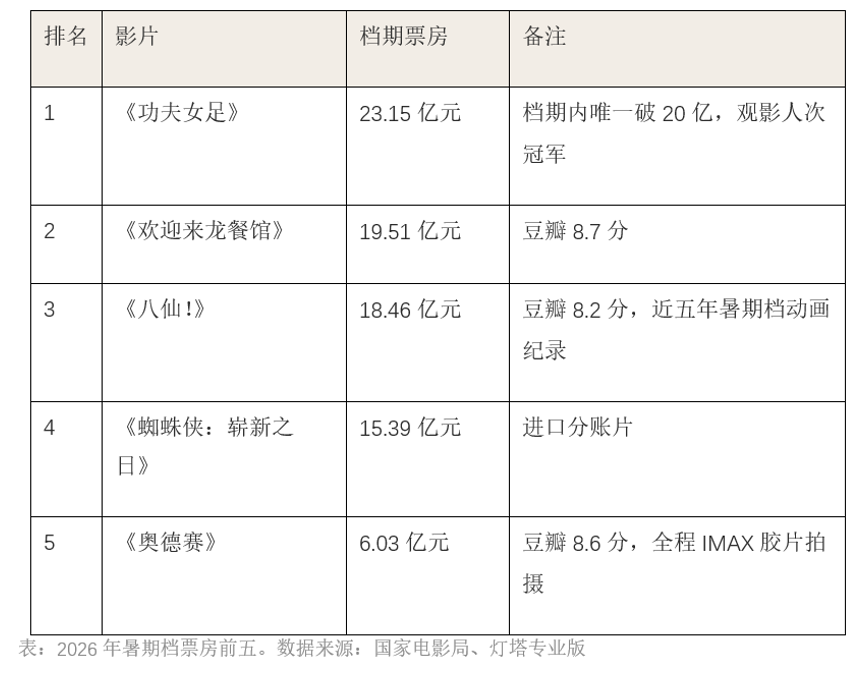
The average ticket price is 36.74 yuan, the lowest point in the summer season since 2022, which means that growth does not rely on price increases at all. During the period, the single-day box office exceeded 100 million for 46 consecutive days, and the number of screenings was 38.51 million, setting a historical record. What's even more rare is that word-of-mouth and box office overlap for the first time: "Welcome to Dragon Restaurant" scored 8.7 on Douban, "Odyssey" scored 8.6, and "Eight Immortals!" 》8.2 points, and 7 of the 14 films that completed the evaluation exceeded 85 points in audience satisfaction. The top three films took together 49% of the box office, five percentage points higher than last year.
The final answer is: the total box office is 12.498 billion yuan, the number of moviegoers is 340 million, and the box office has increased for three consecutive years.
(3) AI is currently just a means of production
In 2026, the world's most advanced AI video models were released; in the same year, one of the world's most popular directors broke his own record using imaging principles developed more than a hundred years ago.
Nolan's "Odyssey" is the first feature film in film history to be shot entirely using an IMAX 15-perf 65mm film camera. It cost US$250 million and was shot in 91 days, traveling to six countries. In order to suppress the noise of the film machine, IMAX built a 300-pound soundproof cover; the huge lens could not fit between the two actors, so the crew built a whole reflector system; one roll of film was only enough to shoot for two and a half to three minutes, and the machine had to be stopped to change the roll after the filming was completed.
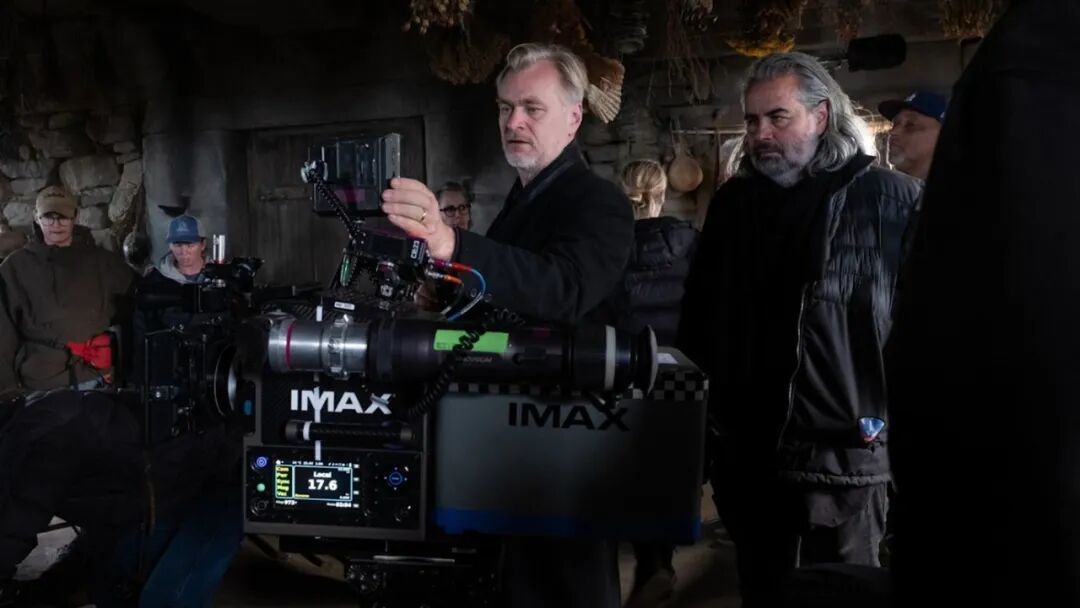
Caption: On the set of Christopher Nolan's "The Odyssey", the new Keighley IMAX 65mm film camera. Image source: Empire Magazine
Only 41 theaters around the world can screen the IMAX 70mm film version. The film studio opened tickets a year in advance, and 95% of the seats were sold out within an hour. The global box office in the first weekend was US$264 million, which was the biggest opening of Nolan's career. 53% of the North American box office came from high-end format halls; in the Chinese market, it received 603 million yuan in the summer season, and Douban scored 8.6 points.
Audiences are willing to pay a premium for uniqueness. For the first time this summer, this matter has a clear box office scale.
There is another thing happening across the ocean. American scientist Taylor asked his AI system DABUS to apply for a patent, and filled in the name of the AI in the inventor column. The result was global destruction: the United States rejected it, the British Supreme Court finally rejected it, and the European Union, Japan, South Korea, and Germany all rejected it for the same reason - the inventor must be a natural person. The British Supreme Court also blocked the backdoor: the owner of AI cannot automatically obtain a patent for its output.
The U.S. Copyright Office gave the same rejection to the AI painting "The Nearest Entrance to Heaven".
The law only protects human creations. It is difficult to confirm the ownership of AI-generated products, which determines that although it is a good tool, it cannot become an asset that can be priced and written on the balance sheet.
In other words, AI for film and television works is the means of production, not the foundation - it helps the industry obtain more economic benefits, but it cannot build the industry itself. Nolan's opponent has never been Seedance, nor MiniMax, nor the same open source model. When everyone can take pictures above the passing mark, the battle is still in their heads.
(4) AI’s knife falls on “mediocre drama”
DataEye Research Institute has tracked the monthly list data of the Hongguo platform: In February 2026, 432 new live-action micro-short dramas were added to the list, a historical peak; starting from April, AI dramas and comics entered the list in batches; by June, the number of new live-action dramas dropped sharply to 110. In four months, it has shrunk by three-quarters. The total popularity of the entire free short drama market in the first half of the year was close to 40 billion, while the popularity in June fell 53% month-on-month.
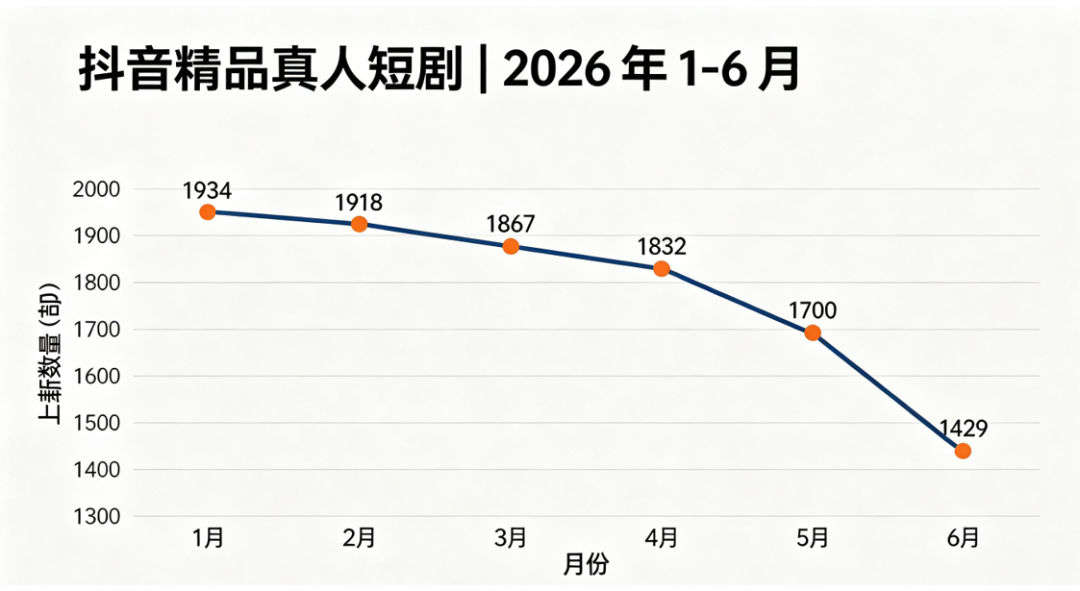
AI's knife falls precisely in the middle of live-action short dramas - films that cost 400,000 to 800,000, with special effects budgets subcontracted layer by layer, and a single location that can shoot 60 episodes.
We often say that AI will replace humans and traditional film and television. But it turns out that there is no essential conflict between the two: the lower the technical barriers and the wider the creative threshold, the more people will devote their attention to good works.
03
Silent films are dead, but movies are not dead
The film and television industry has actually given the answer a long time ago.
In 1927, "The Jazz Singer" began to speak, and the silent film era came to an end. At that time, countless people asserted that the artistry of film was dead, but it turned out that only the "silent film" format was dead, and film turned into a golden age. Later, color replaced black and white, but black and white did not disappear. The writers of "Schindler's List" still use it for the most solemn expression.
Every time a technological change comes, people are used to announcing the death of old things first; but every time what really dies is just the mediocre supply attached to the old technology.
History does not simply repeat itself, but it rhymes. The debate between AI and live-action dramas is a repeat of the same scene: AI does not bring new technologies in the true sense. All its outputs are based on existing human images and corpus. This is destined to repeat work such as special effects rendering, but it is difficult to perform in situations that require unique skills and thinking.
For today's content creators, people can create human-like images, but they cannot create a brain that can feel pain, have a crush, and get up at three in the morning to change the script.
So, don’t worry too much about the film and television industry. AI allows humans to turn a novel into a picture within a week for the first time, freeing creators from repetitive work - this is efficiency and liberation. It forces everyone to go back to that thing that machines can never do:
The expression itself.
Comments