
Abstract:
On September 4, local time on September 3, Tesla held a Cybercab Tesla cyber driverless electric vehicle launch conference in Austin, Texas, USA. As a mass-produced model specifically designed for driverless driving scenarios,
Cybercab eliminates the steering wheel, pedals and traditional rearview mirrors and adopts a two-seat layout. The vehicle's driving is completely controlled by Tesla's driverless software.
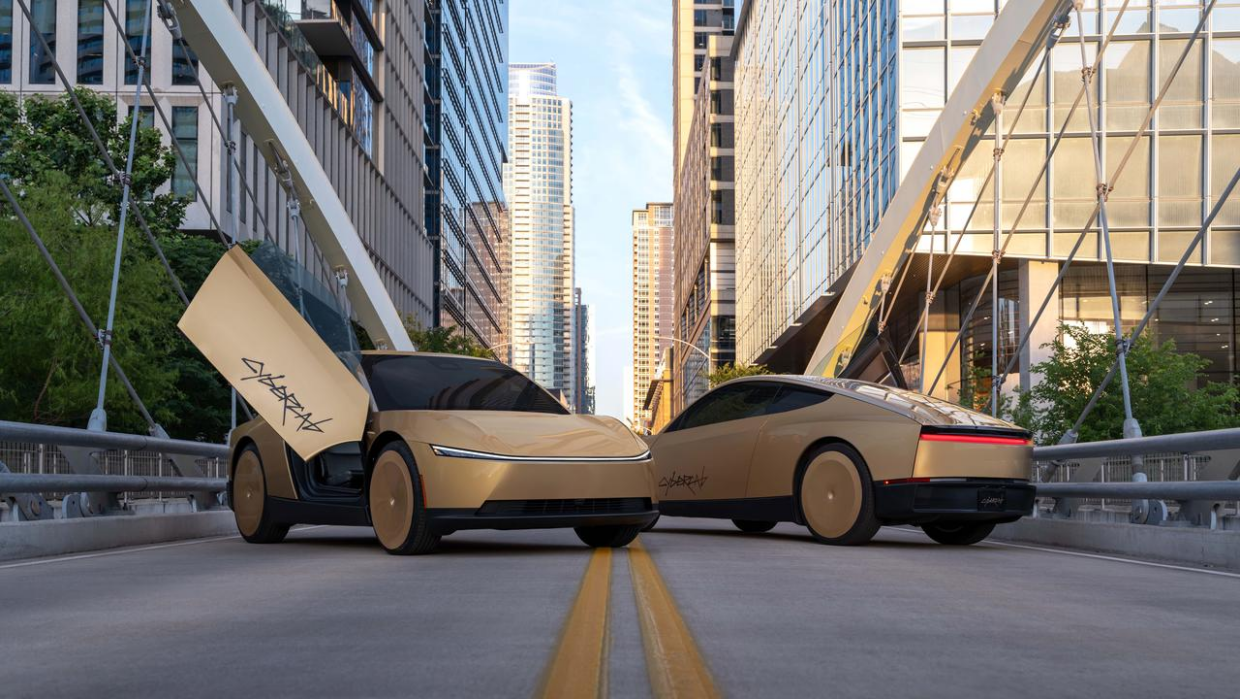
Cybercab will debut as a concept car in October 2024 at Tesla’s “We, Robot” event. In February this year, the first mass-produced car rolled off the assembly line at the Texas Gigafactory, and official mass production began in April.
It took about 18 months from the debut of the concept car to mass production.
As production increases, Cybercab will gradually become the main model of Tesla's driverless online ride-hailing fleet.The vehicle relies on 8 high-definition cameras to sense the surrounding environment and completes driving decisions through an end-to-end neural network, without relying on lidar and high-precision maps. The pure visual technology route it adopts has the same origin as the assisted driving systems installed in Model 3 and Model Y, and the on-board computing platform is also AI 4 hardware.
According to Tesla data, as of September 2026, the cumulative assisted driving mileage of the global Tesla fleet has exceeded
22.5 billion kilometers
, equivalent to about 560,000 times around the Earth's equator. The amount of driving data added to the fleet every day is equivalent to the data generated by a person driving continuously for 500 years, providing support for the continuous upgrade of autonomous driving systems.In terms of energy efficiency, Tesla estimates that Cybercab can travel 9.8 kilometers per kilowatt-hour of electricity, which is equivalent to a power consumption of approximately 10.2 kilowatt-hours per 100 kilometers. The vehicle has a curb weight of 1,412 kg, is equipped with a 47.6 kWh battery pack and a 163 kW motor, and has a cruising range of 673 kilometers under laboratory conditions.
Cybercab adopts a two-seater design. Citing data from the U.S. Federal Highway Administration, Tesla said that more than 85% of online ride-hailing trips have no more than two passengers. The two-seat layout can cover most travel needs, while helping to reduce vehicle weight and wind resistance and improve energy efficiency.
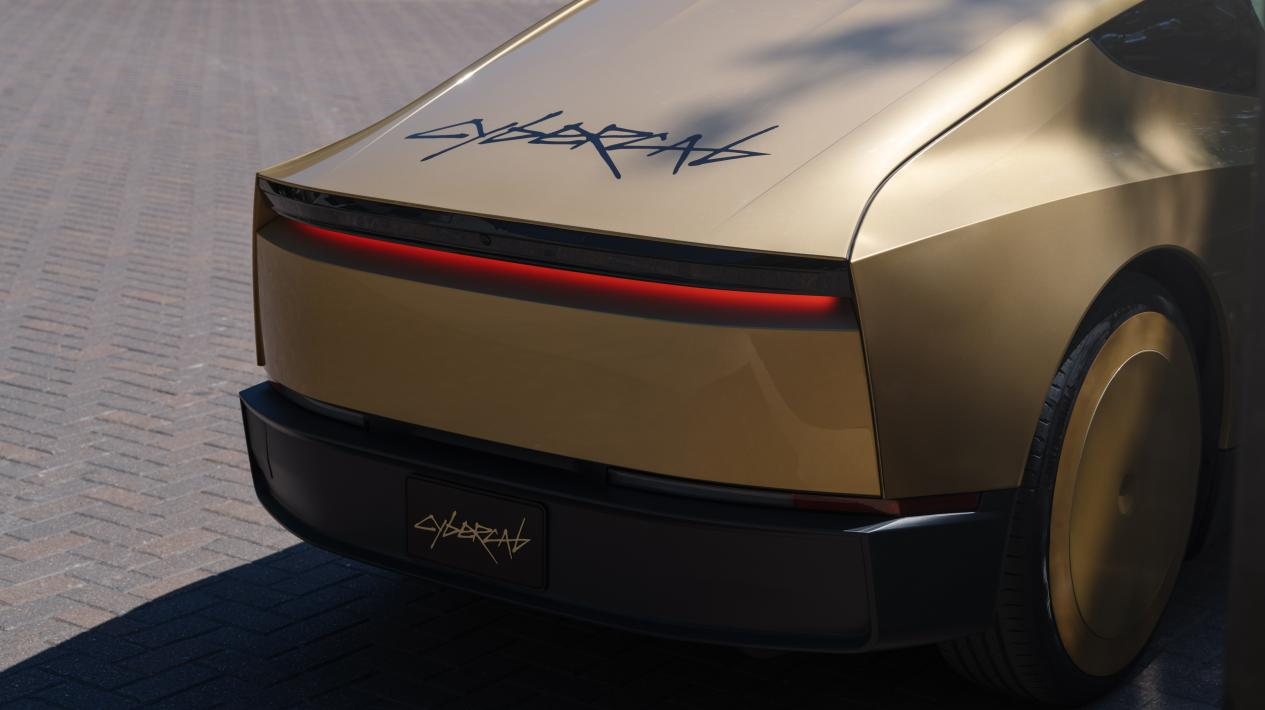
In terms of cost, Tesla predicts that after Cybercab is put into large-scale online car-hailing operations,
the cost of travel per mile can be reduced to US$0.2, which is approximately RMB 0.84 per kilometer,
One-tenth of the industry average.
This cost target mainly comes from the reduction of labor costs brought about by vehicle manufacturing methods, energy consumption efficiency and unmanned operations.In the manufacturing process, Cybercab adopts the "unboxing manufacturing" process. Vehicle parts can be produced in parallel in different sub-assemblies and finally assembled to increase production efficiency and reduce factory space requirements. Musk previously said that Cybercab's manufacturing system is different from Tesla's existing models, and the future goal is to roll off a car every 10 seconds or even 5 seconds.
Cybercab has also designed wireless charging and automatic cleaning functions around unmanned operations. Charging can be started automatically after the vehicle is parked, and it will enter the cleaning process after charging is completed, reducing the need for manual plugging and unplugging of the charging gun and cleaning of the vehicle. The cockpit is equipped with a 22-inch central control screen. Passengers can control seats, air conditioning and doors through the screen, and can also use entertainment functions such as music, games, movies and karaoke.
Barrier-free design is also a focus of Cybercab. Its butterfly doors provide greater entry and exit space, the seat height is flush with a standard wheelchair, and the hatchback trunk can accommodate most wheelchairs and assistive equipment. There are Braille signs on the door and ceiling light areas, the accompanying mobile app is compatible with screen readers, and passengers can bring guide dogs and assistance dogs.
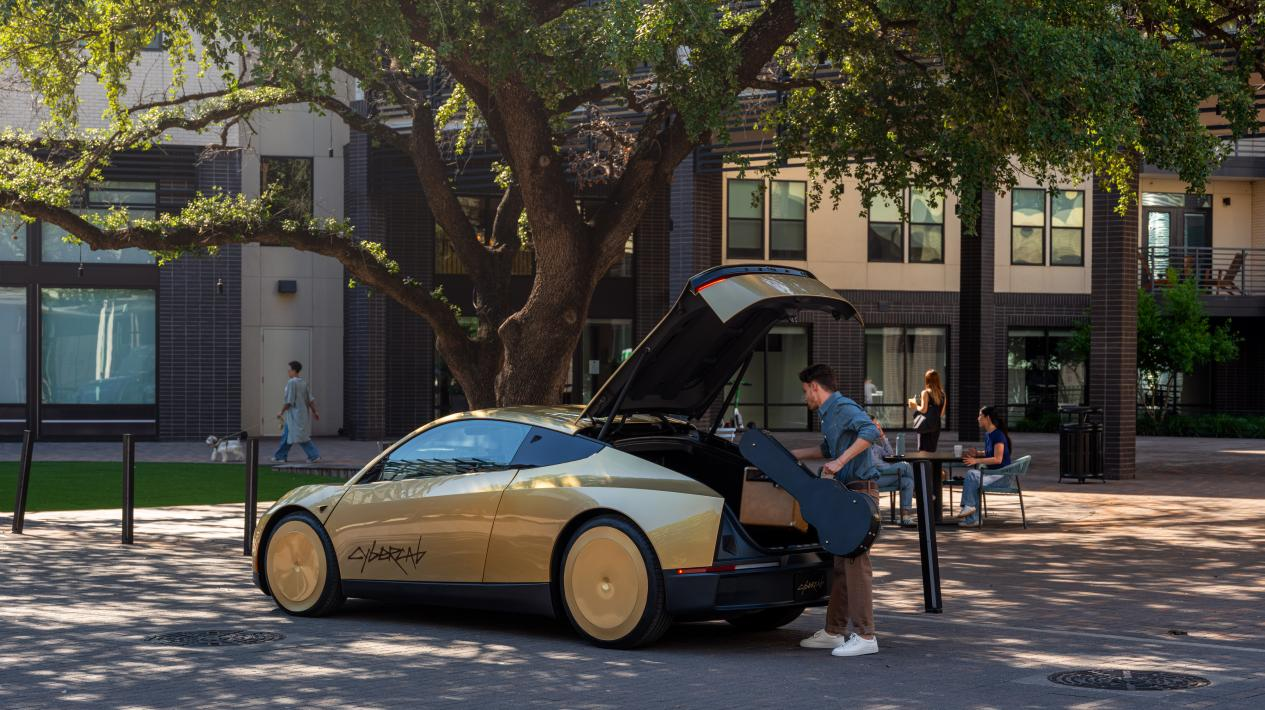
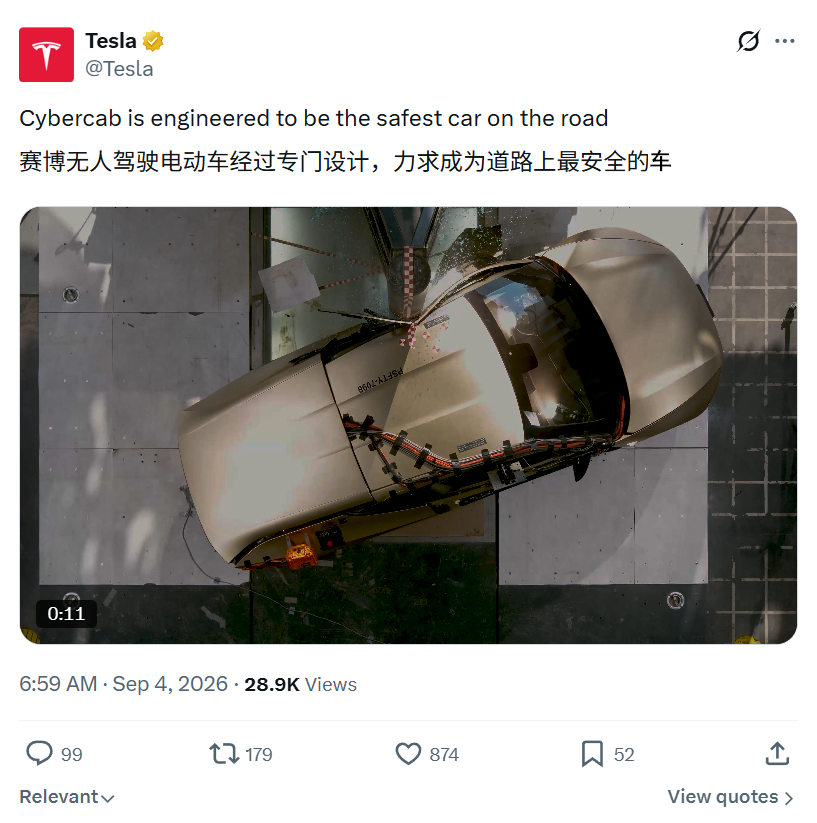
In terms of safety, Cybercab's A-pillars, B-pillars and door rings are made of ultra-high-strength reinforced steel, and the overhead beams are made of high-strength steel. Tesla said that the car continues the safety design concept of Model 3 and Model Y, and can continuously update vehicle functions and safety capabilities through remote software upgrades.
Tesla’s driverless online ride-hailing business currently covers Tampa, Orlando, and Miami in Florida, as well as Austin, Dallas, Houston, Texas, and the San Francisco Bay Area in California.
Tesla said that Cybercab will be exhibited in Beijing, Shanghai and other cities starting in mid-September, marking its first public appearance in China. This demonstration does not involve the launch of Cybercab for sale in the Chinese market, nor does it mean that Tesla will launch commercial operations of driverless online ride-hailing in China.
Comments