
Abstract:
U.S. Commerce Secretary Howard Lutnick confirmed in an interview on Wednesday (September 2) at the G20 Innovation Ministers' Meeting in Chapel Hill, North Carolina, that the White House is formulating a tariff framework for semiconductor products, and relevant companies are clearly aware that the new taxes are about to be implemented.
The core principle is: if you build a factory in the United States, you are exempt from paying tariffs, but if you do not build a factory in the United States, you must pay taxes to enter the US market. The tax rate, coverage and effective date have not yet been announced. At the same time, Lutnick blamed the collapse of U.S.-Canada trade talks last week on Canada's dismantling of existing arrangements "for political reasons only" and predicted that a pickup in economic growth and a shrinking fiscal deficit will jointly push interest rates to stabilize and fall in about six months.
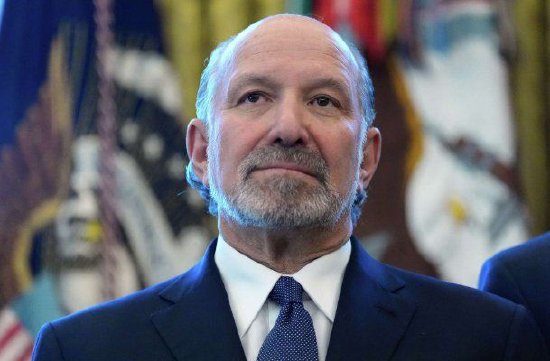
Lutnick co-chaired the two-day ministerial meeting with Michael Kratzios, director of the White House Office of Science and Technology Policy. On Wednesday, he was scheduled to have live conversations with Nvidia CEO Jensen Huang, Anthropic co-founder Tom Brown, OpenAI CEO Sam Altman and Palantir CEO Alex Karp.
Semiconductor tariffs: exempt from paying if you build a factory in the U.S., but pay if you don’t build one
Lutnick said that the government has started to formulate a tariff framework for chips, and the industry generally expects that new taxes will be introduced soon. He confirmed the direction of media reports last week - that the White House is weighing a new round of semiconductor tariffs, and pointed out that "targeted and carefully considered" tariff policies will be launched next. He succinctly summarized the core of the rules: "If you build a factory here, you don't have to pay; if you don't build a factory here, if you want to enter the world's largest market, you must be prepared to pay." He further said: "We will do this in semiconductors. These things will be produced in the United States."
However, he did not disclose the specific tax rate, applicable tax items or effective date. Many media have previously reported that this arrangement has been in the works for a long time, but the government has not disclosed specific plans. According to media reports last week, the plan under discussion may expand the scope of taxation from the chips themselves to end products containing chips, including laptops, game consoles and data center servers. Lutnick's preferred framework design is to link foreign companies' duty-free import quotas to their investment in U.S. chip manufacturing and consider setting up a transition period. The report also emphasized that the framework may still be significantly adjusted in the coming weeks or even months, and tax rates and other key details have not yet been finalized. Lutnick's statement on Wednesday was consistent with the previous direction, still staying at the level of principles and not yet providing specific figures.
From a daily operational perspective, the operating logic of the new framework is: Whether tax is paid on imported chips or complete machines containing chips will depend on whether the company has actual production capacity in the United States. Companies with investment commitments can obtain corresponding duty-free import quotas based on the scale of their commitments; companies without commitments must pay full tax before entering the U.S. market. Reports last week also mentioned that there were plans in the discussion to set different tax rates and quotas by country and provide separate guidance for the country's major chip manufacturers, but these options did not form executable text on Wednesday.
The United States has previously imposed special tariffs on some advanced computing chips and their derivatives. The new framework is intended to cover a wider range of imported categories - from bare chips to server cabinets. How to define "supporting the construction of the U.S. supply chain" to grant exemptions and exemptions, and what situations are considered "ordinary entry into the U.S. market" and subject to tax will be the core difficulty. Lutnick simplified the judgment standard into a principle: "If it is built in the United States, it will not be paid."
Canadian Negotiations: Dispute over medium and heavy trucks became the trigger for breakdown
In the same interview, Lutnick characterized the breakdown of U.S.-Canada trade negotiations last week as Canada's initiative to dismantle the agreement. “They just blew it up for political reasons,” he said. Canadian negotiators, he said, “brought irrational ideas to the table” in the hours leading up to the deadline, focusing on medium- and heavy-duty trucks. The agreement was originally intended to prevent the United States from imposing a 50% tariff on Canadian goods. He revealed that he once asked a Canadian minister face to face: "Do you really want to blow this up?" The other party replied: "I can't say that."
However, Lutnick also admitted that the United States may also make new demands at the last moment - the president has previously said that a similar situation does sound like something he would do. After the negotiations broke down, the United States imposed 50% tariffs on Canadian goods as scheduled. The person in charge of the Canadian negotiators later stated that the issue of medium and heavy trucks was not raised for the first time last Friday afternoon. It had been mentioned from Monday to Thursday. He also pointed out that the Canadian negotiator was the U.S. Trade Representative and Lutnick himself was not sitting at the negotiating table. The United States and Canada are still explaining what conditions were changed at the last moment.
The medium- and heavy-duty truck provisions directly affect the interests of Ontario factories-some Ford F-Series models and General Motors Silverado are produced locally. Lutnick described the asking price as the "last wire" in the scrapping agreement, while Canada views truck tariff reductions as an integral part of the vehicle arrangement. How to reduce tariffs on steel, aluminum and passenger cars has also been stuck on the issue of tariffs on industries under the jurisdiction of the Ministry of Commerce. On Wednesday, Lutnick did not announce a timetable for restarting negotiations, nor did he set conditions for withdrawing from the 50% tariff.
Interest rates and deficit: He gave a window of about six months
When asked about the continued rise in U.S. bond yields, Lutnick said: "I feel comfortable with the current situation." He then predicted that interest rates will first stabilize and then gradually fall in the next six months or so. This judgment is based on two facts: US economic growth will accelerate again and the fiscal deficit will shrink. He pointed out that the combination of deficit contraction and growth recovery will "not only stabilize the bond market, but also bring interest rates down." On the day of the interview, the U.S. ten-year Treasury bond yield had risen to its highest level since November 2023; and the monthly deficit in July also climbed to the highest level in more than five years.
Lutnick did not provide a specific growth reading, nor did he say in which month the deficit would begin to turn downward. The 10-year U.S. Treasury yield is a market indicator of long-term borrowing costs in the United States, and is also an important reference for housing mortgages and corporate bond issuance; its rise to a nearly three-year high means that the cost of rolling maturing debt by the Treasury is still rising. Lutnick positioned the fallback time as "about six months", based on simultaneous improvements in growth and deficit, rather than announcing a new interest rate policy separately. As for whether the Federal Reserve will adjust its policy interest rate during this window, it was not covered in the interview.
Chapel Hill Ministerial Meeting: The direction of light regulation goes hand in hand with semiconductor tariffs
Another public statement at this G20 Innovation Ministers’ Meeting is that the government will not impose heavier supervision on the release, import and export of artificial intelligence. The direction is "quite the opposite" - lighter, not heavier, Lutnick told media at the venue on Tuesday. The temporary controls on Anthropic's most powerful models in June this year were described by him as a one-time arrangement, provided that the models have "reasonable" guardrails. It should be noted that this caliber and semiconductor tariffs belong to two separate clues: chip imports are taxed based on whether a factory is built in the United States, while model supervision is handled in accordance with existing laws, and no new regulatory agency will be established for artificial intelligence. Neither the tax rate details nor the model guardrail specifications were issued on Wednesday.
Comments