
Abstract:
It is reported that Huang Renxun and his wife Lori donated Nvidia shares to an irrevocable trust before Nvidia’s stock price rose sharply. Founders often use this method to divest the subsequent appreciation of the stock from their estate to avoid gift and inheritance taxes. "This is the most common estate planning strategy," says New York estate planning attorney Jonathan Bratmacher. "You make a gift when the value of the asset is low and expect it to appreciate significantly over time. This way, the gain is not included in your estate."
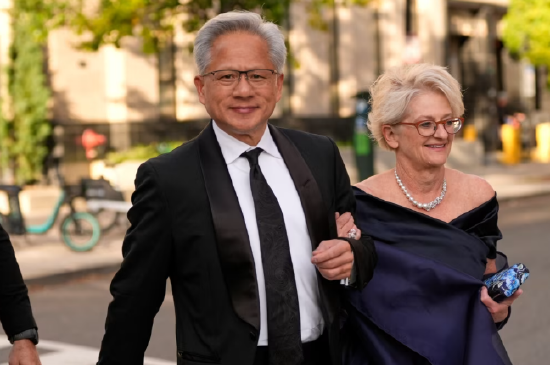
The couple established an irrevocable trust in 2012 and held slightly more than 31 million shares of Nvidia stock. The beneficiaries of this type of trust are usually children and even unborn descendants.
The two also established an irrevocable residual property trust in 2016, holding 109 million Nvidia shares. They hold multiple Grantor Retained Annuity Trusts (GRAT), which can set aside more assets for their children without being taxed on gift and estate taxes. There is a high probability that the assets of these trusts will eventually be injected into this remainder trust. Huang Renxun and his wife are both co-trustees of these two irrevocable trusts and need to bear trust fiduciary responsibilities for the trust beneficiaries.
Lori has never publicly commented on rumors related to her husband's extramarital affair. Miller said that Jen-Hsun Huang and his wife settled in California. If they divorce, the default principle of California law is: assets acquired during the marriage and placed in revocable trusts (including limited liability companies) will be divided in half if no separate marriage agreement is signed.
Generally speaking, the above two irrevocable trusts are independent of the inheritance of Huang Renxun and his wife, so the relevant assets will not be included in the scope of divorce property division, unless one spouse initiates a lawsuit against the conditions for the establishment of the trust.
Wealth Donation
The couple continues to donate through private foundations and has become an important donor in the Bay Area where they settled.
Last year, Huang and his wife announced a multi-year donation commitment to the San Francisco Opera. On election night this month, they held a private performance of "The Marriage of Figaro" at the Opera House. Guests included OpenAI founder Greg Brockman, Salesforce CEO Marc Benioff, and Intel CEO Chen Liwu.
Vanderbilt University officially announced this summer that it will establish a School of Art, Architecture and Design on its San Francisco campus after receiving a $75 million donation from the Jen-Hsun Huang Foundation. Other recipients in the Bay Area include Stanford University, where Huang earned his master's degree from an engineering center named after him, and Second Harvest Food Pantry in Silicon Valley.
A U.S. SEC filing this year shows that Lori Huang is registered as the chairman of the foundation, and Huang Renxun serves as secretary and chief financial officer; the foundation has not registered other managers and directors, and the foundation holds nearly 59 million Nvidia shares under its name, and these shares legally belong to the foundation.
Donations so far only account for a small part of the foundation’s assets. As NVIDIA's stock price skyrocketed, the foundation's assets soared from US$12.6 million in 2007 to US$9.2 billion at the end of 2024 (2024 is the latest year for which IRS filing materials are available).
Jon Bergdoll of the Indiana University Lilly School of Philanthropy said that based on asset size in 2024, the Huang Jen-Hsun and Lori Huang Foundation will roughly rank as the 13th largest private foundation in the United States.
Other recipients include Oregon State University, Asia Society, and multiple mental health organizations. SEC documents show that the foundation also purchases computing power from AI cloud vendor CoreWeave and provides it to universities and non-profit organizations for "open science and artificial intelligence research."
However, most of the foundation's largest allocations over the years have gone to Charles Schwab's Donor Advised Funds (DAF). In 2024, the foundation will invest a total of more than 80 million US dollars in this type of DAF.
For private foundations like Jen-Hsun Huang, DAFs have practical value: Contributions to DAFs can count toward the 5% minimum distribution requirement that private charitable foundations must meet. However, the funds in the DAF are not required to be disbursed to actual operating charities in a timely manner, which has also been controversial.
Comments