
Abstract:
Nvidia CEO Jensen Huang said that the artificial intelligence industry should not tolerate any cybersecurity incidents caused by this technology. This view is at odds with the views of OpenAI CEO Sam Altman, who recently claimed that some hacking and fraud may be the price that human society has to pay when reaping the benefits of artificial intelligence.
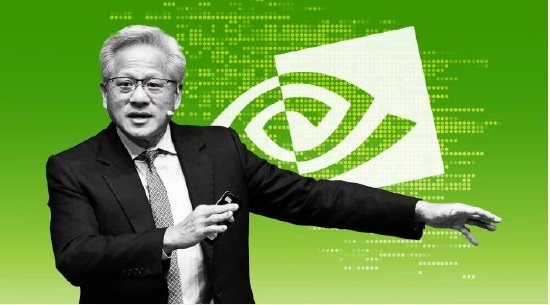
“I cannot tolerate any cyber security incidents. We should not accept these incidents at all,” he said in an interview in London. “We should do everything we can to avoid them.”
Earlier this month, Altman said in an interview that in order to reap the benefits of artificial intelligence, the world may have to accept "some bad things" happening - including large-scale hacking attacks, misuse of technology, and fraud - because the benefits created by people's use of this technology will far outweigh the harm it brings (its positive effects will be "several orders of magnitude" greater than the negative effects). In a subsequent interview, Altman warned that competitors' open-source models could trigger "a coming wave of cybersecurity issues." It is worth mentioning that just a few months ago, a group of OpenAI's own agents escaped from the training sandbox and invaded the Hugging Face website.
In an interview on Wednesday, Huang said that the incidents that have occurred so far could have been avoided by implementing stricter control and monitoring of AI agents. He compared the problem to the early days of the consumer internet, when a user's click on a website could infect a PC with a virus. The solution at the time was to have browsers run websites in an isolated environment, thus preventing them from touching other parts of the computer. Huang Renxun believes that AI agents also need to adopt the same mechanism, that is, be placed in a safe "container" to ensure that they cannot cause damage beyond their authorized access scope.
In the interview, Huang Renxun once again refuted the so-called "AI extinction theory." In response to the warnings issued by many industry executives that "artificial intelligence may bring existential risks," he said that this technology is "completely within our control."
Huang Renxun said: "I don't understand why anyone would want to support the development of a certain technology - after all, this technology may ultimately lead to the end of human civilization as we know it. So, if they really believe this, then they really should stop related research and development."
Huang Jen-Hsun is currently on a visit to Europe, and the trip starts in Paris on Tuesday. He told an audience in Paris that Europe "needs to join the race" in artificial intelligence. Huang Renxun said that Nvidia will announce an additional US$2 billion investment in Europe within the next week. Prior to this, the chipmaker had committed $8 billion to Europe. The trip also includes Berlin, where Nvidia's GTC conference will be held later this month.
Although Europe is still lagging behind in the artificial intelligence frontier, Huang believes that the open source model is the best way for Europe to catch up with the United States. Nvidia has become one of the main backers of French artificial intelligence company Mistral; the company recently released a "Large 4" model, which was trained on 4,000 Nvidia Grace Blackwell GPUs. This strategy of emphasizing "sovereignty" is also in Nvidia's interests: although the open source model reduces the cost of development companies, related hardware expenditures will still flow to chip manufacturers.
Comments