
Abstract:
Microsoft admitted that nearly 900MB of memory on Windows 11 computers had been quietly occupied by its own applications and background services; after optimization, this memory has been released, which is of particular practical significance for devices with 8GB or 16GB of memory.
Microsoft disclosed relevant optimization results at the Ignite 2026 conference. Ian LeGrow, who is in charge of the Windows core operating system engineering team, said that the company has been improving the memory usage efficiency of Windows and Microsoft's own applications on various devices since January this year, focusing on computers with 8GB and 16GB of memory. He said that the increase in memory prices has significantly pushed up the cost of equipment, so reducing system memory usage can allow users to get a better experience on existing equipment.
This optimization involves multiple Microsoft components. Among them, the memory usage of Microsoft 365 office suite has been reduced by 360MB; background services such as Defender, Purview and OneDrive have saved more than half a GB of memory. Adding up the above improvements, the memory freed up is over 860MB, close to 900MB. Microsoft didn't announce specific savings for Defender, Purview and OneDrive, but said the overall reduction is significant for low-end computers.
Microsoft said its optimization ideas include avoiding loading unnecessary components that may have been loaded by default in the past, and allowing components using similar or the same framework to share memory. These practices reduce Windows' own memory consumption, leaving more available memory for user applications and experiences. LeGrow emphasized that Microsoft wants to reduce RAM usage without sacrificing functionality.
In terms of performance, Microsoft said that the speed of Office applications on computers with 8GB of memory has increased by 10%. The company showed off a test in which the device ran a January 2026 version of the system while simultaneously making a simulated Teams call, playing a 4K background video, opening 20 Edge tabs, and working with large files using Outlook and multiple Microsoft 365 apps. The results showed that the October 2026 system version completed this workload approximately 21% faster than the January version. Microsoft also reminds that this is just a sample test of 30-second clips, and the company will run tests over a longer period of time to evaluate the benefits in real-world use.
Microsoft also stated that these optimizations are not only for computers with 8GB memory. Robin Seiler, who is in charge of the Windows commercial partnerships team, said the improvements made for 8GB devices also apply to devices with larger memory.
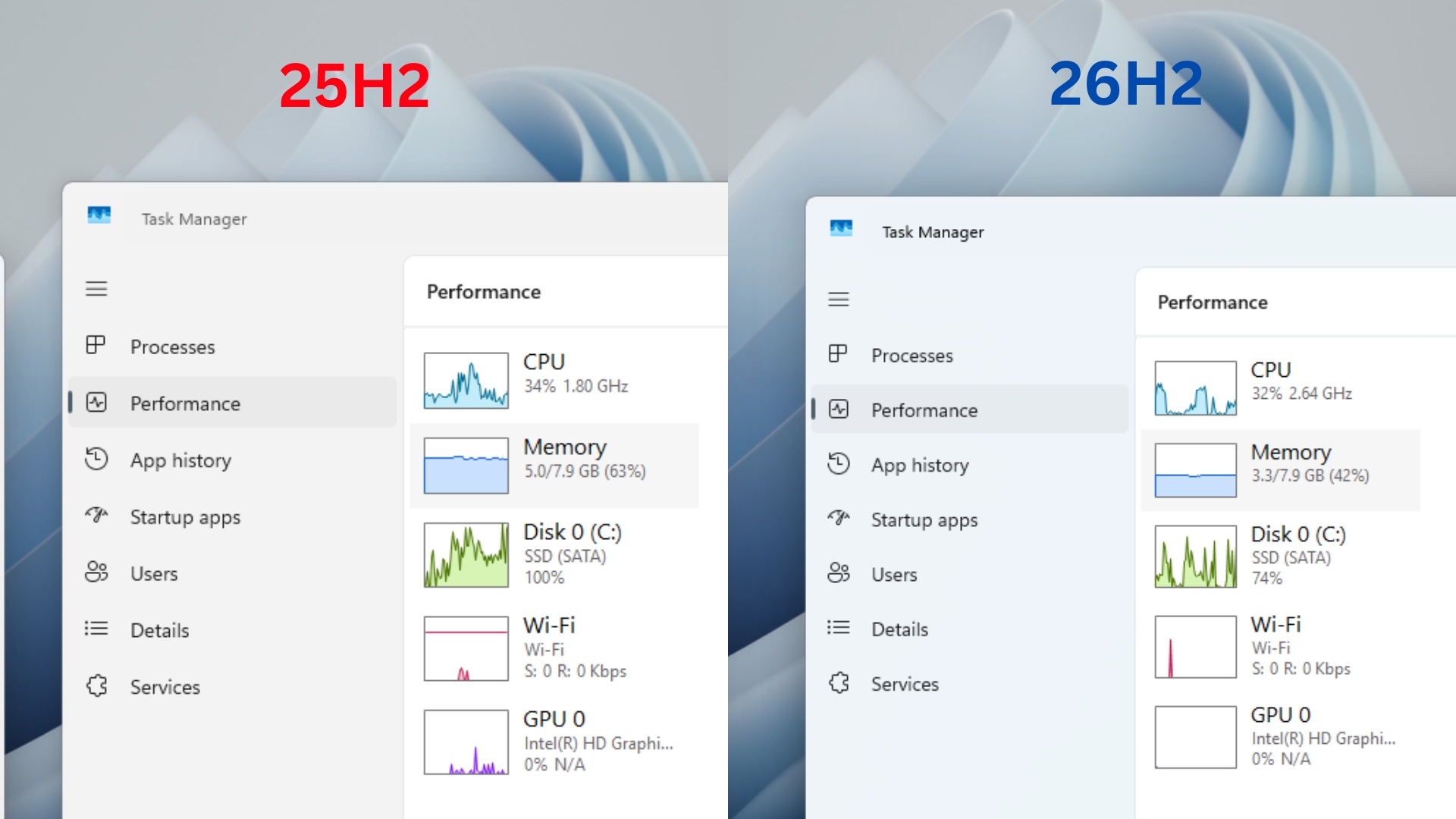
Previously, Windows Latest tested Windows 11 26H2 in October 2026. On an old 8GB laptop with AutoCAD and VS Code installed, Windows 11 25H2 occupies about 5GB of memory after restarting; after upgrading to 26H2 and restarting, the memory usage dropped to 3.3GB. When Chrome is not open, the available memory increases from 2.9GB to 4.6GB.
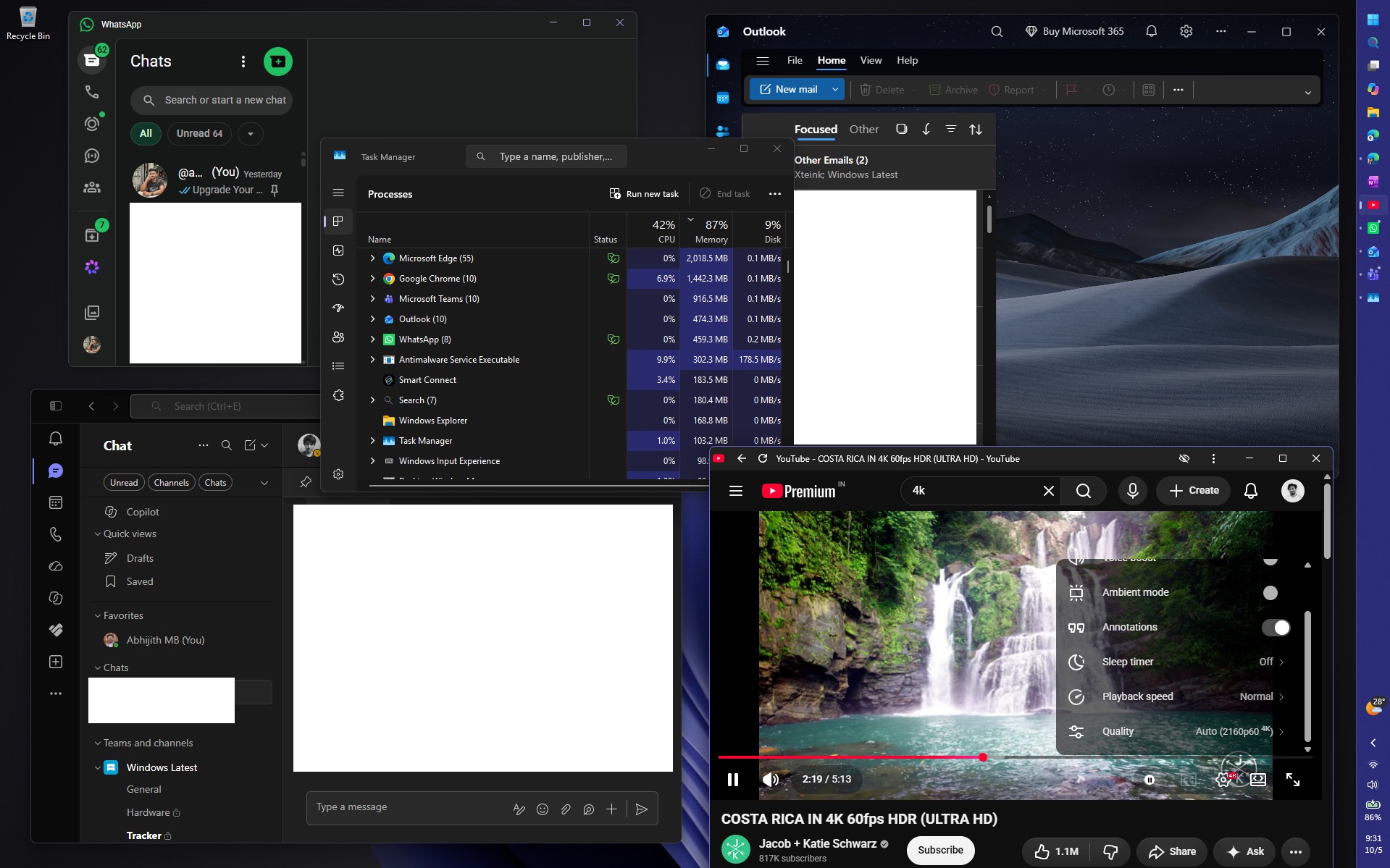
The media also tested on a clean 8GB virtual machine: the memory usage of 25H2 was about 4.1GB after restarting, while that of 26H2 dropped to between 2.8GB and 3.2GB. After turning on the "Discover" information flow, the widget function will increase the memory usage. On a 16GB laptop from three years ago, the memory usage was reduced by up to 2GB after restarting; even when running Edge, WhatsApp, Teams, Outlook at the same time, and playing 4K 60fps YouTube videos, the memory usage remained at about 87%. Then I opened Spotify, Paint and other applications, and the usage only rose to 89%.
Microsoft has previously stated that it will make the Windows experience faster on computers with 8GB of memory. The October 2026 update has introduced some related improvements. Microsoft said that the system response speed can be increased by up to 20% after the update. The nearly 900MB memory savings disclosed this time further illustrates that Microsoft is focusing on the performance and availability of low-memory devices as the focus of Windows optimization.
Comments