
Abstract:
As the AI safety controversy continues to ferment, Musk proposed: Let competitors check each other. He advocates that leading AI companies cross-test each other before releasing models, and believes that this mechanism should be promoted globally as soon as possible, and China's participation is indispensable.
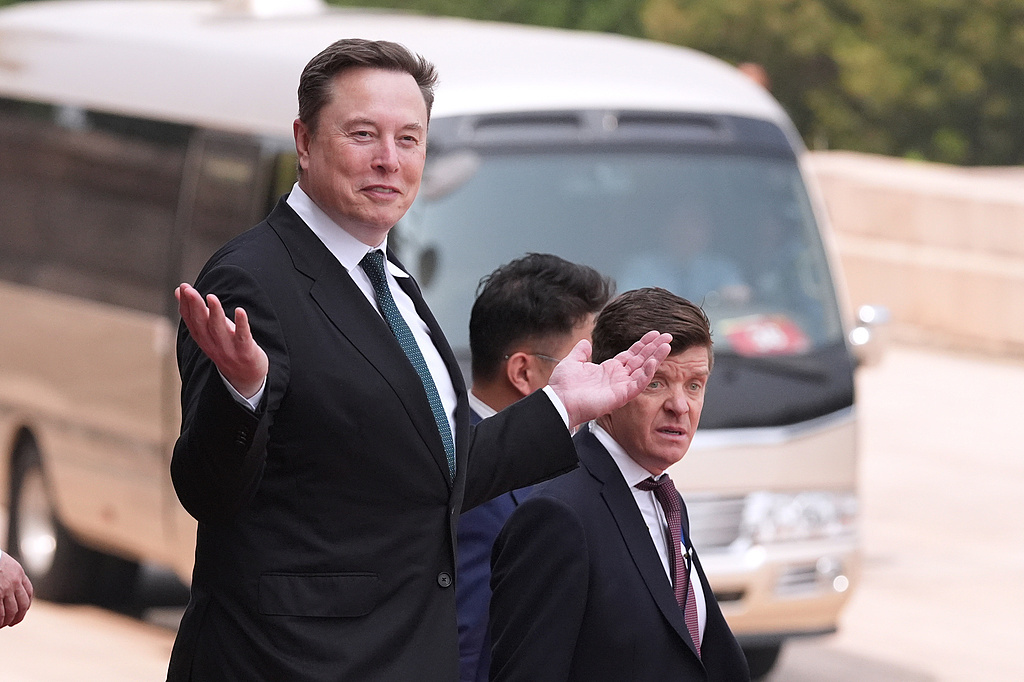
According to media reports on September 15, local time, at the All-In Summit hosted by a well-known technology podcast in Los Angeles from September 13 to 15, SpaceX CEO Elon Musk attended remotely via video.
He proposed a governance framework on the security issues of cutting-edge AI models:
Leading AI companies test each other's models before they are officially released, and competitors are responsible for discovering and raising security risks.
Musk said that this "peer review" mechanism does not need to wait for new legislation and can be started immediately.
Musk said:
"All AI companies have a test harness, which is a series of tests used to check whether the model will help create biological weapons, nuclear weapons, or whether there is deliberate deception."
"Having each company run it through someone else's testing tool may be the best thing we can do to ensure our own security, and it should be promoted as soon as possible."
He described this as meaning that AI companies no longer "grade their own work," but at least have it graded by competitors, and can sound the alarm if problems are discovered.
At the specific operational level, Musk proposed that model developers should provide API access to peers before publishing. If the issues pointed out are not resolved, competitors can publicly declare that the model is unsafe for release.
In his view, this
public questioning will bring huge legal liability pressure and thus form a de facto binding force
.Musk also emphasized that
for this framework to be truly effective, China must be included
. He pointed out: "We should probably reach an agreement with China, which would be a kind of peer review: leading AI companies test each other's models before releasing them."When talking about the security investment of various companies, he gave a relatively positive evaluation of Anthropic, a large AI model developer: "Overall,
I think Anthropic has invested more effort in security than ChatGPT developer OpenAI.
But even Anthropic admits it has concerns about its model. "The "mutual testing" mechanism mentioned by Musk has already taken shape in the industry. On August 27, 2025, according to reports released simultaneously on the official websites of the two companies, OpenAI and Anthropic announced the results of a joint security assessment.
The two parties opened API permissions to each other and relaxed some external protection measures. They used their own internal alignment (that is, whether the model behavior conforms to human intentions) and security testing to evaluate the other party's publicly released models and announced the results at the same time. This is seen as the first time a leading laboratory has opened up internal testing to direct competitors.
Comments