
Abstract:
Community conflicts triggered by the expansion of a data center in Mississippi by the American artificial intelligence company xAI have further escalated. Local residents have alleged that the continuous noise and vibration generated by the gas-fired power generation facilities in the data center seriously affects daily life. The latest reports show that real estate agents carrying out acquisitions on behalf of xAI are proposing house purchase plans to nearby residents, and some plans require homeowners to agree not to participate in a class action lawsuit against the company. The move could lead to a massive housing change in a community called Colonial Hills in Southaven.
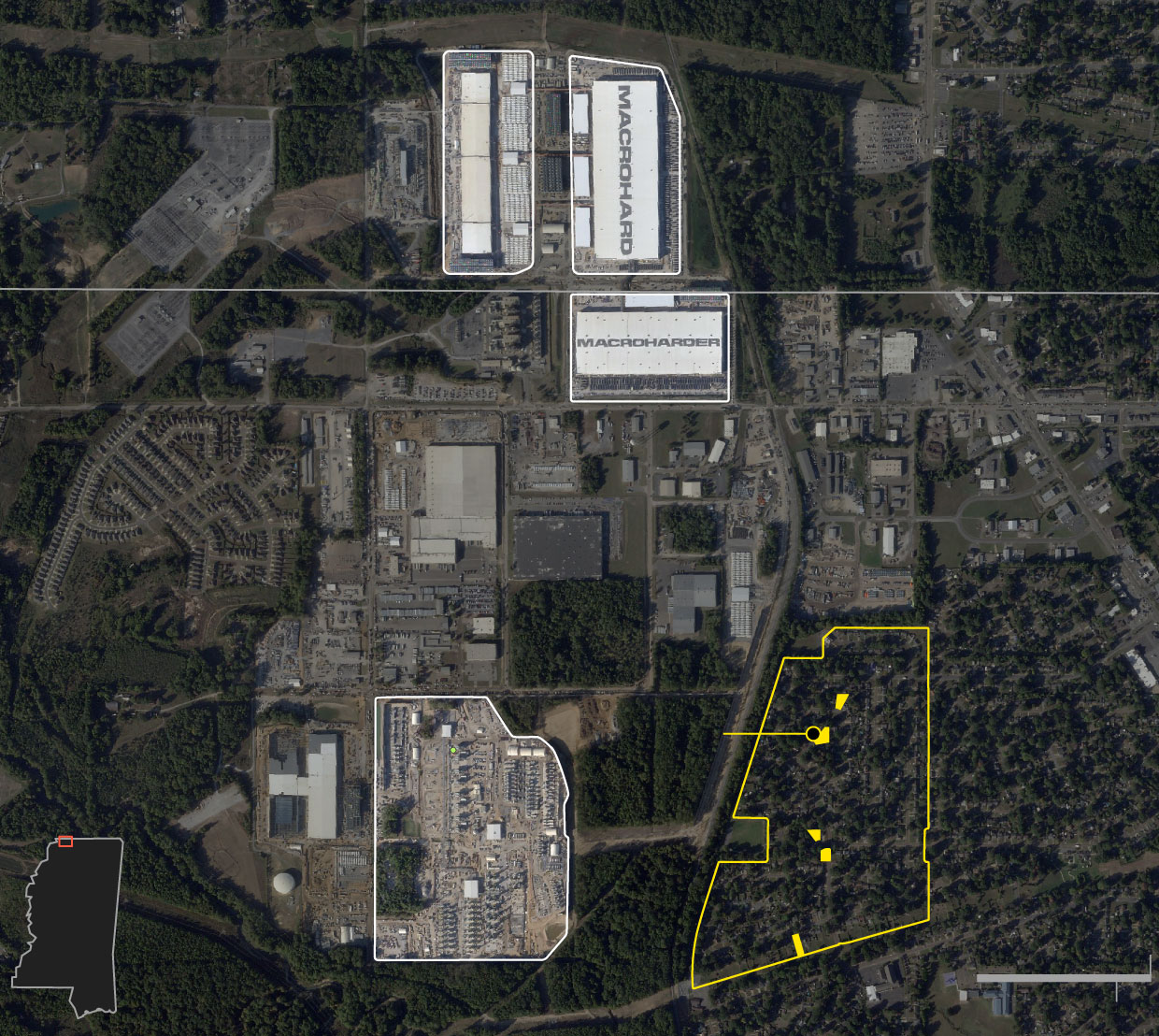
According to a report by The Guardian on October 28, xAI, through its subsidiary MZX Tech, entrusted real estate agents to contact residential owners near the data center and propose a plan to acquire the houses. The relevant letter stated that the company purchased surrounding properties due to business needs and was willing to purchase qualified residences, but the transaction conditions included the homeowners giving up some of their rights related to related class actions.
According to a conversation recording provided by a resident, a real estate agent mentioned that the acquisition target may reach 418 residences, of which 18 owners have already agreed to sell. xAI did not respond to media inquiries about this specific number and acquisition plan. Local real estate registration records show that MZX Tech has purchased at least five homes in the community since October 9.
The community involved in this acquisition plan is located in Southaven, Mississippi, close to the supporting power generation facilities built by xAI for the artificial intelligence data center. Southaven, which borders Memphis, Tennessee, is an important part of the continued expansion of Musk's artificial intelligence infrastructure in the Memphis area.
At the heart of the dispute is the ongoing noise and vibration generated by the gas turbines that power the data center. Local residents said that when these devices are operating, they emit high-frequency buzzing sounds and low roars similar to those of airplanes flying over. Some of the sounds are almost non-stop day and night, which has affected sleep, quality of life and home values.
In June this year, three residents filed a class action lawsuit in federal court, accusing xAI, SpaceX and their related subsidiaries of failing to effectively control the noise generated by power generation facilities and constituting a public nuisance. The plaintiffs hope to seek compensation on behalf of a group of perhaps more than 10,000 people for emotional distress, property devaluation and other losses allegedly caused by long-term noise. The relevant charges have not yet been finalized by the court.
One of the plaintiffs, Jason Haley, said that he had lived there for 20 years and had not considered himself a social activist before, but the continuous noise had seriously disrupted his life. He said that the high-frequency sounds at night made it difficult for him to fall asleep. Sometimes he had to leave the house or play music to cover up the noise until he was exhausted before falling asleep.
Hailey also said that he had tried to communicate with the local government, but felt that his demands had not been effectively responded to. The Mississippi government supports investment in the artificial intelligence industry, and Governor Tate Reeves has linked restrictions on data center development to U.S. concessions in technology competition. Haley expressed dissatisfaction with this, believing that residents' demand for noise reduction does not mean that they are opposed to technological development, but that they hope that companies will take responsibility for the impact of their facilities on the community.
xAI denied the accusation of noise nuisance. The company has previously stated that it attaches great importance to maintaining good relations with surrounding communities, and that it has adjusted the output power of power generation equipment and built sound insulation walls and other facilities to reduce the impact of noise. However, there are still clear differences between residents and companies on whether existing measures are sufficient to solve the problem.
Another controversy caused by this residential acquisition plan is the relationship between selling the house and giving up the right to litigate. Homeowners will need to agree as part of the deal to release claims related to a related class action lawsuit, according to letters some residents received. For residents who wish to continue participating in the lawsuit and ask the company to change the way it operates, this condition may directly affect whether they can continue to pursue relevant liability.
Some residents have accepted the takeover offer, while others are still considering it. At the same time, tenants in the community face a different situation: they do not own their homes and therefore cannot receive compensation by selling their houses, but if they still live in areas affected by noise, their daily lives may still be disrupted. Lawyers representing residents said eligible tenants could also be included in a potential class-action lawsuit.
Noise lawsuits are not the only legal battles surrounding the data center. In April this year, the Mississippi chapter of the National Association for the Advancement of Colored People (NAACP) sued xAI separately, accusing it of violating the Clean Air Act when it used natural gas turbines to power a data center in Southaven. The organization believes that the company did not obtain necessary permits when building and operating related facilities, nor did it use legally required pollution control technologies, which may pose air pollution risks to nearby communities that are dominated by black residents.
The environmental lawsuit involves approximately 69 gas turbines. The Mississippi Department of Environmental Quality previously considered some of the equipment to be temporary, portable facilities and therefore did not require air emissions permits in the same way as fixed power generation facilities. As the operation period of the temporary equipment has been extended, this determination and its legal basis have also been questioned by environmental groups.
The U.S. Department of Justice subsequently applied to intervene in the environmental lawsuit and tried to push for the case to be dismissed on the grounds that it involved the federal government’s authority to enforce the Clean Air Act and the importance of related data centers to the U.S. economy, energy, and national security. In October, a federal judge allowed the Justice Department to intervene but rejected the government's request to dismiss the case outright. This means that relevant environmental disputes will continue to be heard.
Noise lawsuits and air pollution lawsuits target different issues, but both revolve around the same plan to expand artificial intelligence infrastructure. The former focuses on the impact of equipment operation on residents' lives, sleep and property values, while the latter focuses on the emission permit and pollution control requirements of gas turbines. In both cases, final judgments on all disputes have yet to be reached.
xAI and its related companies continue to expand the size of data centers in the Memphis area, reflecting the demand for artificial intelligence computing that is driving large technology companies to rapidly build new power and computing infrastructure. Training and running advanced artificial intelligence models requires a large amount of electricity, and the power supply capacity, access speed and infrastructure construction progress of the local power grid will affect the expansion plan of the data center. The use of on-site gas turbines can alleviate power supply pressure to a certain extent, but will also bring about noise, air emissions and land use disputes.
For residents of Colonial Hills, the residential acquisition plan has added to the debate over noise and environmental impact issues of property rights, litigation rights and the future direction of the community. If the scale of acquisitions continues to expand, the community's residential ownership structure may change significantly; however, at this stage, it is not yet certain how many houses will eventually be sold, nor whether the entire community will be included in the company's acquisition scope.
This controversy reflects the increasingly prominent contradiction between the rapid expansion of the artificial intelligence industry and the rights and interests of local residents. Data centers can bring capital investment, infrastructure construction and related economic activities, but their power supply facilities may also have long-term impacts on surrounding communities. As related litigation continues, how courts deal with issues such as noise nuisance, air emissions, and residents’ litigation rights will affect how such large-scale artificial intelligence projects are constructed and operated in American communities in the future.
Comments