
Abstract:
Nvidia is entering into preliminary negotiations with Reflection AI, an American artificial intelligence start-up, regarding potential acquisitions or further expansion of investment. The transaction may take the form of a comprehensive acquisition, additional equity investment, providing more chip and computing power support, or hiring employees and obtaining technology licensing. Nvidia has previously invested US$800 million in Reflection AI and is one of its largest shareholders.
Informed sources revealed that the two parties may reach an agreement in the next few weeks. Reflection AI was valued at US$25 billion when it raised money in March this year, and the open-weighted AI model it developed is regarded by the U.S. government as an important technical resource to compete with low-cost competitors such as DeepSeek.
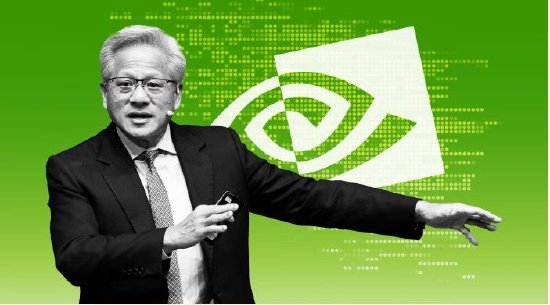
Nvidia is considering multiple transaction options and may avoid lengthy antitrust review through talent acquisition
Negotiations between Nvidia and Reflection AI are still in the early stages, and the two parties have not yet determined the final form of the transaction. One possible solution is a so-called "acqui-hire", in which Nvidia recruits core Reflection AI employees and obtains licensing rights to related technologies without having to complete a traditional acquisition of the entire company.
This method has been favored by large technology companies in recent years. The main reason is that it can obtain key technologies and talents while reducing the antitrust review and regulatory procedures that may be triggered by comprehensive acquisitions. Nvidia has experience with similar transactions before. In December, the company struck a $20 billion deal with chip design firm Groq through a similar arrangement. However, the deal was sued by some Groq employees this week.
In addition to comprehensive acquisitions or talent acquisitions, NVIDIA may also purchase further shares of Reflection AI or provide it with more chips and computing resources to expand cooperation between the two parties.
Currently, Nvidia has invested US$800 million in Reflection AI. Other investors include Sequoia Capital, Disruptive and 1789 Capital, of which 1789 Capital’s partners include Donald Trump Jr., son of US President Trump.
Informed sources said that the two parties may reach an agreement in the coming weeks, but the specific terms of the transaction have not yet been determined.
Reflection AI is valued at US$25 billion and launches the first open-weighted AI model
Reflection AI was founded in 2024 by Misha Laskin and Ioannis Antonoglou, both of whom had previously participated in the development of Google's Gemini artificial intelligence model. The company focuses on open weighted artificial intelligence models and automated software development technology. In March this year, Reflection AI completed a round of financing, with the company valued at US$25 billion.
This week, Reflection AI released the first customizable AI model for the public, which mainly serves programming and AI agent applications and runs on NVIDIA chips. Reflection AI said that the performance of its new model has reached a level comparable to that of GLM-5.2. The company hopes to provide developers and enterprises with lower-cost and more flexible deployment methods of artificial intelligence technology through an open weight model.
Compared with the model that relies entirely on cloud commercial APIs, the open weight model allows users to customize according to their own needs and run on their own hardware, so it has certain advantages in terms of enterprise deployment costs, data control and technical flexibility.
NVIDIA already has the Nemotron model, but it still lacks a self-developed cutting-edge AI model
NVIDIA has continued to expand its investment in artificial intelligence models and software in recent years to consolidate its core position in the global AI industry. Currently, NVIDIA already has a series of open-weighted AI models called Nemotron, but it has not yet developed an independent basic model with industry-leading competitiveness.
In July this year, Nvidia CEO Jensen Huang called on the United States to establish a local open weighted AI ecosystem, believing that this system is crucial to promoting technological innovation and economic development nationwide.
In September this year, Nvidia, which is valued at approximately US$5.5 trillion, agreed to acquire Hugging Face, an AI model and data set platform, for US$13 billion to further expand its presence in model development and distribution.
If it ultimately acquires Reflection AI, Nvidia will have the opportunity to directly obtain its model research and development team, technical achievements and related business partnerships, thereby strengthening its competitiveness in the open weight model market. At the same time, Nvidia has invested tens of billions of dollars in recent years in large AI laboratories such as OpenAI, the new cloud computing company Nebius, and many start-up companies.
While expanding NVIDIA's AI industry layout, these investments also promote related companies to increase their demand for computing infrastructure, and NVIDIA chips are still an important hardware resource for training and running advanced AI models.
Reflection AI has cooperated with the Pentagon and the US government regards it as an important AI technology asset
Reflection AI’s strategic value is also reflected in the U.S. government’s increasing emphasis on open weight models.
As the United States competes with other countries for advantages in artificial intelligence technology, the U.S. government hopes to support internationally competitive local open weight model developers to reduce reliance on overseas low-cost AI technology. Reflection AI has established partnerships and agreements with the U.S. Departments of Defense and Energy to develop artificial intelligence models for U.S. allies, including South Korea.
This background of government cooperation also makes Reflection AI a strategically significant enterprise in the U.S. artificial intelligence industry.
For Nvidia, further investment or acquisition of Reflection AI will enable it to gain stronger basic model research and development capabilities in addition to its existing chips, computing infrastructure and open model ecosystem.
This negotiation also reflects that Nvidia is further expanding its AI industry layout: by investing in model developers, cloud computing companies and software platforms, it will promote the development of artificial intelligence applications and expand demand for advanced computing chips. If the two parties finally reach an agreement, Reflection AI's technology, R&D team and government cooperation relationships will become important assets for Nvidia to further expand its AI software business.
Comments