
Abstract:
Nvidia is adjusting its DGX Spark product line for the local AI computing market and launching a 64GB version with lower capacity and a relatively more affordable price. The latest news shows that the 64GB DGX Spark equipped with the GB10 Grace Blackwell super chip is expected to be launched on October 23, with a starting price of US$4,999. At the same time, the prices of DGX Spark and its OEM version, originally equipped with 128GB unified memory, have continued to rise recently, and the actual selling price of some products has reached US$7,000 to US$9,000.
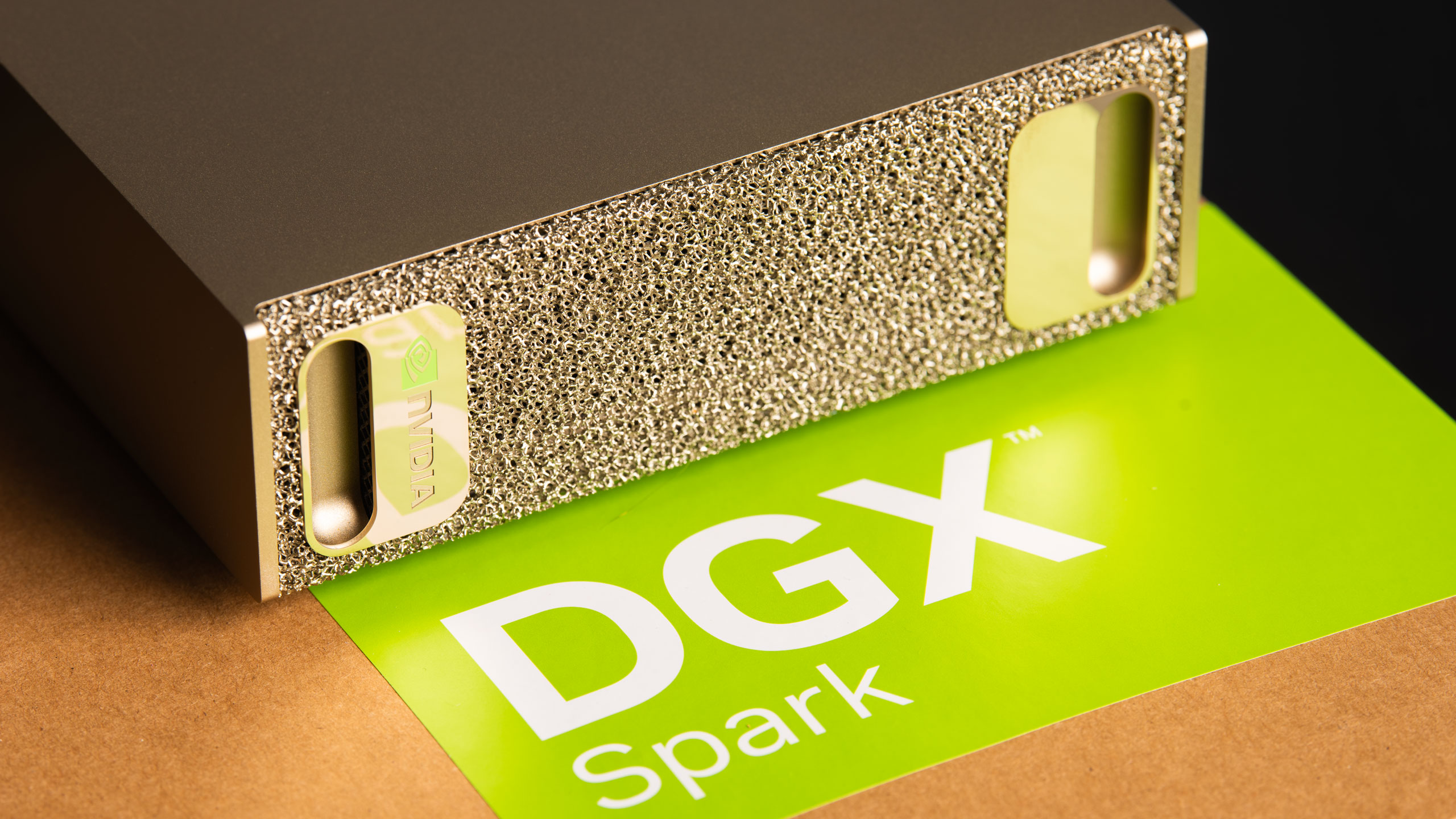
The launch of the 64GB version is mainly in response to the recent continued increase in memory prices and changes in memory capacity requirements for local AI models. One of the initial core selling points of DGX Spark is the 128GB LPDDR5X unified memory, which allows the CPU and GPU to share the same set of memory resources to run larger-scale AI models without relying on independent graphics memory.
But with the rapid development of AI models, not all models require 128GB of memory to run. Nowadays, some efficient models with tens of billions of parameters can already run in about 32GB of memory. Although the context length and operation mode may be subject to certain restrictions, 128GB is not necessarily a requirement for users who only need to perform local inference.
At the same time, the outbreak of the AI industry is driving up global memory demand, and the supply of high-performance memory such as LPDDR5X is also affected. For a device that integrates a large amount of memory directly into the system, the increase in memory prices will be directly reflected in the cost of the entire machine. Therefore, NVIDIA is now adding a 64GB version, which is equivalent to providing users with an option to sacrifice part of the memory capacity in exchange for a lower price.
The core hardware of the 64GB version has not shrunk significantly. It still uses the GB10 Grace Blackwell super chip, has a 20-core Arm CPU, and adopts an architecture where the CPU and GPU share unified memory. Memory bandwidth also remains at around 273GB/s, so the biggest difference between the 64GB version and the 128GB version is the available memory capacity, not the change in the computing core itself.
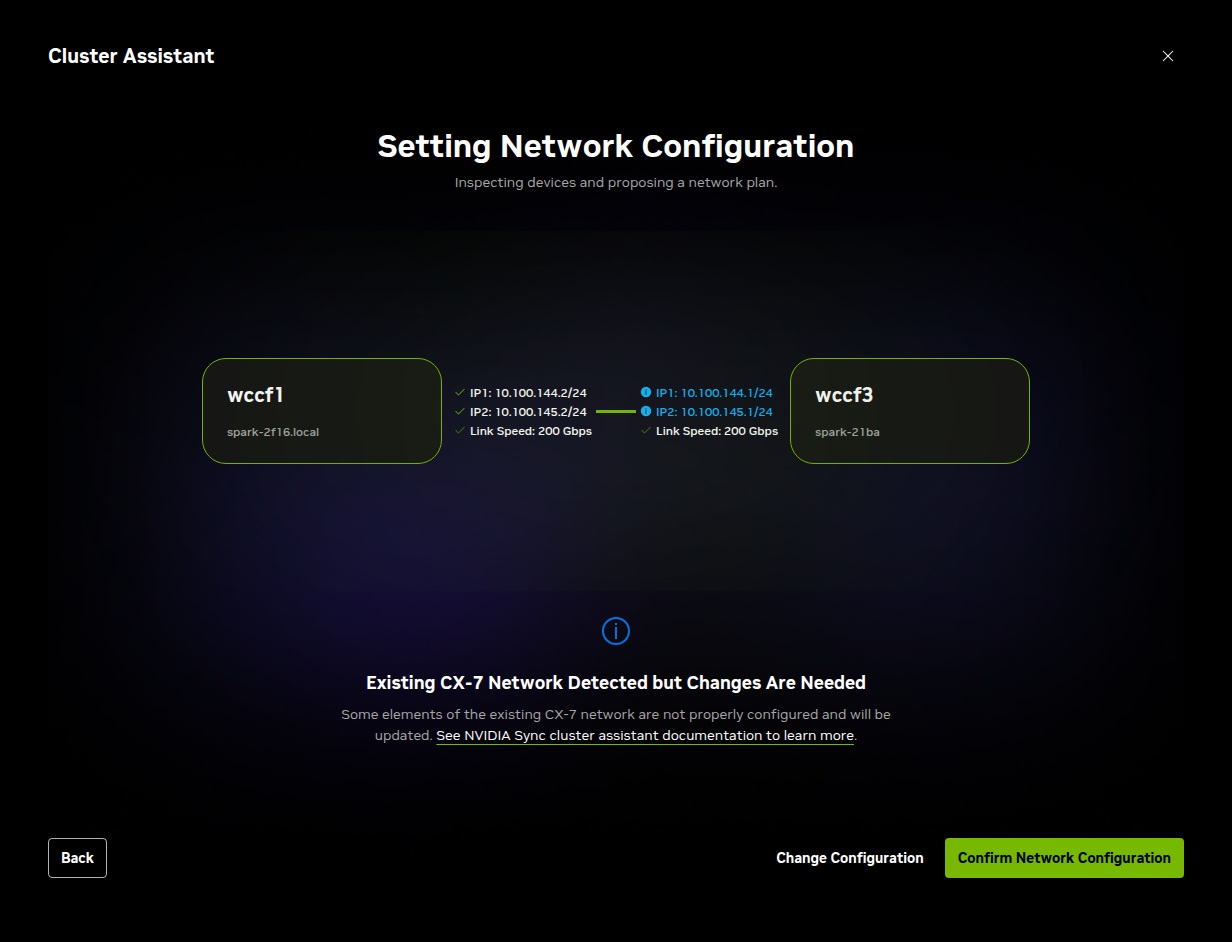
Network connectivity also remains unchanged. The 64GB DGX Spark continues to be equipped with ConnectX-7 high-speed network controller, so multiple devices can form a cluster through high-speed interconnection. For users who need to run models with more than 64GB memory capacity, the overall available memory and computing power can be expanded by combining multiple 64GB DGX Sparks.
NVIDIA also launched a new Sync Cluster Assistant tool to reduce the complexity of multiple Spark networking. In the past, if users wanted to connect two or more DGX Sparks, they needed to perform a certain degree of manual configuration, but the new software can automatically complete the connection and management between devices.
At the same time, NVIDIA has also added Model Launcher functionality to Sync. After the user selects the AI model, the system automatically downloads and starts the model, and connects the model to the OpenCode browser-side programming agent. In this way, a local AI cluster composed of multiple Sparks can be used more directly for code development and other agent workflows.
The 64GB version is priced at $4,999. However, this price is actually not as low as imagined, because the current memory market price has changed significantly, and the actual market price of DGX Spark itself has been fluctuating.
Many OEM manufacturers, including Acer, Asus, Dell, Gigabyte, HP and MSI, plan to launch 64GB versions of GB10 systems. The starting price is also expected to be around US$4,999. The first batch of products is scheduled to be launched on October 23.
In contrast, the price of the 128GB version has increased significantly recently. Due to limited supply, the price of the 128GB GB10 system currently available on the market is approximately US$7,000 to US$9,000, and some models have even had higher retail quotations.
Nvidia’s own DGX Spark Founders Edition was previously priced at US$3,999, but due to tight global memory supply, Nvidia has raised the official suggested retail price to US$4,699. The actual sales price in the market may be further higher than this figure. In other words, the actual price of a 128GB DGX Spark today is much higher than the $3,999 when it was originally released.
This is also an important background for the launch of the 64GB version. For many local AI users, if the main goal is to run small and medium-sized large language models, code models or AI agents, then spending thousands of dollars to buy the 128GB version is not necessarily cost-effective. The 64GB version can retain the computing power of GB10 and NVIDIA's complete software ecosystem, while reducing the cost pressure caused by large-capacity memory.
However, for users who need to run larger models or fine-tune local models, the 128GB version still has obvious advantages. Especially as the size of model parameters continues to increase, more unified memory means that larger models can be loaded directly without the need for frequent quantization, tiered loading, or splitting the model across multiple machines.
In addition, the 128GB version is still suitable for use in multi-machine clusters. Users can connect multiple DGX Sparks through ConnectX-7 to combine the memory and computing capabilities of multiple devices. Therefore, Nvidia did not replace the 128GB version with the 64GB version, but formed a more obvious product hierarchy.
From a practical application perspective, 64GB is enough to cover a considerable portion of local AI workloads. For an efficient model of about 27B, 32GB can already complete local reasoning under certain conditions, while 64GB can provide more context space and running margin. If users primarily use quantized models for inference, 64GB can handle even larger models.
But if it involves model fine-tuning, long context, large-scale agent workflows, or multiple models running simultaneously, 128GB can still provide significantly more space. Therefore, the difference between 64GB and 128GB is ultimately not a pure performance difference, but more about how large a model can be accommodated and how much data can be processed simultaneously.
The core competitiveness of DGX Spark is not just memory capacity. GB10 adopts Grace Blackwell architecture, equipped with Blackwell GPU and fifth-generation Tensor Core, and can provide FP4 AI computing performance of up to approximately 1 PFLOP. The system uses a small chassis of about 150×150×50 mm, weighs about 1.2 kg, and consumes about 240W.
This design places DGX Spark between traditional workstations and large AI servers. It does not rely on independent graphics cards and system memory to handle AI tasks separately like ordinary gaming PCs. Instead, it uses a unified memory architecture to allow the GPU to directly access the entire system memory space. This is also one of the key reasons why it can provide 128GB or even 64GB of large-capacity AI memory in such a small size.
At the same time, NVIDIA is also promoting the RTX Spark product line to enter the market. RTX Spark also uses Grace CPU and Blackwell GPU, and provides up to 128GB of unified LPDDR5X memory, but its positioning is more biased towards Windows PC, creators and AI agent applications. NVIDIA expects that related desktop and notebook products will be launched in October 2026.

This means that the competition facing DGX Spark is changing. Previously, if users wanted to buy a small local AI supercomputer, there were few direct alternatives to DGX Spark; now as RTX Spark and platforms such as AMD and Apple continue to increase unified memory capacity, the number of local AI hardware consumers can choose from is increasing rapidly.
However, what currently limits the price of such devices is not just the GPU or SoC itself, but high-capacity, high-speed memory. For unified memory architecture devices such as DGX Spark, 128GB LPDDR5X is part of the chip design, and unlike ordinary desktop computers, memory modules can be purchased at any time for upgrade. Therefore, once memory prices rise significantly, the cost of the entire machine will also be directly affected.
From this perspective, Nvidia’s launch of the 64GB version is not just a simple product expansion, but a response to the reality of the current AI hardware market. As AI models continue to be optimized, more and more models can run with less memory, and the price of high-capacity memory continues to rise. 64GB may become a more realistic capacity choice for some local AI users.
For Nvidia, the 64GB version can also expand the potential user base of the GB10 platform. Users who were originally unable to accept the DGX Spark because of the high price of the 128GB version can now choose the 64GB model for $4,999. If memory prices continue to rise in the future, this capacity tiering strategy will also allow Nvidia to more flexibly control product costs.
As a result, DGX Spark is gradually developing from a single 128GB local AI supercomputer to a platform covering different memory capacities and price ranges. The 64GB version does not make the 128GB version meaningless, but it may become an entry choice for more local AI developers to enter the GB10 ecosystem. As AI models increasingly emphasize efficiency and the memory market continues to be tight, whether local AI hardware should prioritize computing power or memory capacity in the future will become an increasingly important issue for consumers when choosing such devices.
Comments