
Abstract:
According to Business Insider, OpenAI CEO Sam Altman said in a speech at Stanford University that the attitude of many mathematicians towards OpenAI’s entry into this field has changed from the initial pessimism of “we are finished” to accepting the inseparable role of AI in numbers and proof research. He faced hundreds of students who were insecure about their career prospects.
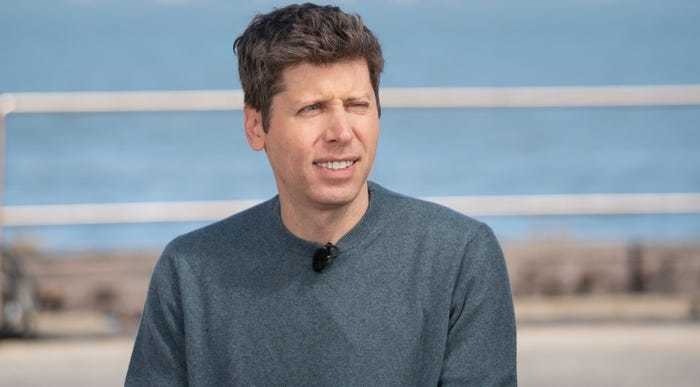
Altman likens this process to mourning: the first day is disbelief, "We are done, this field is over, let's let graduate students change majors"; the third day may be anger, "OpenAI is terrible at doing this"; by the fifth day, many people will say: "I will have a different, but hopefully better, career path as a mathematician."
Ultraman’s optimistic judgment is in sharp contrast to the “survival-level transformation” described by some in the mathematical community. In September this year, OpenAI suddenly broke into the field of mathematics, announcing that its model solved the
Navier-Stokes equation
(Navier-Stokes equations) - a famous problem that has stumped top figures in mathematics since the 19th century. Two academics, one from New York University and one from Anthropic, accused OpenAI of using data from their chat logs to help crack the problem. Some mathematicians complain that even if the AI model may indeed solve the problem, it does not show the derivation process, leaving mathematicians with less than pleasant verification work.The storm did not subside. A group of undergraduates at the California Institute of Technology, who are worried that AI is rapidly subverting the field of mathematics but want to avoid being marginalized, launched a "mathathon" to encourage participants to use AI to solve long-standing unsolved problems.
More than 700 scholars
Sign an open letter denouncing the competition as promoting AI "slop" (referring to low-quality AI content). OpenAI subsequently withdrew its sponsorship. Organizers have since adjusted the rules and the competition is scheduled to take place in November.Terence Tao also expressed similar concerns. The UCLA math prodigy earned his Ph.D. at the age of 20. He said that the
"romantic era" of mathematics is over
, top scholars are adapting to a new process like him: verifying the results of AI work rather than solving problems alone. After OpenAI announced this month that it had solved more than 700 problems, Tao said: "Something is being lost."Ultraman, meanwhile, is on the other side of the debate, maintaining a subversive optimism. When talking about AI prompting companies to reorganize their workforce, he said:
“I don’t think there will be an employment apocalypse”
. But in the field of mathematics, Altman believes the impact is coming faster than in other disciplines and industries. "This is the fastest I think any of us have ever seen a field go through this cycle."
Comments