
Abstract:
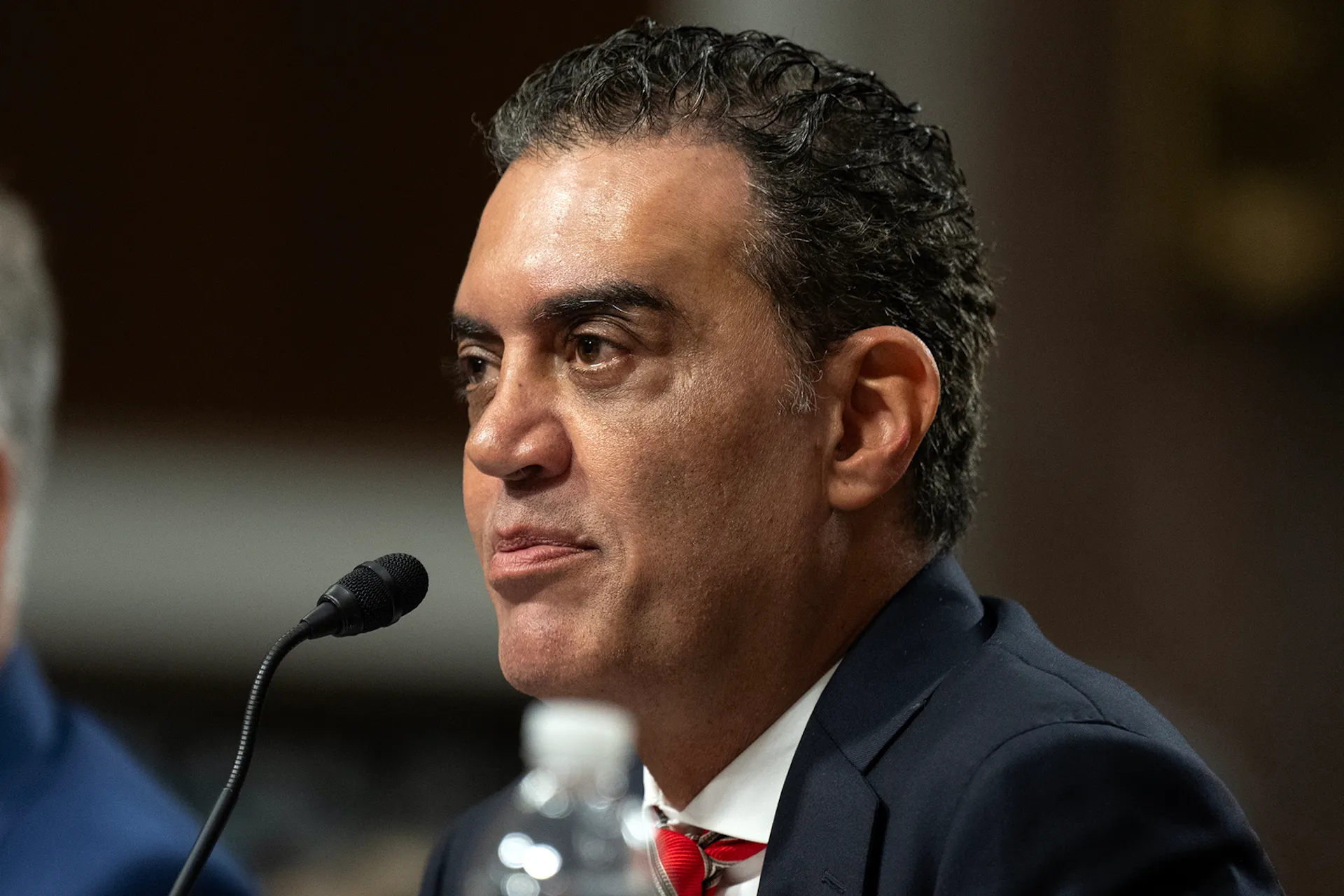
Senior officials of the U.S. Department of Defense recently publicly refuted the "doomsday theory" that AI may destroy humanity, believing that related concerns stem from fear of change, and reiterated that Anthropic is still a supply chain risk identified by the Department of Defense. According to media reports on September 10, local time, Emil Michael, chief technology officer of the U.S. Department of Defense and undersecretary for research and engineering, publicly responded to the recent rising concerns about AI risks that day.
Former Anthropic engineer Jacob Coxon previously warned in a post on social platform
Michael mentioned Coxon's post at a defense industry conference in Washington, D.C. The post has now been viewed more than 150 million times.
Michael said: "It's easy for people to fall into this doomsday cycle of thinking, 'We're going to put 40% of Americans out of work, we're going to destroy humanity.' At the end of the day, it's the fear of data centers, the fear of change, all wrapped up in one well-written tweet."
He pointed out that
The potential harms of AI mentioned in Coxon's post can be mitigated through free market mechanisms, industry-wide collaboration, and communication and cooperation with the government.
Coxon published multiple posts earlier this week, saying that OpenAI and Anthropic are "heading straight towards self-improving superintelligence, betting on our lives" and warning that "there will soon be superhuman systems capable of breaking through any system, subverting any field overnight, and gaining real power and resources."
According to media reports, the 27-year-old Coxon is a British man who graduated from Cambridge University with a major in mathematics. He has been engaged in pre-training research at OpenAI and Anthropic for about three years before, and was one of the core contributors of GPT-4o.
Michael was a former executive of the U.S. online ride-hailing platform Uber and is currently leading the effort to accelerate the application of AI in the U.S. military.
The legal battle continues
It is worth noting that on the day Michael made the above remarks, he also talked about the ongoing legal dispute between the Pentagon and Anthropic.
Anthropic is Coxon’s former employer, and the core of the disagreement between the Pentagon and Anthropic lies in how the use of AI should be restricted.
According to media reports on March 10, local time, Anthropic requested that the US military be prohibited from using its models for mass surveillance of the American people or fully autonomous lethal weapons. This was the starting point of the dispute between the two parties.
Michael once participated in leading negotiations between the two parties, but the negotiations broke down earlier this year. The Pentagon rejected the relevant conditions on the grounds of infringing on the military's authority and identified Anthropic as a threat to the U.S. supply chain.
The dispute between the two parties has been transferred to federal court, and Anthropic filed lawsuits in California and Washington, DC.
According to media reports on September 3, local time, Judge Rita Lin of the Federal District Court for the Northern District of California made a ruling in favor of Anthropic on August 27, but the federal appeals court in Washington has not yet made a ruling.
Michael accused Anthropic of deliberately choosing a California court with more liberal political stances to sue, and called another case being heard in Washington "more important." He insisted Anthropic remains a supply chain risk until the Washington case is decided.
The Pentagon previously made two independent supply chain risk determinations for Anthropic based on two different laws. The California court overturned only one of them; the other finding was directly heard by the Court of Appeals for the Federal Circuit in Washington, D.C., as required by law. Therefore, before the judgment in the Washington case is pronounced, the Department of Defense's corresponding risk determination remains valid.
Comments