
Abstract:
ChatGPT developer OpenAI was involved in a public dispute with a mathematician after claiming to have solved a major problem in mathematics. The mathematician had been conducting related research with a researcher at Anthropic, his top competitor. OpenAI announced on Tuesday that an internal model that has not been released to the public has solved the Navier-Stokes equations. The reward for this complex mathematical puzzle is as high as $1 million.
However, Tristan Buckmaster, a mathematician at New York University, accused OpenAI of inappropriate behavior. Buckmaster had previously worked on related research with Anthropic mathematician Levent Alper.
As the controversy brews, CEO Sam Altman defended OpenAI on Tuesday, saying the lab had been subject to "baseless accusations of plagiarism."
This dispute over mathematical breakthroughs not only reflects the continuous improvement of AI system capabilities, but also highlights the fierce competition between OpenAI and Anthropic, which has spread into unexpected controversies.
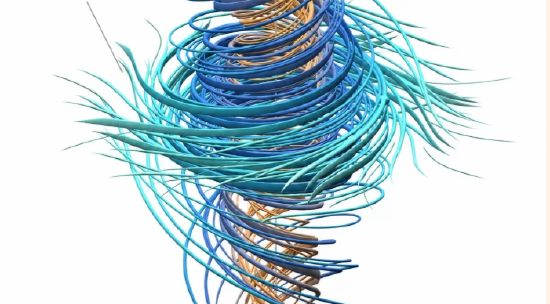
The mathematics controversy began with a blog post published by OpenAI on Tuesday. The article states that the agency found a solution to the Navier-Stokes equation. This equation is one of the seven Millennium Prize problems proposed by the Clay Mathematics Institute and is regarded as the "hardest" problem in mathematics.
OpenAI said that since the end of August, it has been training a new internal model that has "unprecedented performance" in the field of mathematics. The company said that after hearing "rumors" in early September that Anthropic had solved some of the problems, it was inspired to try to use the model to solve all the unsolved Millennium Problems, with a prize of US$1 million for each problem.
OpenAI stated that it later learned that relevant rumors pointed to Alper and Buckmaster. After completing its own research project, OpenAI contacted the two scholars and "proposed to simultaneously release the research results of both parties and recognize their research priorities in a joint statement."
But Buckmaster’s statement is significantly different from OpenAI’s version. The New York University professor said on Tuesday that OpenAI used their existing research ideas and invested massive computing resources to solve the problem and complete the results before he and competing product Anthropic.
Major laboratories and AI practitioners generally face the dilemma of shortage of computing power and the continuous increase in running costs of cutting-edge models. OpenAI said it has invested millions of dollars in solving this problem.
Buckmaster and Alper announced three proofs on Tuesday that are considered milestones closely related to the Navier-Stokes equations, including a breakthrough in the field of Euler's equations.
The two used a variety of models in their research, including tools from Google Deep Thinking, Anthropic and OpenAI. Buckmaster believes that their research and problem-solving ideas have laid the foundation for solving the Navier-Stokes equation.
Buckmaster said that he and Alper conducted research in their personal capacity and "set out to tackle the problem in a low-key manner" with the help of ideas proposed in past academic papers. "As far as I know, almost no one else is doing this research. It is impossible to just give the model a problem description and figure out this research route in just a few days."
He recounted a conversation with OpenAI researcher Sebastian Buback. Buckmaster said Bubeck twice requested that Alper's name be removed from the certification paper on the grounds that Alper was employed by Anthropic. Buback denied this claim.
According to the professor's account, the conversation became heated after Buckmaster informed Buback that he planned to make the dispute public.
Altman posted on the
Altman added: "When we learned that they had conquered the Euler equation but had not yet solved the Navier-Stokes equation, we proposed that they should be the first to publish the results and claim the prize; we also proposed that Tristan Buckmaster could be the first author of the rewritten OpenAI proof paper."
Altman said that it would be difficult to make the same cooperation proposal to Alper, who works at Anthropic, because the other party "is unwilling to communicate and cooperate with us in any case." But he added that OpenAI is "open to considering other solutions."
Anthropic did not respond to a request for comment.
Alpoer posted on the
He added: "This is quite bizarre, lacks strategy and is completely unnecessary."
Both researchers suggested that because they have used OpenAI's tools, their research data may provide a reference for the OpenAI laboratory's model problem-solving ideas.
OpenAI said: “To solve this problem, we did not retrieve any specific user data”, but it could not “exclude that de-identified data from their product usage behavior played a certain role in model optimization”. OpenAI also stated that its proof process and research conclusions are different from the research results of Alper and Buckmaster.
Comments