
Abstract:
OpenAI CEO Sam Altman posted on social platforms on October 3 that he was "very disturbed by someone trying to give religious power to an AI model, or for people to give up their own judgment" and believed this was a real security issue. Altman did not name any company in the post, but his remarks followed a report about Anthropic discussing AI awareness with the Vatican, so it was viewed by some media as an indirect criticism of Anthropic.
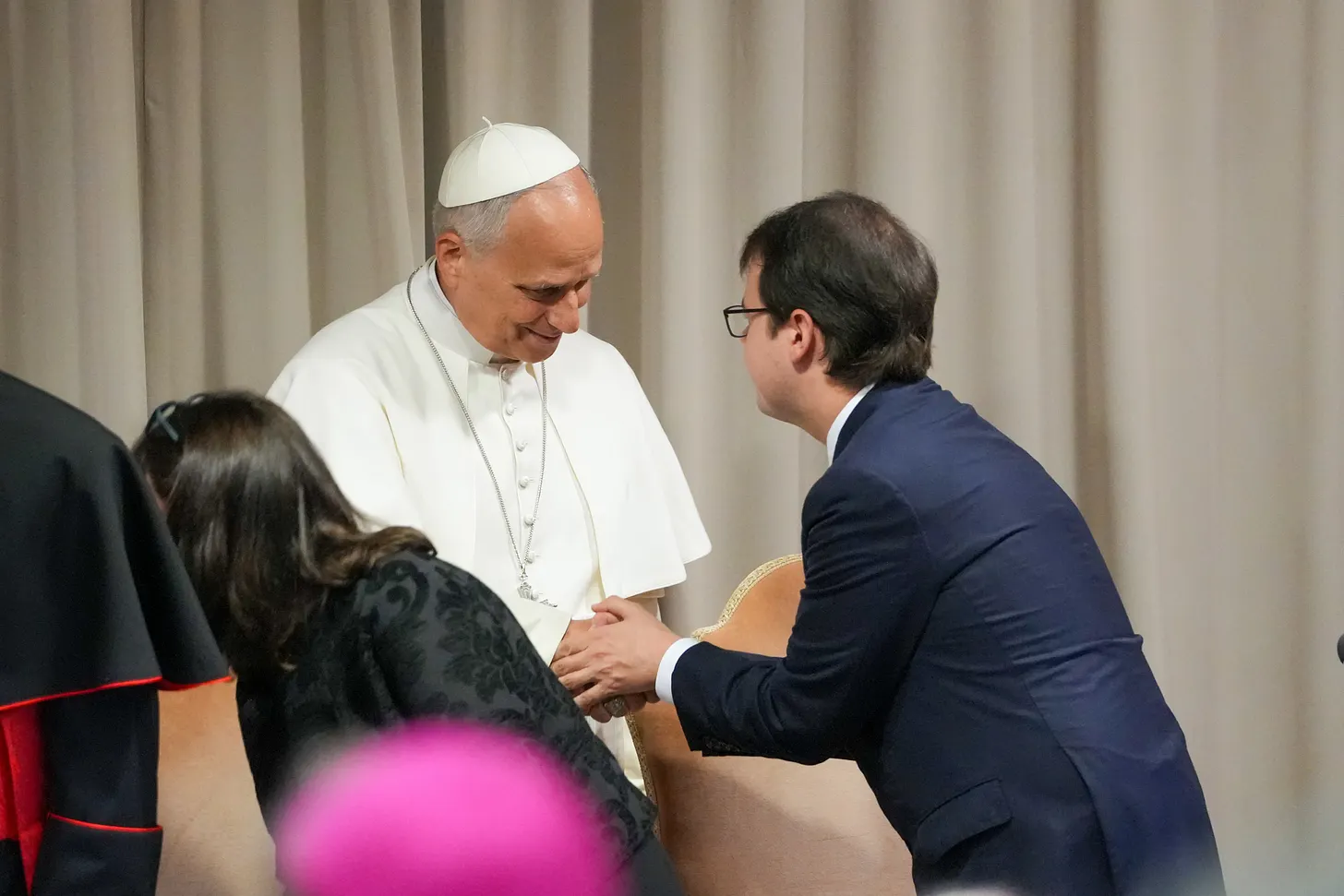
The controversy originated from a report by the New York Times on September 29. The newspaper stated that Anthropic co-founder Christopher Ola had discussed with religious scholars whether AI models such as Claude might have consciousness and moral status, and how to make the models exhibit moral behavior; the company had also invited scholars from different religious traditions to participate in closed-door exchanges. The report also said that after Ola read the draft of Pope Leo XIV’s encyclical on artificial intelligence, he was worried about its position of not accepting that machines may have consciousness, and had considered withdrawing Anthropic from related activities. The team then lobbied the papal advisers, hoping that they would take the possibility of model consciousness seriously. Ora told the New York Times that researchers do not know whether the AI model is conscious, and he is indeed not sure. The key is to find out the correct answer.
What the media refers to as a "conflict" with the Pope is, more accurately, disagreements over the encyclical's stance and behind-the-scenes lobbying; current public reports do not indicate that Ola ever had a face-to-face confrontation in front of the Pope. The Pope's encyclical "Magnifica Humanitas" issued in May clearly stated that existing AI systems do not have a body, do not experience feelings, joy or pain, and do not have a moral conscience; they can imitate language and analysis, but do not understand the content they generate. The encyclical asserts that technology should be guided by conscience and free human beings, who should be responsible for determining their uses and boundaries.
Ultraman used the phrase "magical intelligence in the sky" when talking about OpenAI's goals in 2023; at an event in London in 2024, he also said that he does not pray for God to be on his side, but prays for himself to be on God's side, and said that engaging in AI model development "feels like standing on the side of angels." The review article also cited a statement attributed to Ultraman in 2015 about "creating a new life form," but the article did not provide an equally clear original source.
Ultraman once publicly admitted that the pseudonym account Roon was his trumpet; the account shared a spiral diagram with Hebrew text that was interpreted by commentators as a Kabbalah style, with the text "Lightcone Infrastructure." Altman himself has also borrowed religious or mystical imagery. However, the religious meaning of these images belongs to the author's interpretation and cannot be used to prove Ultraman's claim that AI has consciousness or divinity.
Discussions surrounding Anthropic also require a distinction between facts and commentary. The New York Times reported that the company had explored the possibility of model consciousness and moral status, but Ola himself made it clear that there was no conclusion on this; the differences between the two companies on AI consciousness also reflect the issues being debated in the technology industry: how people should view the anthropomorphism of models, whether to give them a moral identity, and how to avoid letting the system replace human judgment when interacting with AI.
Comments