
Abstract:
Microsoft CEO publicly responded to the global service outage incident. On November 17, local time, Microsoft CEO Satya Nadella responded to the global service outage that occurred last week at the Ignite annual technology conference, admitting that Microsoft still has work to do in improving service resilience, and promised to continue to learn lessons and improve system reliability.
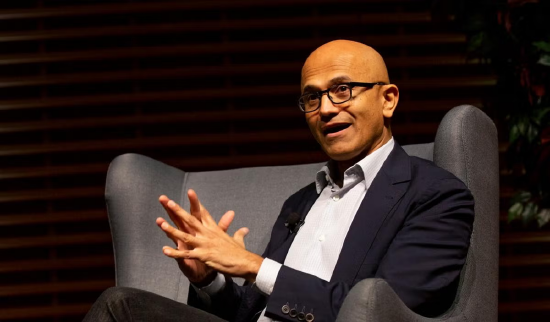
Nadella said at the opening of the conference, "In a sense, the events of last week once again reminded us that digital infrastructure is critical to the functioning of the world. We know that you place trust in our services and take this responsibility extremely seriously. Against this background, I know that we still have a lot of work to do to provide you and the world with resilience. We are committed to learning from this and continuing to improve."
He then expressed his gratitude to employees and said, "In addition, I would like to thank each of you for the efforts you have made within your respective organizations, which ensures business continuity and resilience. I thank you from the bottom of my heart for everything you have done for your respective organizations and the entire ecosystem."
On November 12, Eastern Time, Microsoft's Microsoft 365, Outlook (email), Teams (instant messaging) and other applications continued to be interrupted for multiple hours, affecting a large number of users. Until 11:10 on November 13, Microsoft confirmed that users were no longer directly affected by the incident, and the entire impact window lasted 23 hours and 50 minutes. According to data from the fault monitoring website Downdetector, at around 1:00 pm Eastern Time on November 12, there were nearly 130,000 Outlook-related fault reports. Failure reports covered 74 countries and regions in about an hour.
As for the cause of the failure, Microsoft previously made it clear in a company statement: "This is a technical issue that has nothing to do with cyber attacks or AI/agents."
According to a report released by Microsoft on November 15, the failure was triggered by the superposition of three factors: a software flaw that was deployed in July and had been latent for several months, an increase in load caused by switching Teams traffic to the main network gateway, and nearly 14% of the network gateway's server capacity being temporarily unavailable due to another independent issue that occurred the previous day.
Microsoft said it has completed code rollback, increased infrastructure capacity, strengthened monitoring and improved traffic distribution protection measures to reduce the risk of similar failures happening again. The company expects to release a final accident report on November 20 to further disclose the investigation results and long-term corrective measures.
At the same Ignite conference, Microsoft also announced the launch of six dedicated AI models, covering areas such as programming, network security, image generation and speech. Foreign media commented that Microsoft’s move is an attempt to compete with OpenAI and Anthropic at a lower cost.
Among them, Microsoft claims that the average performance of its self-developed programming model MAI Code 2 in four daily enterprise programming benchmark tests reaches 98% of GPT-6.1 Sol, and the price is about 40% of the latter; compared with Claude Opus 5.5, the performance reaches 96%, and the price is about 5% of the latter. Microsoft emphasized that the model's performance is almost comparable to rival AI models, while costing much less.
In addition, Microsoft has also touted its cybersecurity-specific model, saying it plans to make it available to a select group of customers to help address the proliferation of software vulnerabilities increasingly exposed by artificial intelligence tools.
Mustafa Suleyman, Microsoft's director of artificial intelligence, said in an interview that creating specialized models for different fields can help control costs and can even surpass competing products in benchmark tests in some scenarios.
Comments