
Abstract:
As artificial intelligence tools are deeply embedded in daily applications of the Internet, OpenAI is relying on its huge user base to open up a new business territory. The company recently officially launched the "Sign in with ChatGPT" authentication service, allowing third-party developers and enterprises to use ChatGPT accounts as a unified authentication entrance for their applications. This move marks OpenAI's official entry into the field of digital identity verification, directly competing with technology giants such as Google, Apple, and Microsoft that have long dominated this market.
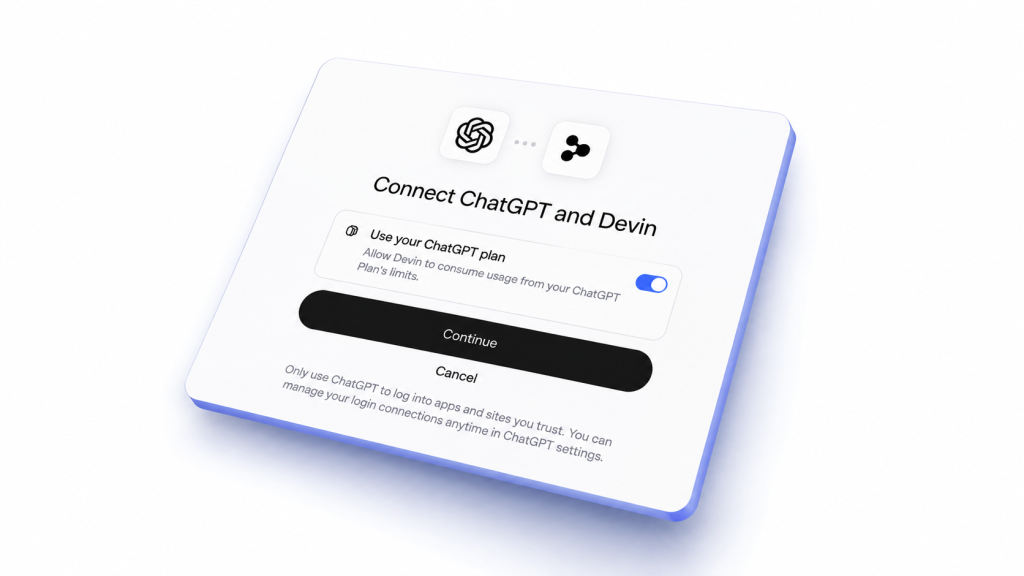
In the modern Internet architecture, single sign-on solutions such as "Log in with Google" or "Log in with Apple" have been widely adopted, which not only simplifies the process of user registration with cumbersome forms, but also builds deep user ecological barriers and continuous stickiness support for the platform. Industry analysis points out that ChatGPT has accumulated hundreds of millions of active users in a very short period of time, laying a solid infrastructure foundation for its evolution into a universal network identity credential. OpenAI launches a dedicated login system this time, aiming to further upgrade itself from a single AI dialogue platform to a key identity hub and ecological entrance at the bottom of the Internet.
At the technical level, this mechanism mainly relies on the security authentication protocols popular in the industry. After third-party services integrate this interface, users can securely authorize login without having to repeatedly create independent passwords. For developers, the introduction of ChatGPT authentication can reduce user churn and simplify identity management; for OpenAI, this service can more extensively embed its technology and brand into tens of thousands of third-party websites, enterprise collaboration tools and external development applications, expanding its control as an underlying account provider.
However, industry insiders also expressed caution about the popularization path of this feature. Compared with the enterprise-level identity management and strict compliance frameworks of established technology giants that have been proven for many years, emerging AI platforms as primary identity providers still need to face strict market testing in terms of data privacy protection, account security defense, and service high availability. In addition, in enterprise-level single sign-on systems, organizations have strict requirements for data sovereignty and internal access control. How to make enterprises trust and adopt the authentication system based on the AI platform will be a core test faced by OpenAI.
Despite facing ecological and compliance challenges, the launch of "Login with ChatGPT" is still regarded as an important benchmark for the evolution of the generative AI platform towards platform and infrastructure. Analysts believe that with the gradual rollout of this function, OpenAI is expected to transform its first-mover traffic advantage in the AI field into long-term account network effects, thereby accelerating the reconstruction of the entire Internet identity verification competitive landscape.
Comments