
Abstract:
As soon as Meta’s Muse became popular, OpenAI’s rival products arrived.
In the early morning of September 30th, Beijing time, OpenAI released the all-weather intelligent agent Dots at the developer conference. Users can create their own Dot directly in the ChatGPT web page, and let it use the cloud computer to browse the web, call applications, and handle multiple tasks at the same time; it can continue to work after leaving the chat window and come back to you when it encounters things that need confirmation.
The conference also brought a collaborative space, ChatGPT Space, allowing team members and AI to work on projects together; the new model GPT-6.1 Sol focuses on cost-effectiveness. OpenAI claims that its capabilities are close to those of the flagship Astra, and the standard API input and output prices are about one-fifth of the latter.
The programming tool Codex has also been updated: the cloud working environment can be used repeatedly, and users can still continue to advance the original tasks when changing devices. Together with the newly added $500 monthly Pro package, OpenAI has updated its personal assistant, team office and development tools this time.
01 Dots: Continuously hand over a job to AI
The tasks OpenAI lists for Dots include monitoring incoming fault reports, testing fixes, or finding out why the application is getting slower. While it handles these tasks, users can also report new things without having to open a separate chat window for each project.
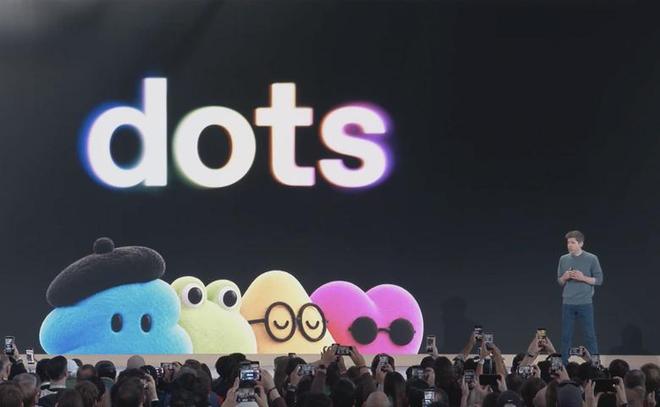
In the opening promotional video, a Dot named Alfred has already begun to take care of these things for users: updating board presentations based on newly received data, sorting out nightly news, and reminding urgent matters before going to work. The wedding cake supplier temporarily canceled the order. It found alternatives and let users decide when to try them.
In the film, the user checks the new design of the website and asks to swap two photos and confirm before publishing; the board materials are ready and can be modified before being sent to the team.
Dot retains the previous task background, so users do not have to explain it from the beginning every time.

Powering Dots is the released GPT-6 Astra. Dot can use applications that the user has connected to; after obtaining authorization, it can also connect to the user's computer.
CEO Sam Altman cited a longer task: migrating the application before the old API is retired. According to the company, Dot will track dependencies, identify areas that need modification, write code, run tests, and finally submit a code change for human review.
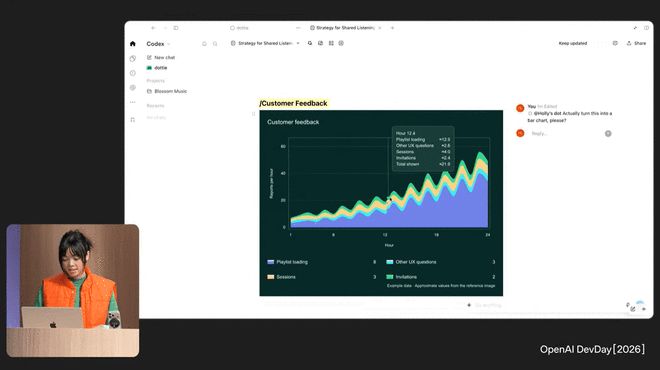
OpenAI employee Holly Li gave a live demonstration using the fictional music application Blossom Music. Her Dot is called Dotty, and she can access Slack and mobilize Codex. When the app is about to go online, Dotty will follow up on schedule adjustments and user feedback, and send over designs that need her review.
The voice demonstration was not as smooth as the promotional video.
Holly simulated asking about the user test situation on the previous night on her way to work. Dotty replied that she was looking for it, but then she still did not give the expected answer. She then changed her instructions and asked Dotty to put the relevant information into the Page. Another demo that asked Codex to build an application also encountered an error. She explained the situation on the stage and continued to wait for the task to run.
Holly also introduced an internal use case of OpenAI: someone sent the session ID and user problem to the feedback channel, and an engineer's Dot received the clue and submitted the repair code. OpenAI engineers already have their Dots fixing dozens of software glitches every day, she said.
In addition to ChatGPT, users can also contact Dot through Slack and Microsoft Teams, and can also make voice calls with it in ChatGPT. OpenAI also plans to add SMS communication, allowing users to use text messages to explain things, receive progress, or express their position on a decision.
How much information can be accessed and which tools can be used are determined by user authorization. Dots respects the access permissions of connected applications, and users can specify how it does things with custom instructions.
The background active research is read-only by default, and you cannot use it to send messages, modify content, or control devices; there is automatic review when performing operations, and sensitive operations such as changing passwords are still left to humans.
Dots is available to regionally qualified Pro and Business Premium users, while Enterprise, Edu and Healthcare workspaces require administrators to enable the beta.
The first Dot is included in the eligible subscription, and conversations with it will not be counted in the ChatGPT usage quota; the Codex and ChatGPT Work tasks it starts or manages will still consume the corresponding quota.
For enterprises, OpenAI has also launched a pilot of professional Dots. This type of agent serves the entire team, has its own organizational identity, credentials and system permissions, and is responsible for a clear piece of business. The company has been experimenting with procurement, invoice processing, email marketing, customer support and commercial contracts internally and working with customers to define responsibilities, available tools and approval processes.
OpenAI is working with Microsoft to allow these professional agents to connect to Microsoft Agent 365 and use the enterprise's existing management and security systems.
02 ChatGPT Space: The results are handed back and the team continues to make changes
The work done by Dot can be put into the newly launched ChatGPT Space and handed over to colleagues for review and modification.
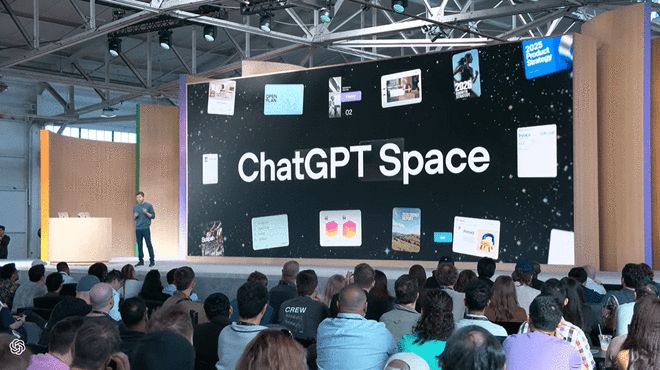
Space will replace the original Library of eligible users. The team's work materials are placed in Page. A page can contain text, pictures, tables, interactive charts and tools.
Members can edit together, or they can @ChatGPT or Dot in the comments to have it check dependencies, add content, and continue to advance the project.
During Blossom Music's demo, Holly put the team's feedback into Page and called Dotty to organize the content into a bar chart. Charts can be filtered by feedback type, view specific data points, or can be left to Dotty to update hourly.
When she needs to supplement information, she doesn’t have to go through the messages one by one: she can ask Dotty to find the user guidance data mentioned by an engineer in a Slack private message and add it to the page; she can also ask Dotty to include more feedback from her colleague Laura.
These updates can be run repeatedly on a schedule. The user specifies which sources to check, which parts of the Page to modify, and how often to run it, and ChatGPT maintains the page as required. OpenAI also previewed features such as shared presentations, allowing teams and their respective Dots to collaborate on modifying slides within ChatGPT.
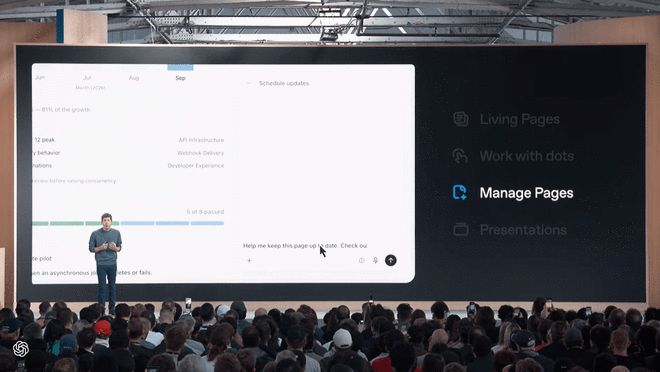
After the page is shared, the visibility of the information will also change. Sharing rules for existing workspaces continue to apply, members can gain view or edit permissions, and permissions can be adjusted or revoked. Files uploaded directly to Page inherit the permissions of the page.
Putting a link to an external file into Page will not automatically grant colleagues access to the original file; however, if the text in the file is excerpted or summarized on the page, people with page permissions can see the content.
The same is true for private chats and personal memories: sharing a Page will not directly open the user's private conversations or memories, but if ChatGPT writes the information into the shared page, this part of the content will be displayed to collaborators.
In the same project, multiple employees can edit the Page at the same time, each calling ChatGPT to process the same material. After Dot brings back the results, colleagues can comment, add, or continue assigning tasks directly next to the results. There is no need to first move out the answers in the private conversation and then re-explain the ins and outs.
03 Sol reduces costs, Ultrafast improves speed, and Pro has a new $500 price tag
After a job is handed over to an agent, it often goes through multiple rounds of reading materials, calling tools, and modifications. OpenAI also adjusted the model price, output speed and subscription amount this time.
OpenAI stated that the capabilities of the newly released GPT-6.1 Sol are close to those of the released GPT-6 Astra. The standard API price is US$2 per million input tokens and US$10 per million output tokens.
The company positions Sol as the workhorse model in daily work, emphasizing programming, computer operations and professional tasks. At present, it has entered ChatGPT Work, Codex and API, but has not yet entered normal Chat mode.

According to Bloomberg, the day before the conference, OpenAI canceled the release plan of GPT-6.1 Astra due to security risks.
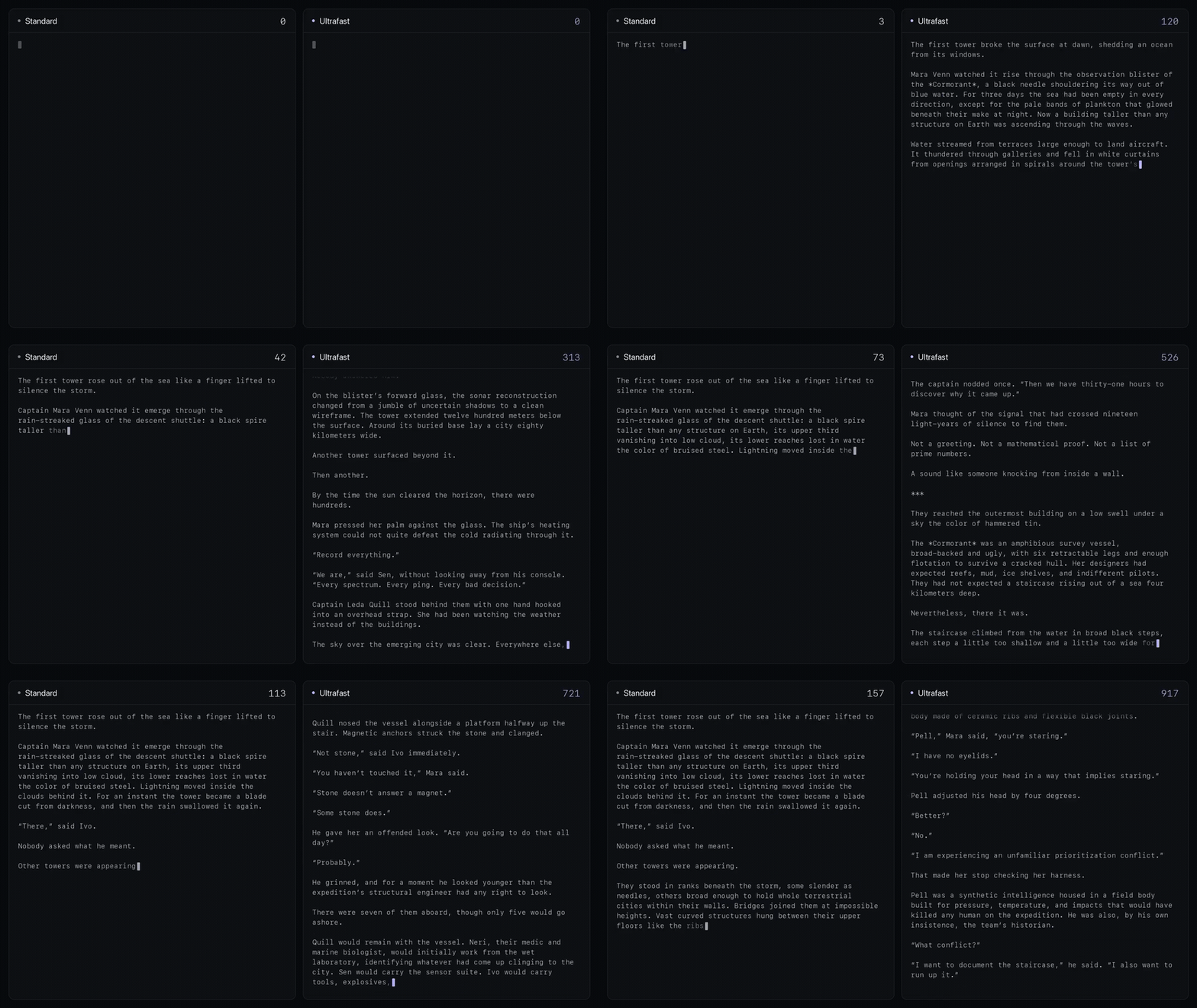
The Astra Ultrafast has been launched to shorten waiting time. According to the official documentation, in Codex, its token generation speed can be up to 8 times that of the standard mode, reaching approximately 300 tokens per second. Tool execution, testing, and waiting for external responses will still take up task time.
In the live side-by-side demonstration, both sides received the same prompt. The rocket demonstration generated by Ultrafast had taken off, but the standard mode was not yet completed. The Ultrafast version of GPT-6.1 Sol is planned to be launched later.
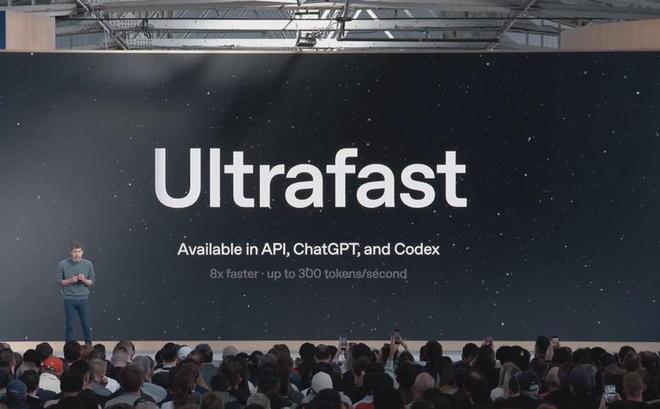
Faster modes will also consume credit faster.
In Codex, Ultrafast consumes the usage quota in the package at 8 times the rate of standard mode. Users can choose the speed mode according to task needs.
In terms of subscription, the newly added Pro 500 is priced at US$500 per month, providing 25 times the usage of ChatGPT Plus and including Ultrafast access.
Pro 200, which costs US$200 per month, is also open for subscription, but some usage limits have been reduced. Eligible old users can keep the original quota until October 29, 2026. It will be adjusted thereafter, and the monthly fee will still be US$200.
For quick judgment, OpenAI also launched the Decisions API. The developer first gives a set of predefined options, which are then selected by the Luna model, eliminating the need to generate an entire answer. It's suitable for well-defined tasks such as triage and triage, and the company says responses can be compressed to a fraction of a second. This API is initially available in a limited preview.
Tejal Patwardhan, head of post-training research at OpenAI, introduced on stage that the company already has its own AI research interns. She showed examples of models handling legal tasks, designing game assets, making dashboards and filling in tax information, and said the models participated in training improvements that helped improve computer operations and rejection performance.
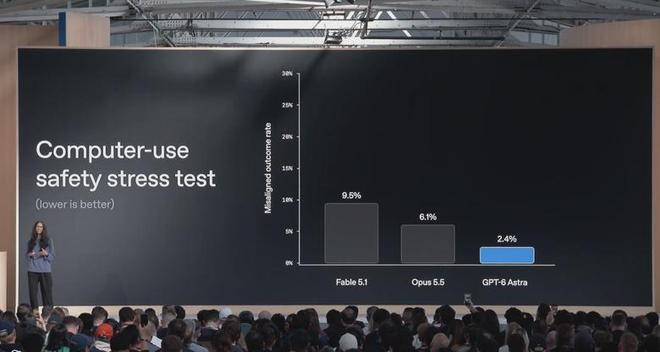
According to Patwardhan, from July to August this year, the model was able to complete more than one-third of the research tasks that were statistically expected to take humans a day to complete without human intervention.
Previously, models failed on most attempts when faced with longer tasks like this.
OpenAI also said that its model has helped solve more than 100 mathematical problems that have been open for decades, and has participated in research on new antibiotics, ancient languages, and manufacturing robots.
04 Codex and Agents API: Developers can also build their own agents
The orchestration framework shared by Dots and Codex is responsible for managing context, calling tools and scheduling tasks. Developers can also use this framework to build their own agents.
When Codex is released in May 2025, it will already be able to perform tasks in the cloud sandbox.
What DevDay further updates this time is the cloud work experience: users can start, follow up and hand over tasks across devices, reuse the development environment, and leave long-term work in the cloud.
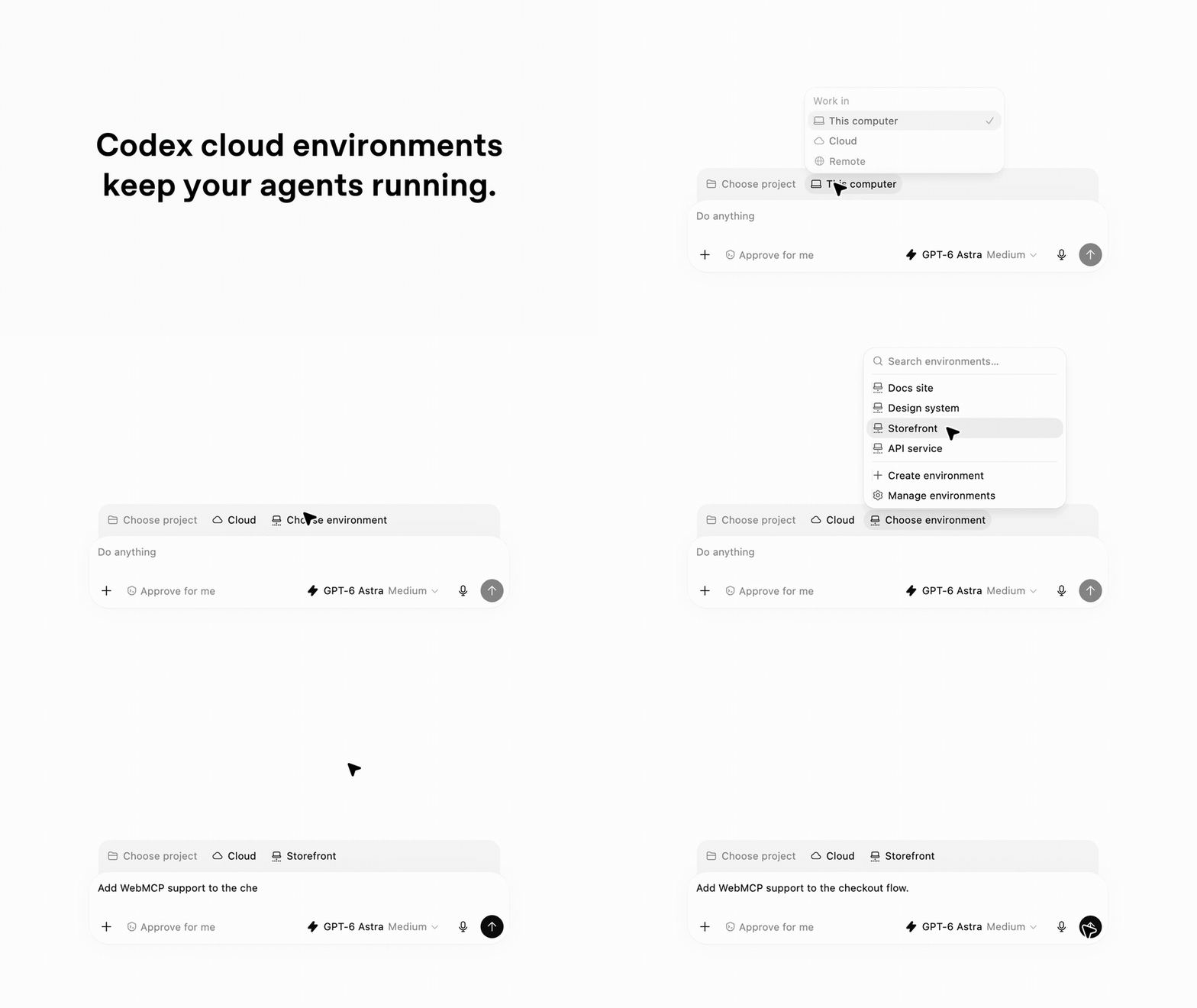
Romain Huet, head of developer relations at OpenAI, demonstrated on stage how to launch a big task: rewriting the entire backend of the project in Rust. He sent the task to the cloud, let it continue to run, and moved on to demonstrate other functions, planning to come back later to check and hand over.
For shorter tasks, you can see the complete modification process. He used the command line to ask Codex to make an application that randomly selected three participants, and gave the selected candidates tickets to the next DevDay. After the application was generated, he changed the number of participants to six, and then selected the selected candidates on site.
This demonstration was originally intended to use voice, but he encountered difficulties in starting the voice, so he used the command line to complete it instead. In another demonstration, he handed a screenshot of the app to Codex and asked to check the performance on different screen sizes. The agent then operated the simulator, opened the app and checked the functionality.
The Codex orchestration framework that supports these operations has been open source, and developers can view the implementation and build it themselves.
The newly launched Agents API puts capabilities such as computer usage, multi-agent control, tool invocation, and context management into hosting services for developers to access their products.
For example, a website testing agent can open a browser, click on different pages, and check the user operation process. OpenAI is also working with AWS to provide related capabilities in Amazon Bedrock Managed Agents, allowing enterprises to build agents next to existing applications and data.
In terms of response speed, OpenAI also reported that the waiting time for the first token of the API was shortened by 45%.
The agent needs to access company information, and the company will also care about how this content is handled. The Private Intelligence introduced by OpenAI this time includes privacy mechanisms such as zero data retention and Private Safety Processing; Private Inference, which uses confidential computing, plans to launch a preview this fall.
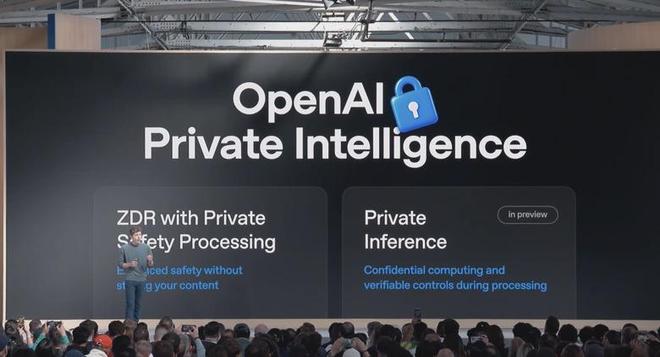
Private Safety Processing stores relevant encrypted records in customer-controlled storage, conducts automated security reviews through a protected computing environment, and limits staff access to content.
The customer retains storage control, and OpenAI uses limited security signals to determine whether measures need to be taken to avoid allowing staff to directly read the original content during daily review.
05 The credit in ChatGPT subscription will be used for third-party applications
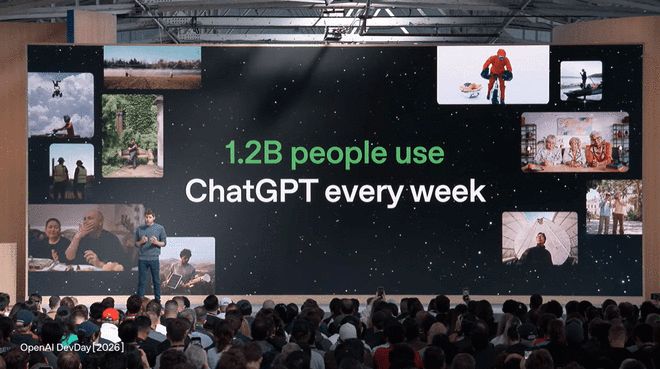
After developers build an application, they still need people to use it. OpenAI announced at the conference that ChatGPT has more than 1.2 billion weekly active users; the new login and distribution arrangements this time will make it easier for some users to try third-party products.
Login with ChatGPT started with 16 publishing partners.
Eligible Plus and Pro users can use the AI quota within the ChatGPT subscription in participating applications without providing an additional API key. This use will be counted in the corresponding shared quota.
Users can buy one less duplicate model call credit, but third-party applications can still charge for their own subscriptions, infrastructure, services or premium features, as determined by the developer.
Plug-in extensions allow developers to put more interfaces into ChatGPT and Codex. In addition to having a model call a service, users can directly open an editor, dashboard, or workspace and work on things alongside the conversation.
Examples of on-site demonstrations include viewing meetings in the calendar, taking notes in ChatGPT, and opening design files, viewing colleagues' comments, and then asking ChatGPT to modify them. Adobe is also one of the partners displayed at the conference, and design operations can be completed in the current working environment.
ChatGPT can also recommend suitable plug-ins during the conversation, and the user can decide whether to connect on the spot. Developers do not have to start the entire submission process again when applying for manual review.
These plugins also provide access to ChatGPT Sites. According to Altman on stage, users have created millions of websites of different types in the months since Sites was launched. After accessing the plug-in, the same website can combine applications and information authorized by different users to provide their own user experience.
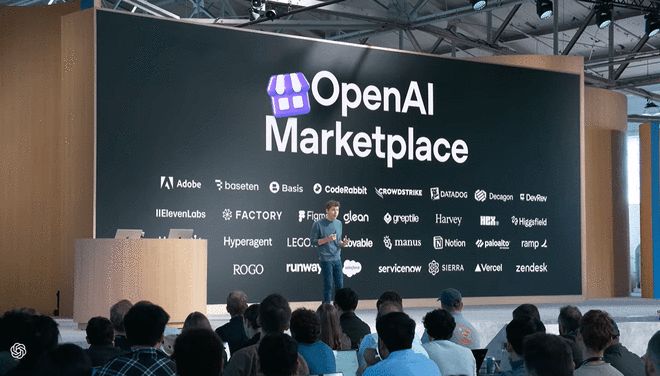
Enterprise procurement is undertaken by OpenAI Marketplace, with 32 partners in the first batch.
Eligible enterprise customers can use a portion of their existing OpenAI purchase commitments for approved third-party products.
Developers will also be able to reach corporate customers who are already purchasing services from OpenAI.
The conference also mentioned the cooperation with Baseten, which provides developers with more channels to access open models.
06 Muse grabbed users first, Dots brought the team in together
Meta Muse, released on September 8, also runs in a dedicated virtual machine, has a browser, can work across connected applications, remembers user preferences, and continues to work for the user.
According to VentureBeat citing TechCrunch, Sensor Tower estimates that Muse has been downloaded more than 3.4 million times as of September 24. Estimates from other agencies vary: Apptopia gives 4.3 million, Appfigures around 2.3 million. In less than three weeks since its launch, Muse has topped the charts in the US app stores of Apple and Google.
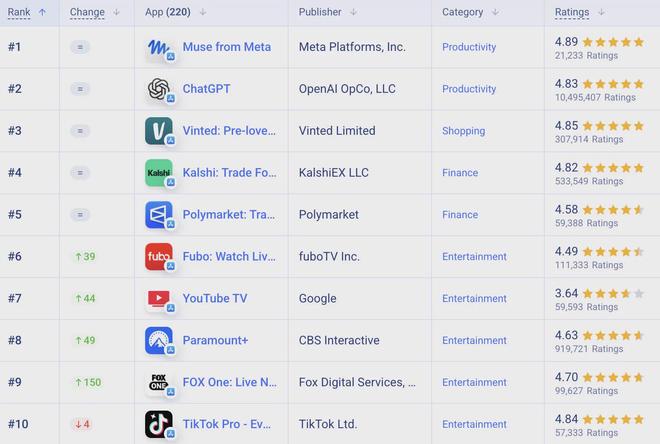
Meta is also bringing this heat into the work scene. On September 29, it expanded integrations for small businesses to include tools like Shopify, QuickBooks, Stripe, and Canva. VentureBeat quoted the Wall Street Journal as saying that about one-third of Muse users have connected business-related accounts, and more than 1,500 companies have applied for Muse integration.
At the Dots release site, team tasks were set out from the beginning: following up on the software launch, sorting out feedback from colleagues, fixing bugs, and updating shared pages.
Personal Dots are responsible for doing things for users, Space allows colleagues to join, and professional Dots pilots hand over procurement, contracting and other tasks to agents that serve the entire team.
Other companies are also vying for such access. Instinct connects assistants to emails, messages and devices, allowing users to make phone calls or send text messages; Manus 2.0 brings new cloud computing and automation features; xAI’s Grok Bot also allows agents to log in to existing applications and continue to run; OpenClaw allows users to hand over tasks in familiar messaging services.
In addition to tasks, users give such assistants access to their mailbox, calendar, and work applications. The agent gradually remembers the user's work habits and follows up on unfinished work.
When changing to an assistant, these connections, permissions, and accumulated work background may also need to be migrated.
Enterprises must also clarify the permissions of personal assistants and corporate agents. An employee can have his or her own Dot process data, and the team may also have a professional Dot responsible for procurement; which systems they can access, in whose identity they act, and where the results are placed must comply with existing account and sharing rules.
At the end of the conference, Altman said that he hopes AI will bring about a renaissance rather than turning people into cogs in an industrial machine. OpenAI hopes that after people hand over some of their daily steps, they can free up energy to do things they didn't have time to do before.
Currently, each eligible user will receive a Dot first.
OpenAI plans to allow users to manage a group of Dots in the future, but the specific commercial pricing for additional Dots and professional Dots has not yet been announced.
Comments