
Abstract:
OpenAI’s next trump card has been exposed in advance! There are rumors that OpenAI will release a personal 24-hour online AI assistant on its Developer Day on September 29. Its name has only one letter - o! Now, developer Chetaslua has officially unearthed ironclad evidence hidden in the core code of ChatGPT: Lowercase o is the assistant's product name. (lowercase o is the official product name of the assistant)
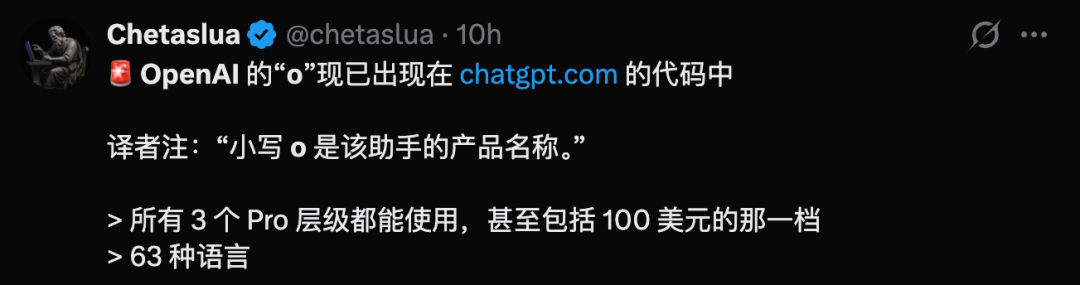
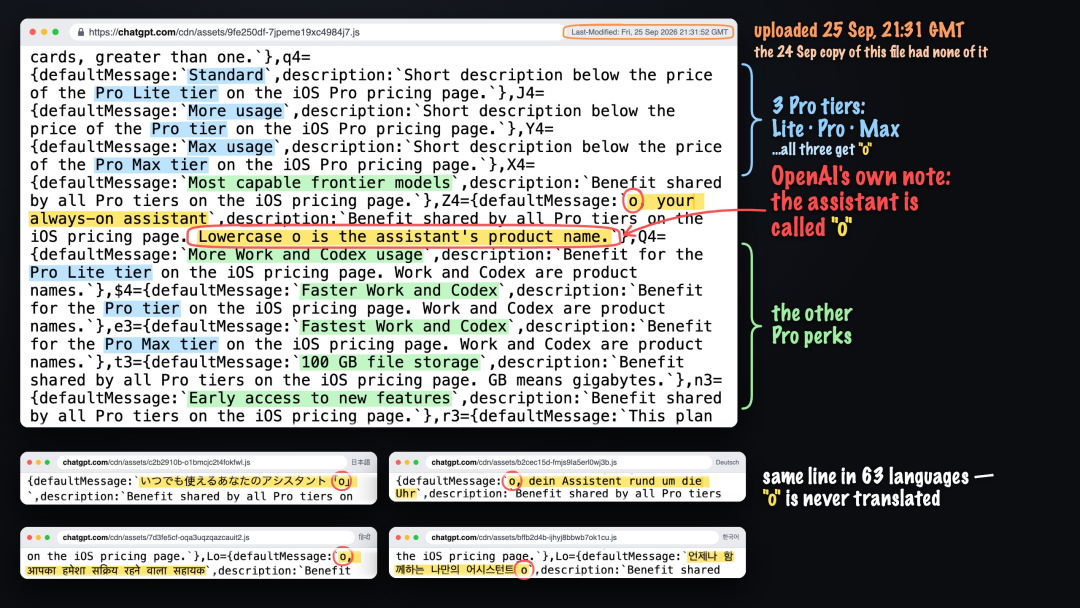
63 languages, Fast Mode is in place, multi-agent collaborative billboards are fully accessible, and even independent mailbox suffixes have been written into the logic.
What’s even more amazing is that it will be directly distributed to all Pro subscribers.
Just now, an official picture from OpenAI developers once again hinted that o will be launched soon.
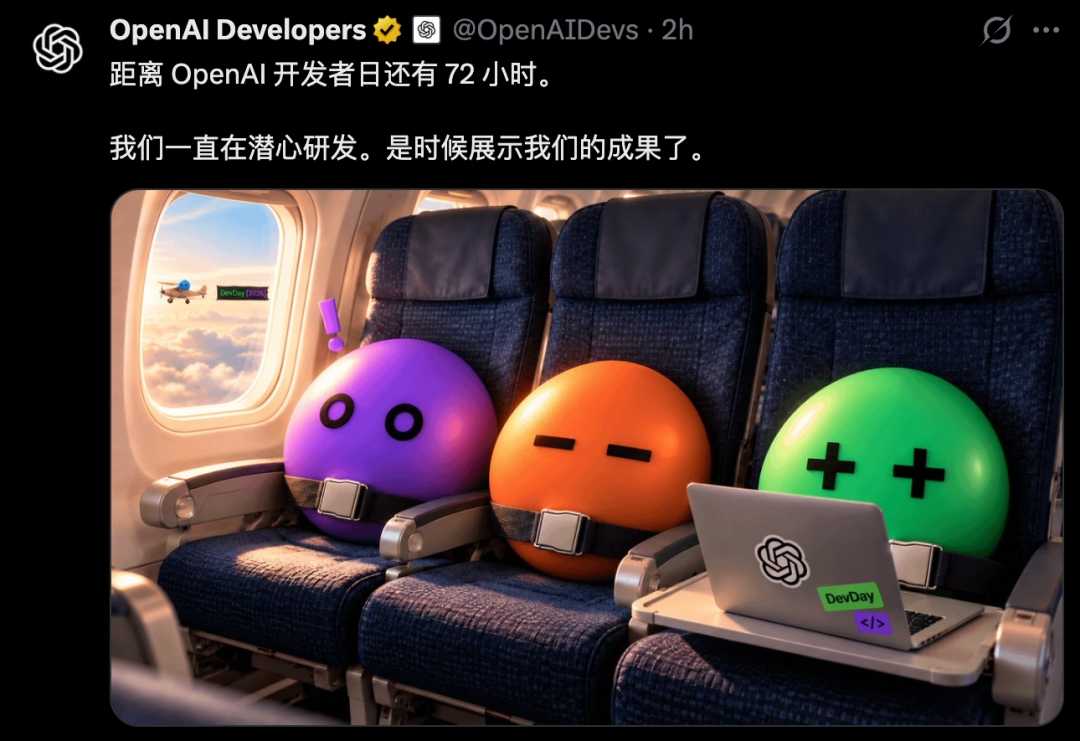
This time on Developer Day, OpenAI is going to flip the table.
OpenAI mysterious appearance
Always-on AI
o’s debut is definitely a major release of OpenAI this time.
This god-level preview started a few days ago. On September 25, in the afternoon of Western Time in the United States, Codex experienced a failure.
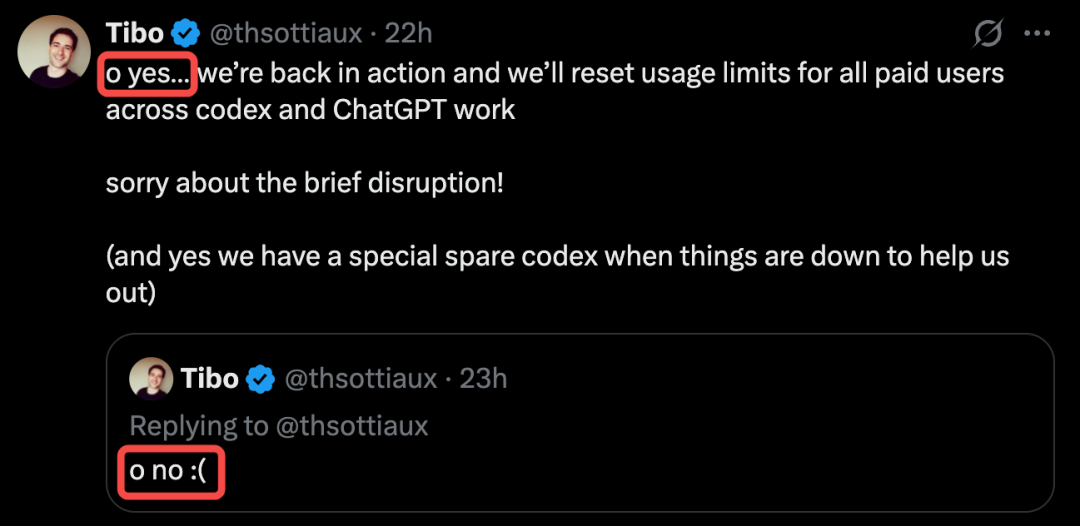
OpenAI "adopted father" Tibo posted a post - o no :(. After the service was restored an hour later, he posted again: "o yes... we're back", and conveniently announced that everyone's usage quota would be reset.
Almost at the same time, several clues emerged one after another——
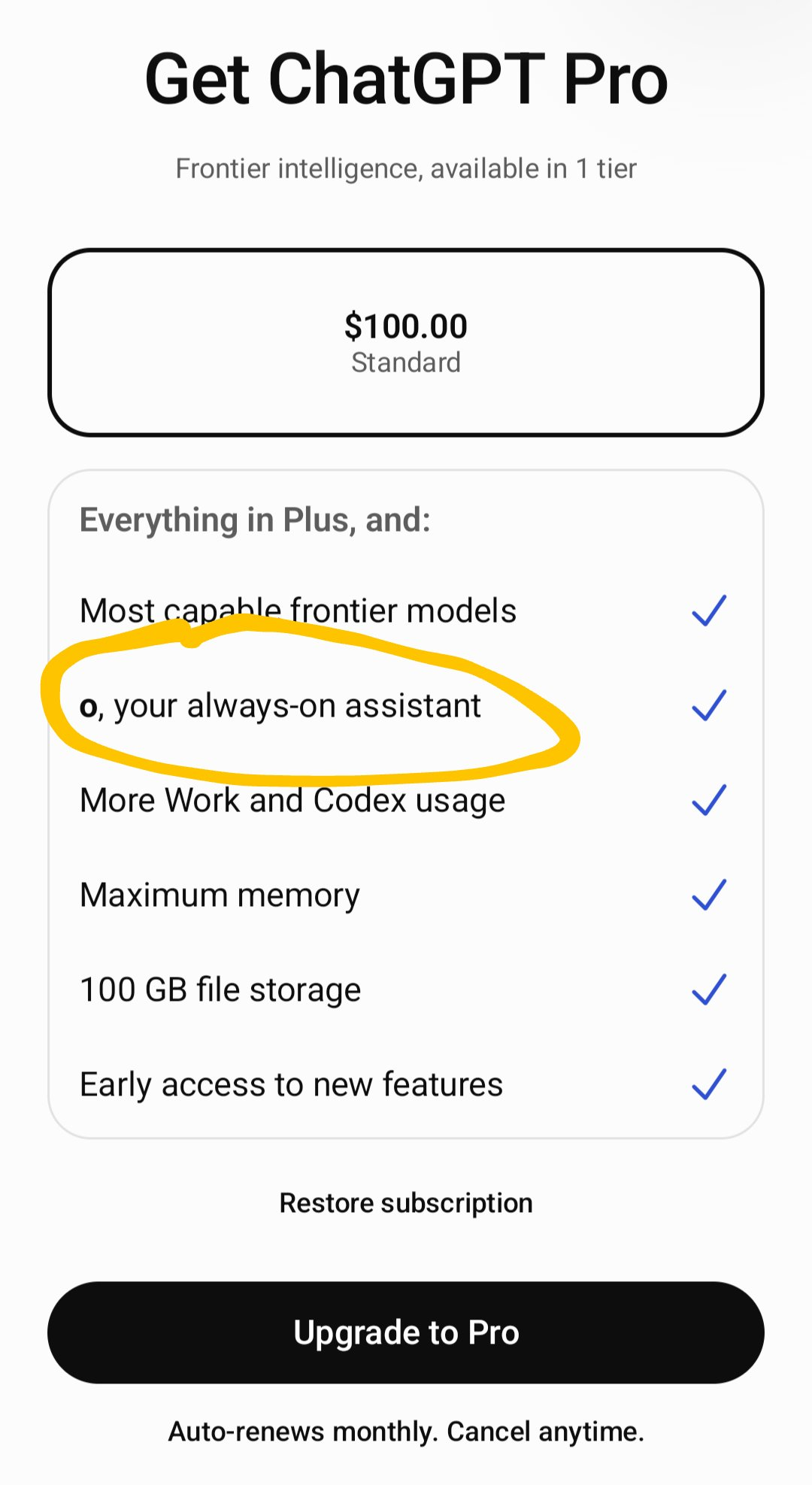
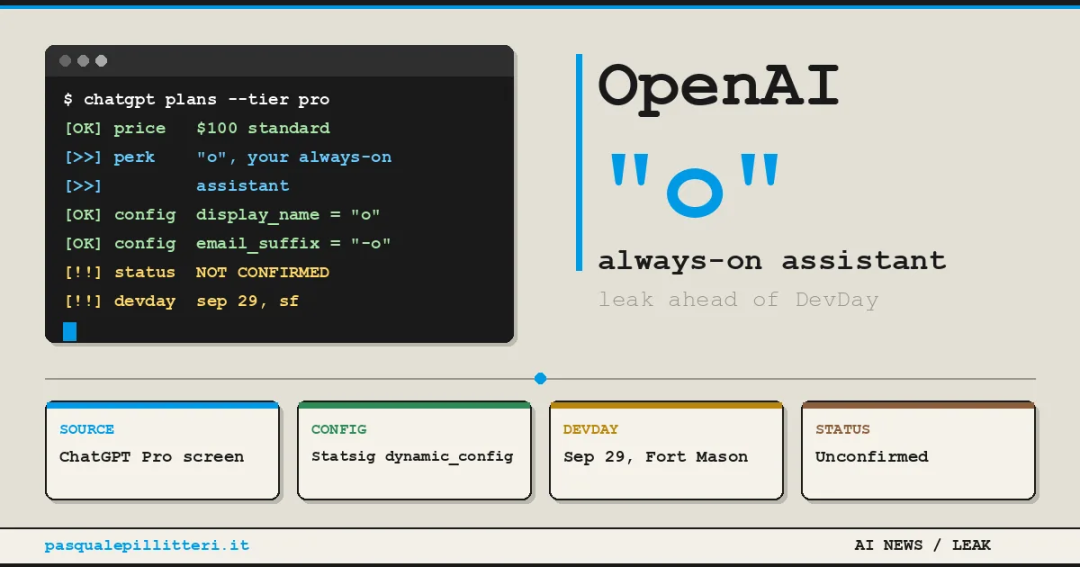
Some Pro users saw a line of text on the ChatGPT upgrade page: o, your always-on assistant (o, your all-weather assistant). This line of text disappeared after a few hours.
Not only that, there is an additional note for translators in the ChatGPT web code. The lowercase o is the product name of this assistant.
Moreover, in the internal configuration, "o" is written as the display name, and an email suffix appears: "-o".
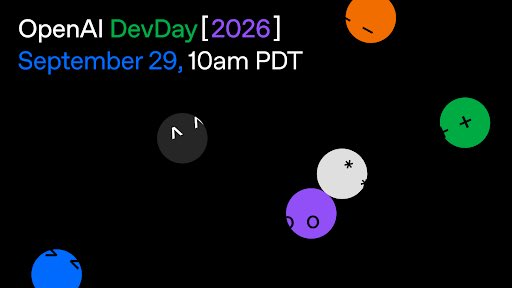
In addition, the OpenAI developer account said, "There are still 72 hours until DevDay. We have been building things, and it's time to hand in homework." Things are basically on the right track.
OpenAI will release an agent that is online 24 hours a day and will continue to work for you on DevDay.
The information that can be confirmed now is that its positioning is: long-term online and continuous operation.
There are three levels: the $100 Pro Lite, the $200 Pro, and the $500 Pro Max that is not yet online. Users of the $20 Plus and Codex Plus are not eligible.
Additionally, Codex Plus users are expressly excluded. This means that "o" and code assistant are two product lines, and OpenAI deliberately distinguishes between "AI that writes code" and "AI that does work for you."
Uncover the underlying code
o "grew" out
Judging from the underlying configuration uncovered by various reverse engineering masters, "o" has been comprehensively reconstructed from interaction logic to execution architecture.
From the core details leaked so far, we can see its four major killer features in advance.
Always-on (can sleep and wake up on its own)
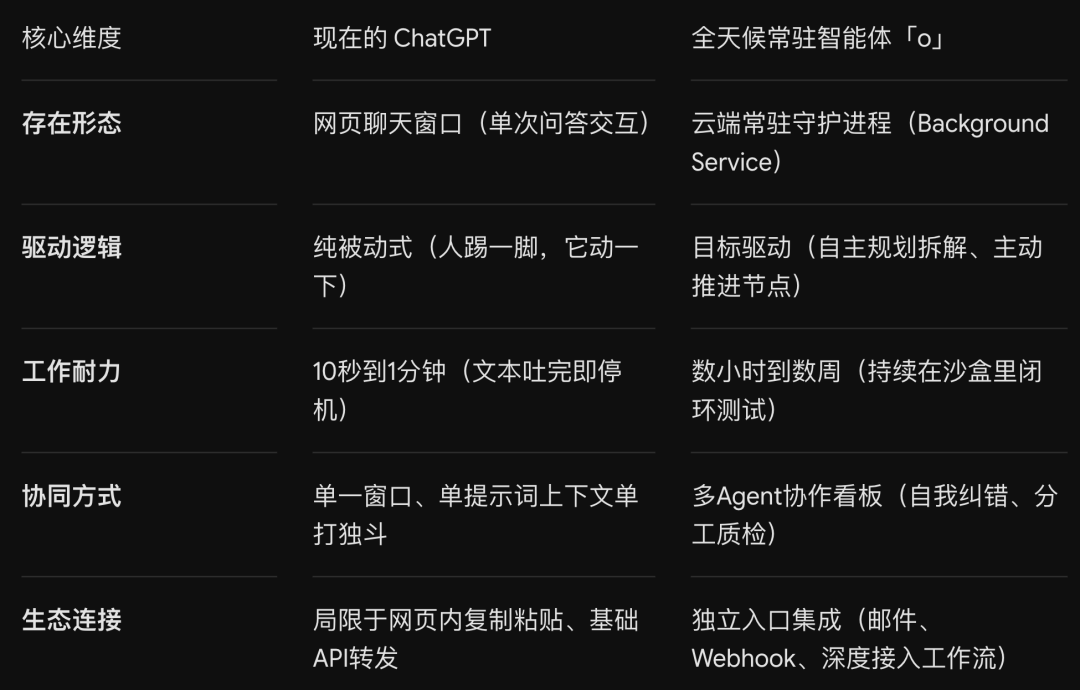
At this stage, when you use ChatGPT, you are essentially playing a "turn-based game".
You enter a line of instructions, and it spits out a string of text. If you don't reply, it goes to sleep; once the page times out or the task is too long, the window is automatically truncated.
The "o" codename is rumored to point to the internal project "Aeon" (meaning eternity), which is driven by a variant enhanced for long-range missions.
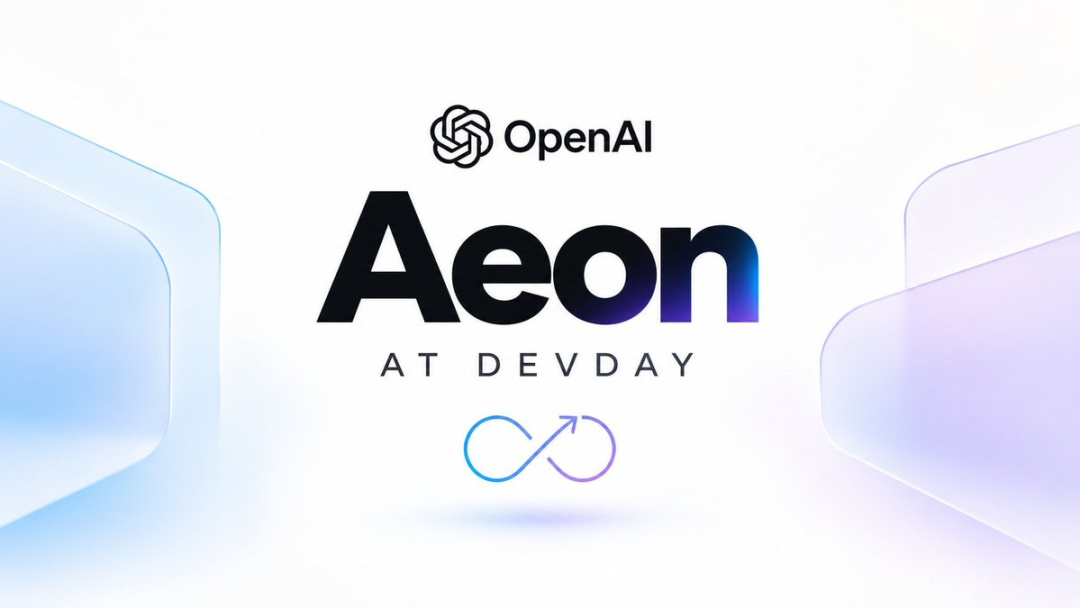
Its bottom layer is mounted with a set of persistent cloud hosted sandbox (Hosted Sandbox).
You throw a complex business goal to it, and it can run continuously for hours, days or even weeks in the cloud background.
Configure the environment by yourself, correct errors by yourself, and test data by yourself until the task is completely completed and the closed loop is completed. When you turn off your computer and go to sleep, it will work for you in the cloud all night long.
Fast Mode: Reduce long chain waiting to milliseconds
What is mentioned repeatedly in the code is "Fast Mode".
Many people don’t understand: Large models can generate text quickly enough, so why do we need to set up a special ultra-speed mode?
If you go deeper into Agent development, you will understand: when AI changes from a single answer to autonomous thinking, behind a task there are often dozens or hundreds of "CoT derivation → tool call → result return → error retry".
Ordinary models spit out 30 tokens per second, and it may take 20 minutes to run a complex process.
It is rumored that o is connected to an ultra-high inference computing power architecture and even uses the Fast Mode of a dedicated high-concurrency chip cluster to increase the token generation speed several times.
Multi-Agent shared message board: create a group,
AI
Hold morning meeting by yourself
A person’s energy is limited, and so is an AI.
But in the world of "o", OpenAI directly moves the "company structure" into the system.
The "Shared message board for agents" that appears in the code completely breaks the single-soldier battle:
Master Agent (PM): Responsible for breaking down macro goals into multiple subtasks;
Search Agent (Researcher): Call the interface for literacy across the entire network;
Code Agent (engineer): runs simulation and script verification in the sandbox;
Quality Inspection Agent (Auditor): Compare the results and find faults and correct errors.
Humans only need to be the boss and write the delivery standards and acceptance conditions at the top.
The rest of the time, the AI employees below held meetings on their own on the shared bulletin board, inspected each other's quality, and made progress spontaneously.
Exclusive email suffix "-o": officially receive work permit
What makes everyone’s backs shiver the most is the email processing logic of “-o” appearing in the configuration.
If "o" has independent email sending and receiving capabilities, it means that it has a true "native external communication entrance".
When the team copies the email to the customer, it can automatically parse the attachment and synchronize it to the dashboard; when the downstream supplier sends a quotation, it can independently compare the historical data, generate an evaluation and reply to you for confirmation.
It starts to have a communication identity that is exactly the same as a human employee.
Today’s ChatGPT is not yet a “24-hour employee”
Many people may be confused. Isn’t ChatGPT already very powerful now?
I am good at writing code and making reports. What is the revolutionary difference of this resident agent called "o"?
Let's put it this way, the gap between the two is essentially a species crossing between "calculators" and "professional managers".
Looking at this comparison table, you can clearly see what a qualitative change in product form is:
In the past two years, most people’s novelty towards AI has gradually become overdue.
You ask a question, and it is written in a colorful way with references to classics, but in the end when you close the web page, you have to check the data yourself, fill in the Excel files yourself, and manually deploy and troubleshoot the written code piece by piece.
What everyone really needs is an executor who can quietly finish the work for me after explaining the goals.
This is why OpenAI has to do "o".
The leap from "Chat" to "Do" is the only meaning of the existence of resident intelligence.
Starting next week
Get ready to meet your “AI colleagues”
In fact, this time, OpenAI played its cards much later.
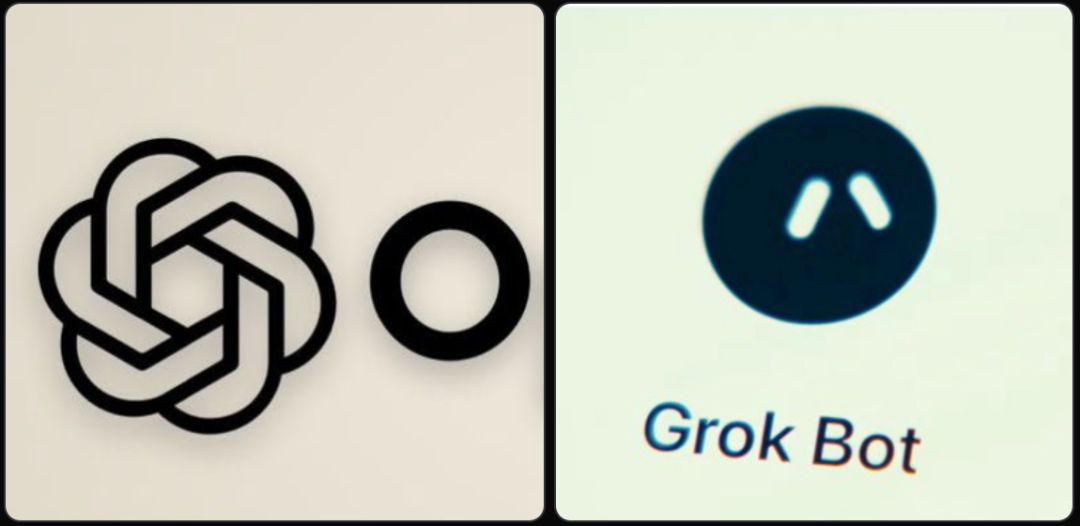
Early last month, Musk’s SpaceXAI’s Grok Bot was officially launched.
Its core design is extremely smart: each Bot has its own dedicated cloud computer, logs in to existing human tools, and works without stopping even if the computer is turned off.
Multiple Bots can also send messages to each other and collaborate in group chats.
Meta’s Muse is equally aggressive. Xiao Zha personally stood up and called him a "personal agent who understands your goals and works for you 24/7."
In the 13 days since its launch, Muse has surpassed Claude and Grok in terms of downloads over the same period, directly reaching the top of the App Store.
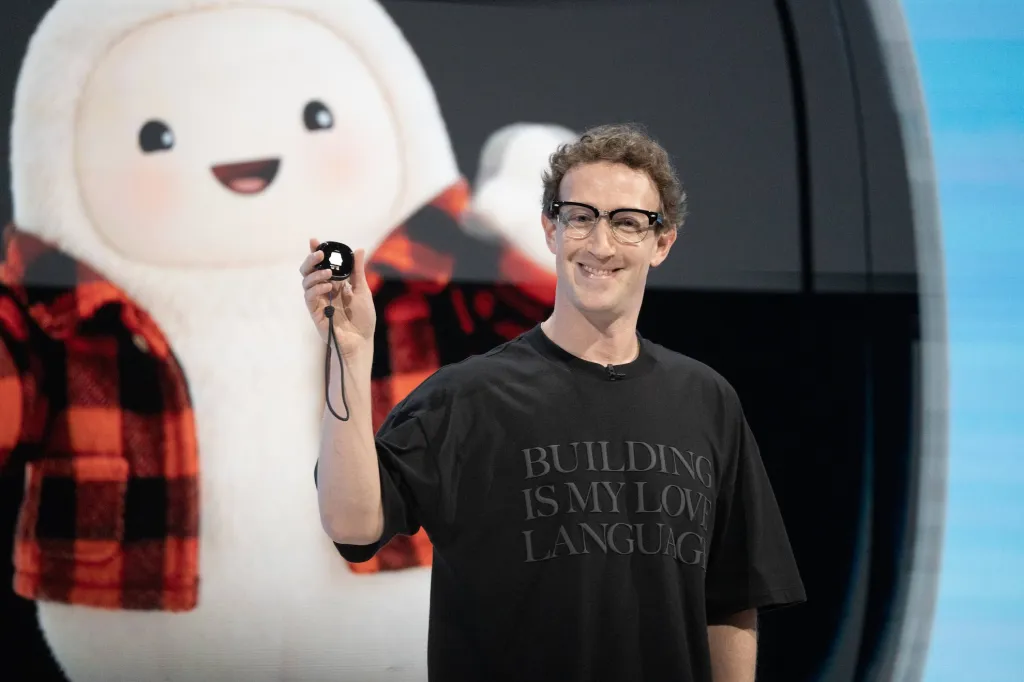
For more than a month, the track was crowded with people, and OpenAI’s o was forced to hand in the paper.
The signal released by o is that the focus of OpenAI’s next stage of competition is likely to be replaced by a simpler problem:
How long can an AI do for people every day?
On September 29th, OpenAI Developer Day will kick off.
Get ready to meet the first “AI colleague” in your life who is tireless and doesn’t need to sleep.
Comments