
Abstract:
A latest research report shows that the data center industry in Oregon, USA, has developed to a considerable scale. There are currently 111 operating data centers across the state, covering approximately 22.1 million square feet of building area. The electricity consumed by these facilities in 2025 is already equivalent to 23% of the state's retail electricity sales, nearly one-quarter.
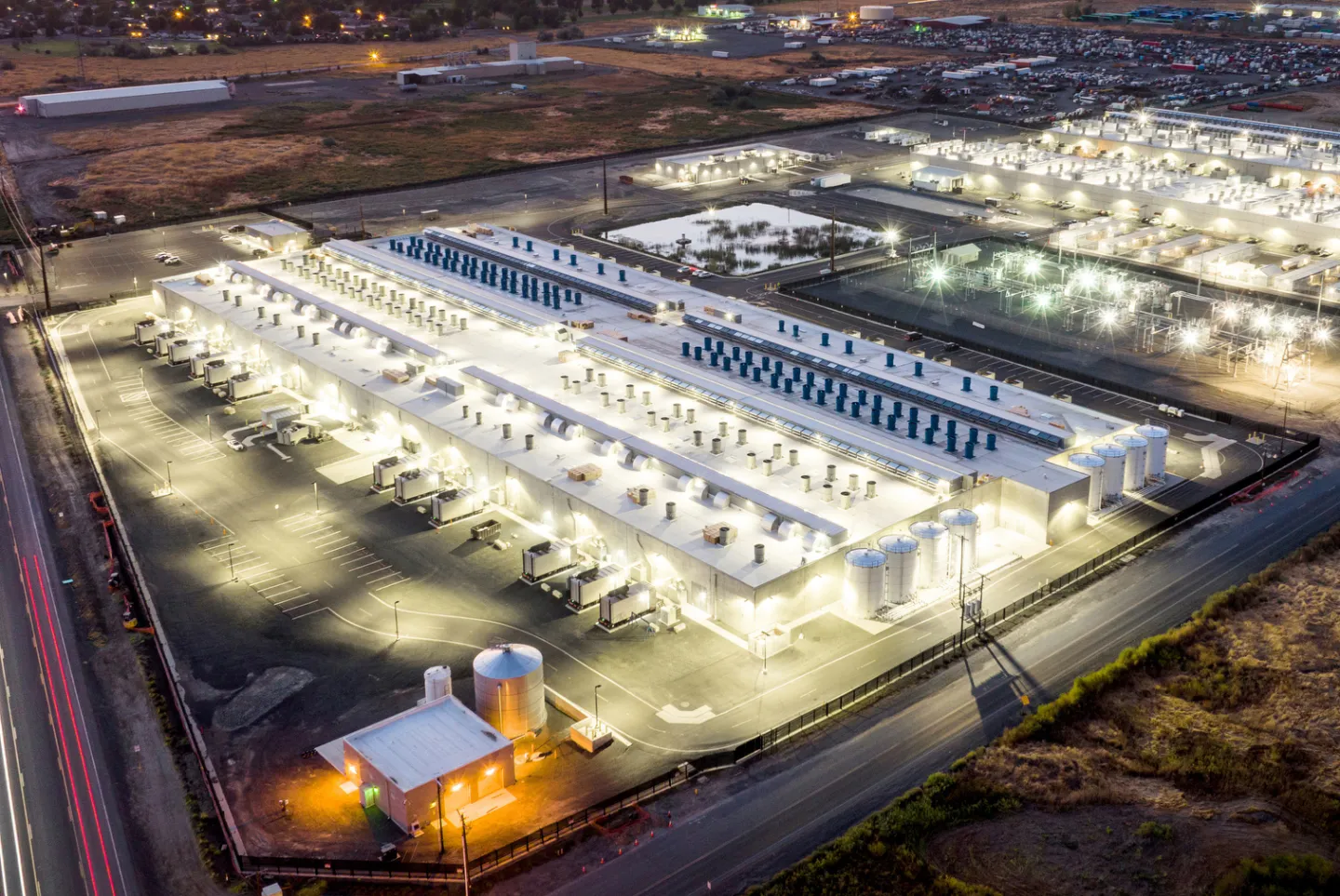
This study, jointly completed by ECOnorthwest and the University of Virginia, is believed to be the first systematic quantification of the industry's scale, economic impact and energy consumption in Oregon after the artificial intelligence boom drove the rapid expansion of data centers. The report was funded by the Portland-based Lemelson Foundation.
The study also found that Oregon's data center industry is still expanding rapidly. In addition to the 111 facilities currently in operation, there are 32 data centers in the planning or construction stages, which are expected to add approximately 6.9 million square feet of potential construction area. This means that the industry's energy demand is likely to continue to grow significantly in the future.
The report shows that Oregon’s data centers actually form two markets with significantly different characteristics. East of the Cascade Mountains are dominated by large-scale hyperscale data centers that have already formed a large scale. These facilities are usually operated by large technology companies and have large-scale individual projects; while western Oregon is more dotted with smaller data centers that are used by multiple companies.
This geographical difference also leads to different power consumption patterns in data centers. Large hyperscale data centers in the east usually have relatively stable and predictable high loads. However, as the number of newly built small data centers in the west increases, power demand may change more significantly within a day, making future power grid planning more complex.
The researchers specifically pointed out that the 23% electricity consumption ratio does not mean that a quarter of Oregon's entire power generation is directly occupied by data centers. The report uses "retail electricity sales" as a measure, which is the scale of electricity sales to end users. However, this number is still enough to show that data centers have become a very important large-scale power user group in the state's power system.
As the demand for artificial intelligence training and inference continues to grow, data center power requirements are rising rapidly. The report concludes that Oregon’s existing grid infrastructure may not be able to easily handle future large-scale load growth. If data center expansion continues at current rates, the power system will require the addition of new generation resources, transmission capacity and related infrastructure, as well as more coordinated long-term power planning.
The report also pointed out that there are still obvious information gaps in the outside world's understanding of the actual impact of data centers. During the investigation, the researchers found that data on employment, electricity consumption and other data related to data centers are relatively easy to obtain, but data on water use and impacts on the local environment and communities are inconsistent, incomplete or even completely missing.
This means that it is currently difficult to fully assess the long-term impact of rapid data center expansion on local communities and the natural environment in Oregon. Especially as data centers require large amounts of power and cooling systems, water usage may become another important issue in the future.
In terms of employment scale, Oregon's 111 operating data centers currently directly employ approximately 2,630 employees. Compared with the huge power consumption, the scale of this direct employment is relatively limited, but the data center industry also brings construction, engineering, power supply, maintenance and other indirect employment, so its economic impact cannot be fully measured simply by the number of direct employees.
The researchers did not directly propose in the report whether the construction of data centers should be restricted or expanded. Instead, they focused on providing the data currently available and pointed out the problem of insufficient existing information. The report believes that the rapid growth of data centers has made it a part of Oregon's economic and energy planning that cannot be ignored, so policymakers need more complete data to evaluate future development.
The Oregon state government has recently begun to formulate special policies for the power demand brought by data centers. The state's POWER Act, passed in 2025, requires power-hungry facilities such as large data centers to bear more of the costs associated with their new power needs to avoid ordinary residents and other commercial users bearing the additional grid costs caused by the expansion of large power projects.
A report released by the state government in September this year showed that after the implementation of the POWER Act, the cost of electricity in some data centers in Oregon has increased significantly, while electricity prices for residential and commercial users have dropped. The state government also warned that as data center loads continue to grow, how to manage these new power demands will become an important task for future planning of the power grid.
The situation in Oregon mirrors similar problems emerging in other parts of the country. As the scale of AI data center construction continues to expand, the impact of data centers on the power system has gradually evolved from a problem of a single enterprise or a single community to a state-level or even nationwide energy infrastructure problem. The U.S. Congress has even recently pushed to require large AI data centers to bear the cost of power grid upgrades to meet their power needs.
Currently, there are still 32 data centers in Oregon in the planning or construction stages. If these projects are completed, the floor space and energy demand of data centers in the state will further increase. The researchers therefore believe that issues such as future power supply, transmission infrastructure, water resources and community impacts need to be more fully assessed before the construction of new data center projects.
The most important change revealed in this report is that data centers are no longer just the infrastructure behind the Internet industry, but are becoming an important power consumer in Oregon's power system. Accounting for 23% of state-wide retail electricity sales in 2025, it also means that as the AI industry continues to expand, the relationship between the growth of data center power consumption and the carrying capacity of the local grid will become an increasingly important issue in Oregon's future energy policy.
Comments