
Abstract:
At the 2026 International Supercomputing Conference (SC26) in Chicago, storage controller manufacturer Phison demonstrated a new SSD design solution for artificial intelligence servers. This solution integrates a neural network processor (NPU) and 64GB of memory inside the solid-state drive, and can run AI frameworks and models such as PyTorch and llama.cpp directly on the hard drive, allowing some data processing to be completed before the data leaves the storage device.
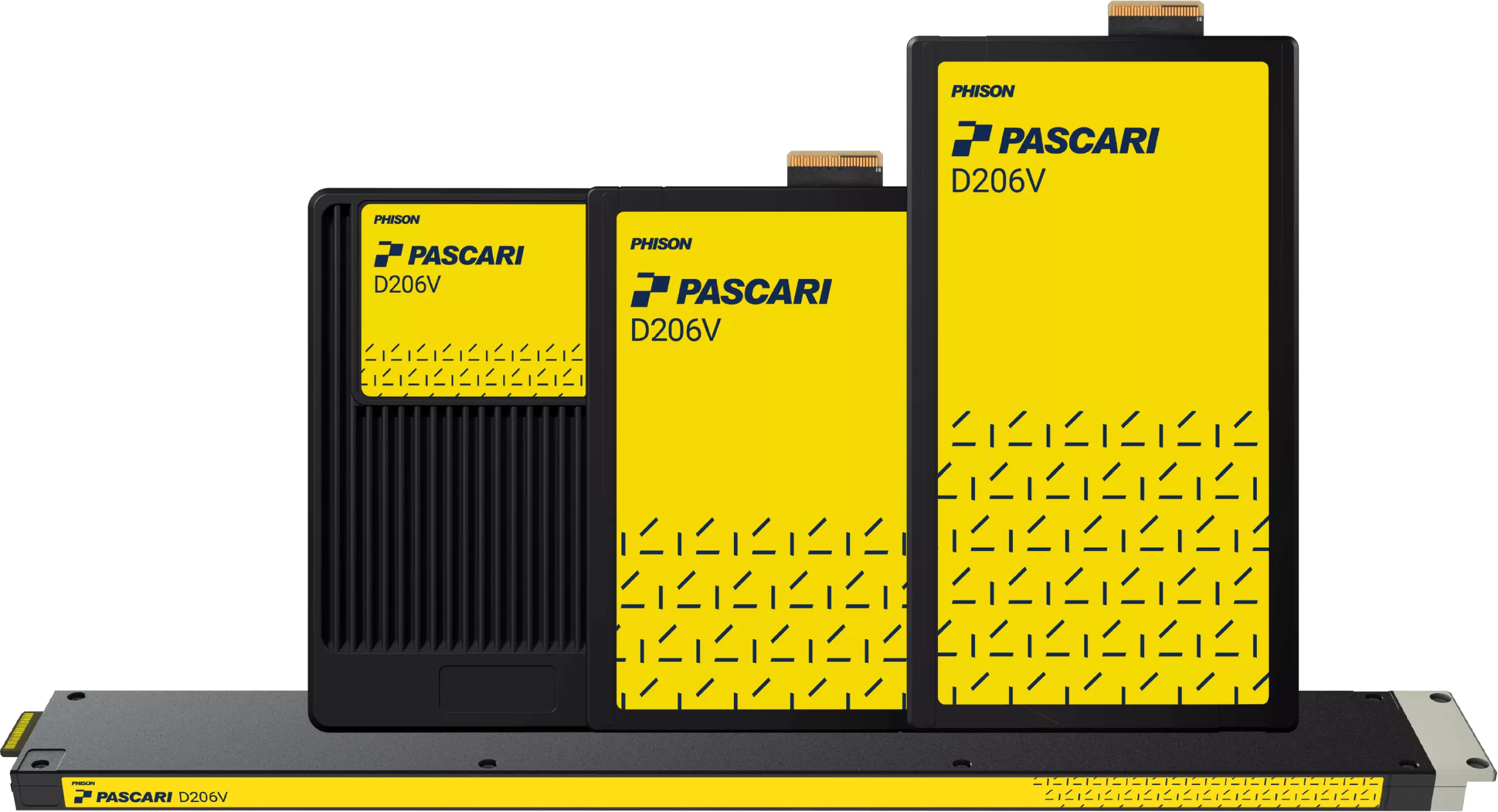
Many current AI servers spend a lot of time reading data from SSD and then handing it over to the CPU or GPU for processing. Phison hopes to change this model. By completing some computing tasks inside the storage device, the hard disk will not only be responsible for storing data, but also participate in data analysis and reasoning.
According to Phison, the new design enables parallel scanning and processing of data directly where it is stored, without the need to transfer the complete data set to the host system. Once the hard disk processing is complete, just return the key results to the server. For suitable application scenarios, this method is expected to reduce the amount of data transmission by 10 to 100 times, while reducing the CPU load and releasing more resources for the host processor.
In terms of hardware specifications, the 64GB memory equipped with this SSD can provide a bandwidth of approximately 130GB/s. By comparison, Phison's upcoming PCIe 6.0 SSD controller has a data transfer speed of about 28GB/s between the host and the host. This means that the speed of reading the data stored in the hard disk is much faster than the speed of transmitting data to the outside, further highlighting the value of computing on the storage side.
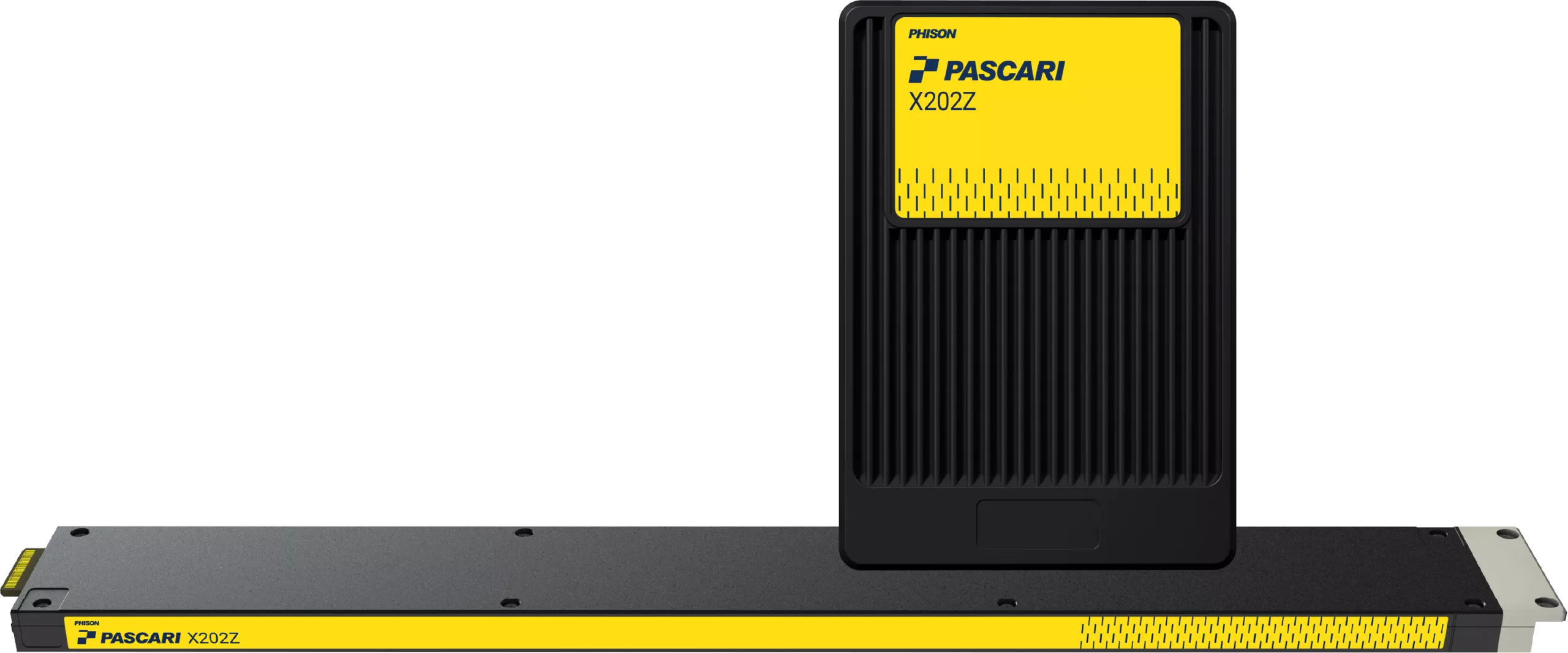
Phison also said that developers do not need to learn new specialized development tools. The design supports mainstream AI software frameworks such as vLLM and OpenVINO, so the existing artificial intelligence software ecosystem is expected to easily adapt to this architecture.
However, regarding the core AI computing performance indicators of this SSD, Phison still releases limited information. The company currently only gives a calculation indicator of 36,800 DMIPS. DMIPS is a long-established CPU integer arithmetic benchmark test standard. Industry analysts believe that this number is more likely to represent the performance of the CPU core inside the hard drive rather than the artificial intelligence computing power of the NPU itself. It is worth noting that Phison has not announced the TOPS (Trillion Operations Per Second) indicator commonly used in the industry, so it is temporarily difficult for the outside world to accurately assess its true AI performance level.
In addition, the official model, launch time or sample shipment plan of this product has not yet been announced. Phison also did not specify what type of memory technology it uses. The company said many of the products and features showcased are still in the research and development stage. Therefore, this technology is currently closer to a future architecture solution than a mature product that data centers can purchase and deploy immediately.
In fact, "computable storage" is not a new concept. As early as 2018, Samsung launched a SmartSSD equipped with FPGA and will release the second-generation product in 2022. However, such products later gradually faded out of the market. Some analysts believe that the boom in generative artificial intelligence has driven the market's huge demand for large-capacity storage. In comparison, products with storage-side computing capabilities have not received the same attention.
Compared with Samsung’s earlier plan, there is an obvious difference in the design proposed by Phison. The previous SmartSSD required customers to develop relevant software and intellectual property modules themselves, while Phison promised to be compatible with the AI tool chain that has been widely used by developers. If this compatibility can be successfully realized and its NPU performance meets official expectations, then the concept of storage devices directly undertaking AI computing tasks may have the opportunity to gain the attention of the industry again.
Comments