
Abstract:
With the conclusion of the autumn new product launch, the battery hardware details of Apple’s latest generation flagship smartphones iPhone 18 Pro and iPhone 18 Pro Max have been fully disclosed to the public through regulatory compliance certification documents. Since Apple has never directly marked the rated power value in milliamp hours (mAh) in its public keynote speeches and official technical specification pages, but is accustomed to using usage scenarios such as "continuous video playback time" to express equivalently, official archived documents from the communications regulatory database and environmental compliance certification agency have revealed to the outside world for the first time the exact battery capacity parameters of the two Pro series flagships.
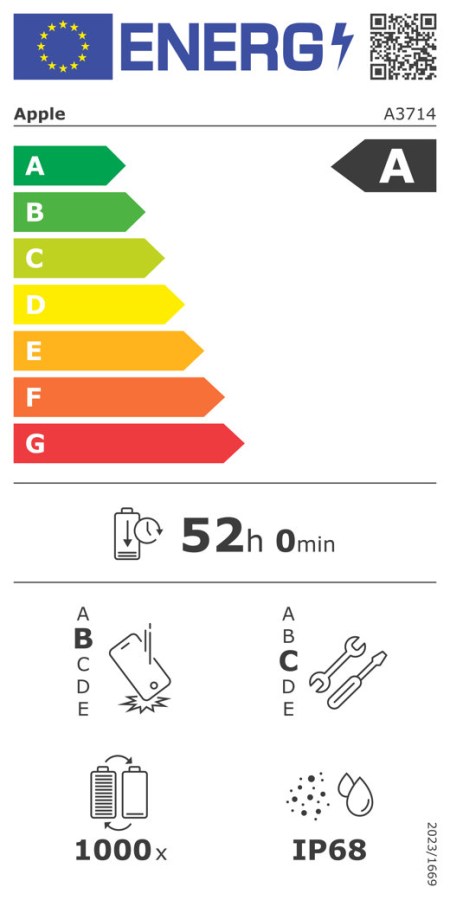
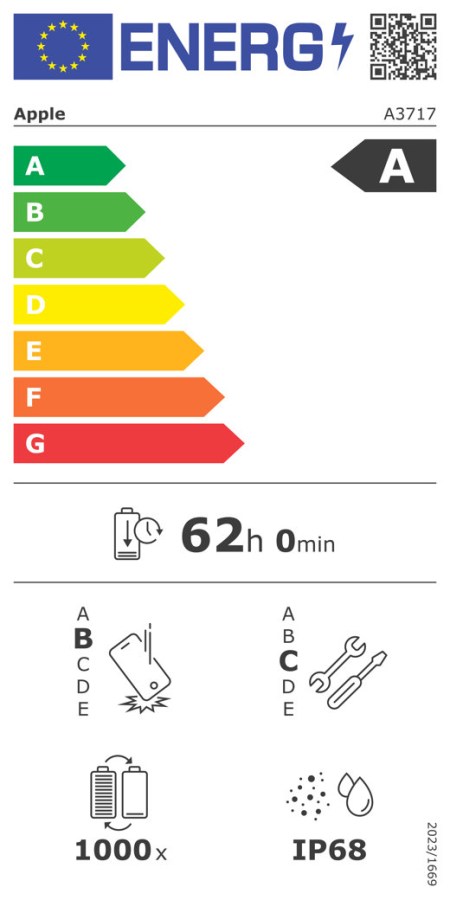
According to specific engineering data disclosed in regulatory filings, the lithium-ion battery on the iPhone 18 Pro has a rated capacity of 3988 milliamp hours (mAh) and a rated energy of approximately 15.52 watt hours (Wh); while the higher-positioned iPhone 18 Pro Max is equipped with an ultra-large-capacity battery with a rated capacity of up to 5080 mAh (mAh) and a rated energy of approximately 19.78 watt hours (Wh). Compared with the previous generation of products, the battery capacity of the iPhone 18 Pro has achieved a significant increase of about 11% compared to the approximately 3582 mAh of the iPhone 17 Pro; the iPhone 18 Pro Max has broken the historical record of Apple Intelligence mobile phone battery capacity, which has increased by approximately 8.4% compared to the previous generation iPhone 17 Pro Max’s level of approximately 4685 mAh. This is also the first time that the battery capacity in Apple’s mobile phone product line has officially crossed the 5000 mAh mark.
In terms of internal engineering structure, disassembly and certification material information show that Apple has fully adopted and upgraded the high-energy-density steel shell/aluminum metal shell battery cell packaging technology in the iPhone 18 Pro series. This metal casing not only provides better physical and mechanical torsional rigidity to comply with increasingly stringent removable maintenance regulations, but also significantly improves the heat conduction efficiency of the battery during sustained high-power fast charging and long-term high-load graphics/AI computing. It allows the heat of the fuselage to be more evenly dissipated through the graphite heat conductor and internal heat dissipation structure, thereby creating valuable internal clear space for accommodating a larger volume of electrode active materials.
This significant physical battery expansion directly translates into a jump in battery life in users’ daily use experience. Combined with the optimization of the energy efficiency ratio of the A20 Pro chip built by TSMC's latest generation advanced process, and the deep sleep algorithm of the iOS 27 system underlying the dynamic refresh rate ProMotion display and end-side neural computing power scheduling, Apple officials previously announced at the press conference that the actual comprehensive battery life of the two models has ushered in a qualitative breakthrough: Among them, the single offline video playback time of the iPhone 18 Pro has been increased to a maximum of 30 hours, while the iPhone 18 Pro Max has reached an astonishing 35 hours, completely refreshing the comprehensive battery life benchmark in the high-end smartphone camp.
Communications and hardware supply chain analysts pointed out that as generative artificial intelligence algorithms are deeply embedded in the daily operation of operating systems, large-model end-side inference and more complex camera multi-frame computing pipelines have placed unprecedentedly stringent requirements on the instantaneous power and all-weather continuous power supply capabilities of mobile phone batteries. Apple chose to significantly increase the physical battery capacity of the iPhone 18 Pro series and break through the 5,000 mAh mark. This not only effectively dispelled the anxiety of core consumers about the cliff-like decline in power caused by high-frequency calls to end-side AI functions, but also provided the most solid hardware foundation for the all-day battery life chassis of the two Pro flagships while maintaining high performance, high screen brightness, and full-featured external expansion.
Comments