
Abstract:
According to reports, Samsung Electronics and SK Hynix are competitively placing orders to purchase extreme ultraviolet (EUV) lithography machines. The investment scale of both companies is in the range of 10 trillion to 20 trillion won. ASML has clarified the EUV equipment supply gap in 2027-2028. Whether it can lock in the delivery schedule has become the core of the two companies' expansion of advanced DRAM production.
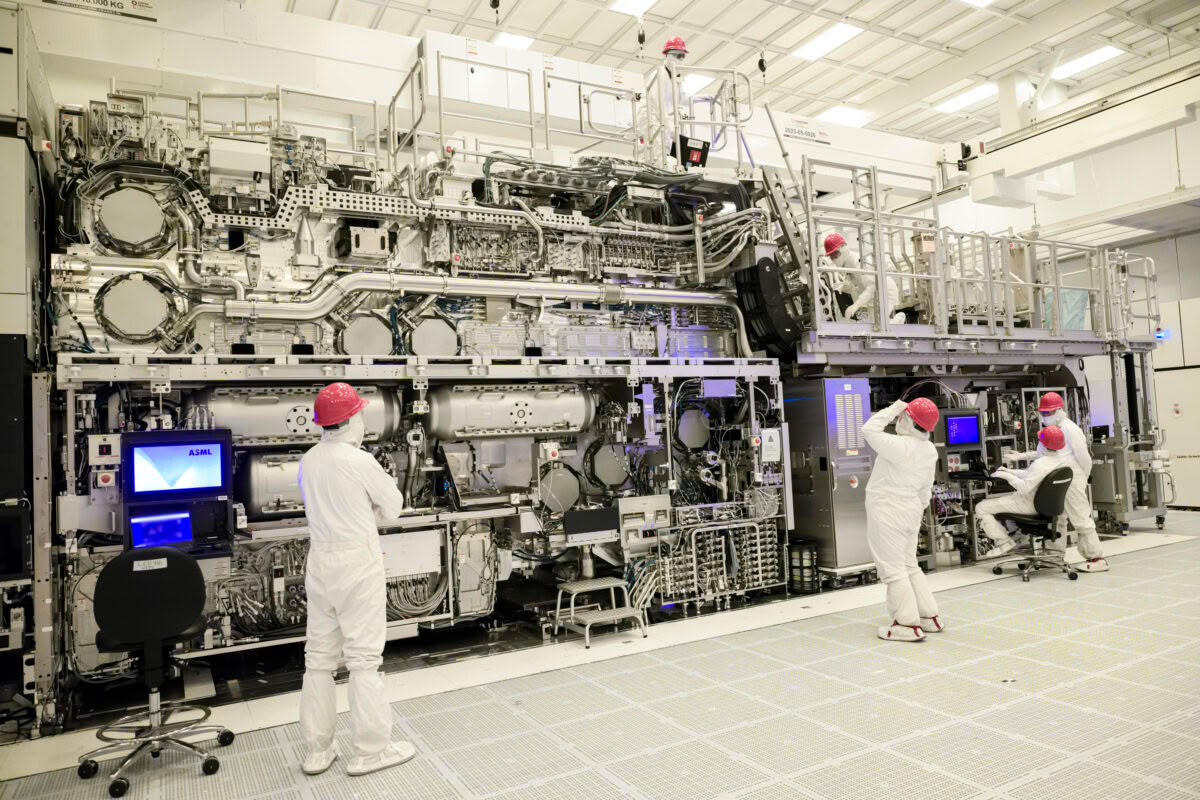
It is reported that the two companies plan to receive ASML’s EUV equipment in batches starting next year. SK Hynix disclosed in March that it would purchase EUV equipment worth approximately 11.95 trillion won, with the delivery deadline being December 31, 2027. Affected by tight supply, the delivery cycle of core equipment has been lengthened to twice the original longest cycle. The two companies are considering placing orders in advance; they will also place additional orders depending on the situation, raising the possibility of further increases in capital expenditures.
Samsung Electronics simultaneously increased orders to match the investment pace of its Pyeongtaek base. In November last year, Samsung announced a five-year local investment plan of 450 trillion won, including the Pyeongtaek P5 production line, which is targeted to be put into production in 2028. It is reported that the investment scale of a single P5 wafer fab exceeds 60 trillion won. Industry expectations are that after the first phase of the P5 clean room project is completed in the first half of next year, equipment will gradually enter the site; Samsung has already placed an order for lithography equipment for this production line.
EUV lithography machines rely on 13.5 nanometer wavelength light sources to etch circuits, which can reduce the multiple patterning processes that used to rely on multiple exposures to split patterns and improve accuracy and yield. For advanced DRAM such as 10nm sixth generation (1c), as the circuit pitch continues to shrink, the number of EUV process layers continues to increase. According to TrendForce, SK Hynix plans to use EUV in more than five layers of 1c DRAM, an increase of two layers compared to the previous generation.
ASML stated in this year’s third quarter report that EUV supply under the current plan for 2027-2028 cannot meet customer demand. EUV shipments this year are about 65 units, an increase of nearly 50% from 44 units last year; but even if production capacity is increased by 30% in 2027 and an additional 30% expansion is planned in 2028, supply is still insufficient. The impact of the price increase on core products will be gradually reflected next year and will be fully apparent in 2028; in the third quarter of this year, storage customers already accounted for 46% of ASML's total machine sales.
The next-generation DRAM mass production process relying on EUV equipment has achieved a certain degree of stability. Samsung shipped the industry's first DRAM module using EUV as early as March 2020 and accumulated relevant process experience. It is currently the manufacturer with the largest number of EUV equipment in the storage industry. SK hynix launched its first EUV equipment at the Lichuan M16 factory in February 2021, and introduced the industry's first high numerical aperture (High-NA) EUV mass production machine in September last year. Samsung announced on September 8 that it would expand its cooperation with ASML and plan to introduce High-NA EUV into DRAM mass production in 2028.
At the same time, the order reserves of back-end equipment manufacturers have been filled for two to three years. Industry sources say that order reserves for HANMI Semiconductor and Amkor are basically in place. The two companies are expanding production of key process equipment required for AI data centers, including thermocompression bonding machines (TC bonders). A person in the semiconductor industry said: "AI data center chips are not only important for advanced front-end processes; in order to achieve large capacity and high performance, the value of the back-end process of multi-dimensional packaging and interconnection of a single chip continues to increase. As the ecosystem takes shape, Hanmi Semiconductor and Amkor are also deeply bound to the business cycle of major front-end manufacturers."
Comments