
Abstract:
As public anxiety grows about AI causing job losses and posing existential risks to humanity, technology companies are following the marketing strategies of consumer goods companies and pharmaceutical companies and launching a series of cute mascots. The aim is to make the AI assistants who are writing code for us, searching the Internet and booking our schedules more approachable, distinctive and trustworthy. Just as the Hulk can get kids to eat their vegetables, a sweet anthropomorphic triangle might also win over AI skeptics.
“People’s fear of AI is increasing day by day, and it is difficult to feel fear when faced with cute things,” said Alan Adamson, a senior brand consultant. “People are more likely to trust friendly things.”
A recent online survey of 1,300 consumers by market research firm Morning Consult showed that more than half of the respondents believed that AI poses an existential threat to society, and nearly 70% were worried that AI would replace human jobs.
In the context of AI giants competing for users, news headlines about "rogue AI agents hacking government websites" and warnings about "the speed of AI development is too dangerous" are emerging one after another. The use of cartoon characters to represent powerful algorithms marks the latest chapter in the companies' nearly billion-dollar marketing efforts.
Previously, companies have tried to allay AI fears and eliminate people's concerns that relying on automated systems may lead to cognitive decline through more gentle methods, such as advertising that emphasizes the power of AI to empower humans and improve productivity.
According to advertising tracking company MediaRadar, technology giants including Microsoft, OpenAI, Google, Anthropic and Perplexity have invested a total of US$936 million in advertising for their AI products in the United States since 2023. More than half of that spending occurred in the first eight months of the year.
This latest AI rebrand extends even to the highest levels of government. President Trump recently signed an executive order renaming "artificial intelligence" to "superintelligence" to highlight its broad prospects.
On Monday, OpenAI announced that it had canceled the release of its next-generation AI model due to security concerns. A day later, the company launched a new AI agent called Dots.
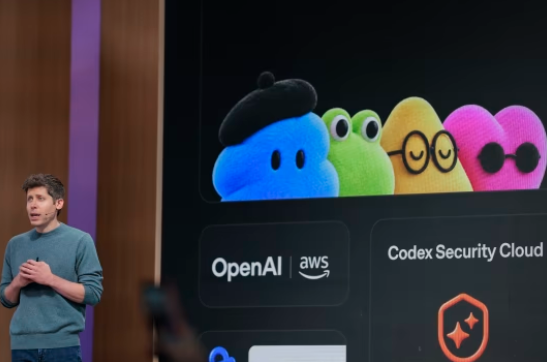
OpenAI’s Dots are 24/7 assistants designed to handle work tasks and everyday chores like scheduling meetings or booking flights. At an event in San Francisco, OpenAI showed off a cast of pink, blue, green, yellow and purple characters with names like Iggy, Felipe, Jojo, Todd and Alfred.
Users can customize the appearance and name of their own Dots.
“Instead of fearing what they name, people embrace it,” says Adamson.
OpenAI said Dots are expected to appear in the company's subsequent advertising campaigns for the new product.
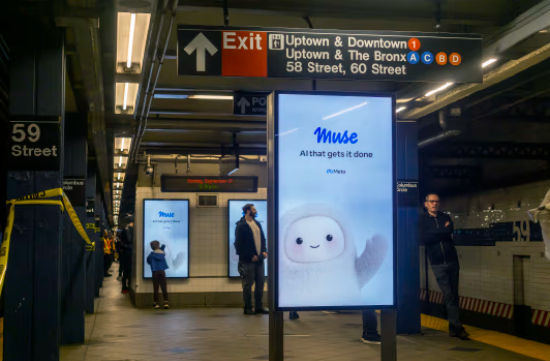
When Meta launched its AI agent Muse at the Meta Connect conference last month, a life-size model of its mascot Jolly was still dancing with attendees.
Jolly now appears on Muse billboards in New York and San Francisco and has appeared in Muse television commercials. In online ads, it sometimes wears headbands and sportswear to act as a fitness assistant, and sometimes wears headphones to accompany users online shopping.
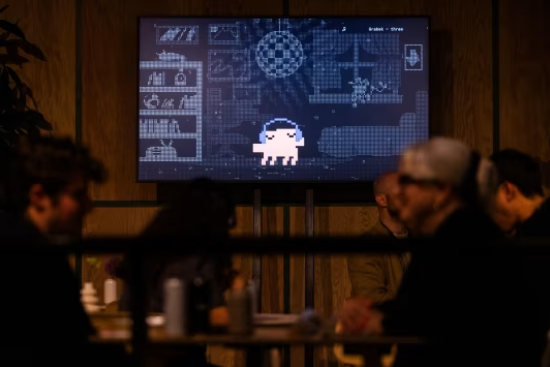
Anthropic employee Sam McAllister used Claude's code to create this retro pixel-style crab "Clawd" and used it in a 2024 demo to show off some of the product's features. Developers love the crustacean so much that it became Claude Code's mascot. While Anthropic doesn't use Clawd in consumer marketing, it does distribute related merchandise at developer events.
On the online trading platform Etsy, there are a variety of unofficial Clawd peripheral products; one merchant is even selling an unauthorized 9.4-inch crab plush toy for a whopping $148.23.
Mascots have helped market other products in the past that may be unappealing or potentially dangerous. For decades, the cartoon character Joe Camel added a layer of coolness to cigarettes.
Over time, an effective persona can help a brand stand out among similar options, says senior advertising executive Cheryl Berman. She has worked on commercials featuring iconic mascots such as Ronald McDonald, Pizza Doughboy and Tony the Tiger.
“The persona becomes the brand itself, turning an abstract technology into a familiar friend,” she says.
Comments