
Abstract:
The construction of artificial intelligence infrastructure in the United States is on track to become the largest economic bet in American history, far exceeding previous large-scale investment projects such as railways, highway systems, and Internet infrastructure construction.
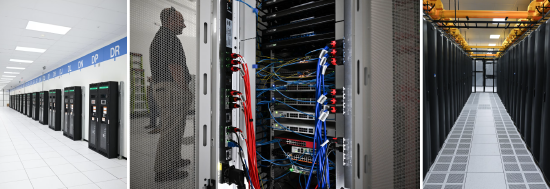
Data center spending exceeds the construction of canals, railways and power grids combined - it is creating jobs and wealth while driving up inflation.
According to new estimates published by economist Stijn van Nieuwerburgh in the Brookings Institution, total investment in U.S. data centers and related artificial intelligence infrastructure is expected to reach $10.3 trillion from 2025 to 2032.
This equates to an average of approximately 3.6% of U.S. gross domestic product (GDP) per year. Never before has the U.S. economy been so reliant on massive construction in a single industry.
These investments are transforming every corner of the economy, creating hundreds of thousands of jobs and spawning new billionaires.
But at the same time, it also carries significant risks, as a significant portion of these investments rely on debt financing. Once AI investment suddenly slows down, the impact may quickly spread to the entire U.S. economy.
Of course, there is a great deal of uncertainty in forecasting the scale of future investment, and it is entirely possible that actual expenditures will be significantly lower than current forecasts.
However, even so, the funds that have flowed into data center construction this year have reached an unprecedented scale in the modern history of the United States.
According to the latest estimates from Goldman Sachs, U.S. AI-related investment is expected to reach 1.9% of GDP in 2026. The last time construction investment in a single emerging industry accounted for a higher proportion of the economy dates back to the railway construction boom at the end of the 19th century.
Here are some of the important impacts this huge amount of money is having on the U.S. economy.
Construction Industry
Amid a sluggish performance in the overall construction industry, the influx of funds into data center construction has become one of the few bright spots.
According to data from the U.S. Department of Commerce, as of July this year, seasonally adjusted, U.S. private data center construction spending reached $37 billion, an increase of approximately $9 billion from the first seven months of the same period last year.
In contrast, in the first seven months of this year, spending on private construction other than data centers - which includes homes, apartment buildings, shopping malls and more - was about $46 billion lower than the same period last year.
Hyper-scale cloud computing companies are occupying a large amount of already limited labor and power resources, thereby increasing the operating costs of other companies.
The Federal Reserve Bank of Richmond recently stated that data center construction has begun to tighten the labor supply in its jurisdiction.
Last year, Mississippi was expected to receive an aluminum smelter project that was expected to bring about 1,000 permanent jobs.
However, according to a person familiar with the decision-making of the project operator, the aluminum smelter ultimately chose to locate in Oklahoma due to the announcement of a data center next to a candidate site near Vicksburg. The data center occupied the power supply originally needed by the smelter.
It’s not just power resources that are being squeezed by data centers.
In many areas, data centers are also driving up land prices.
Didi Caldwell, a consultant who advises heavy industry companies on site selection, said:
"It's crowding out manufacturing."
Financing and Risk
FactSet data shows that analysts expect the five so-called "hyperscale cloud service providers" - Alphabet, Amazon, Meta Platforms, Microsoft and Oracle - to total $4.2 trillion in capital expenditures during the four-year period ending in 2029.
And an increasing proportion of this is being financed through debt.
Such a huge scale of investment means that once the AI investment boom breaks down, the financial industry may also be at risk.
Tech companies often borrow from banks and private lenders through off-balance sheet entities, Van Neuerberg said, often with little public disclosure in these transactions.
This approach makes it difficult for the outside world to accurately judge the extent of financial risks, he said.
If AI fails to generate enough revenue to repay the debt raised to build data centers, the consequences could ripple through the entire financial system.
Employment
Economists are still divided as to whether artificial intelligence has significantly impacted white-collar employment.
But one thing is relatively clear: AI infrastructure construction is making some types of workers very in demand.
According to LinkedIn estimates, from 2023 to 2026 to date, artificial intelligence-related activities have created more than 750,000 new jobs in the United States.
And the salaries for these positions are generally higher.
The median salary for AI-related job postings on LinkedIn is about $180,000, compared to the overall median salary for all positions, which is about $80,000.
Kory Kantenga, head of economic research for the Americas at LinkedIn, said:
“This is one of the few areas that remains strong in a very weak labor market.”
White-collar positions such as data annotators and AI engineers account for the majority of new positions.
However, the data center itself has also added approximately 117,000 jobs since the beginning of 2024.
This figure does not include the large number of construction jobs created during data center construction, many of which are not permanent positions.
Near Washington, D.C., the number of union electricians has grown from 9,000 to 17,500 in recent years.
Don Slaiman, political coordinator for International Brotherhood of Electrical Workers (IBEW) Local 26, said:
“A lot of people come here to work just to pay off their college loans.”
Kwaku Afriyie, 23, has a university degree in cybersecurity and previously worked in an entry-level IT job.
But as he began to worry that AI might replace his job, last year he chose to switch careers and become an electrician.
Today, he is responsible for assembling parts used in data centers, earning about $30 an hour as an apprentice.
More experienced workers can earn even double this level.
Tyler Beam, 28, has spent much of the past two years building data centers and working for a company that supplies prefabricated components to Amazon data center sites across the United States.
His hourly wages as an electrician recently reached $62, not including overtime.
Beam often worked 58 hours a week and was sometimes paid double wages.
He said:
“They just want to build these data centers as fast as possible.”
The substantial increase in income also stimulated his consumption.
Bim recently bought a GMC Yukon SUV and is currently looking for a house to buy.
Wealth Effect
The rise in the stock market driven by AI has also brought about huge increases in financial wealth.
Federal Reserve data shows that as of the second quarter of this year, the total assets held by U.S. residents in stocks and mutual funds reached $63 trillion, almost double the amount at the end of 2022.
This wealth growth has supported consumer spending even as inflation-adjusted wage growth has slowed.
Moreover, these gains are particularly concentrated among wealthy households, because wealthy households typically have a higher proportion of their net worth allocated to the stock market than those in the middle class.
Nationally, home sales have been sluggish for four consecutive years.
But in Silicon Valley, AI wealth is driving a surge in luxury home sales.
Real estate agent Ken DeLeon said:
"This is the best market since 2000."
De Leon recently listed a five-bedroom home for $9.9 million.
Seven buyers ultimately made offers, and just two weeks later, the home went under contract for more than $13 million.
The final buyer is an AI entrepreneur.
Inflation
The huge demand for equipment in data centers - especially memory chips - is creating supply shortages and driving up the cost of high-tech products.
In August, prices paid by U.S. importers for computers, peripherals such as hard drives, and semiconductors were 20% higher than a year earlier.
These higher import prices then put upward pressure on the prices of some consumer electronics products, such as iPhones and game consoles, further driving inflation.
Chicago Fed President Austan Goolsbee recently warned that investment in data centers is driving up wages in related industries.
At the same time, Federal Reserve Chairman Kevin Warsh pointed out that large-scale lending by hyperscale cloud service providers is one of the reasons for the rise in long-term interest rates.
Rising long-term interest rates have further weakened the affordability of home ownership for millions of Americans.
In some areas where data centers are highly concentrated, residents’ electricity bills have also risen sharply.
Comments