
Abstract:
As the artificial intelligence boom pushes data center construction into an unprecedented expansion stage, Microsoft is facing increasingly obvious environmental and community pressures. Although controversies surrounding data center power, water, land, and noise issues continue to heat up, Microsoft has no plans to slow down infrastructure construction. Instead, it is trying to reduce the impact of data centers on local communities through a series of measures and allow more economic benefits from data center construction to return to the local area.
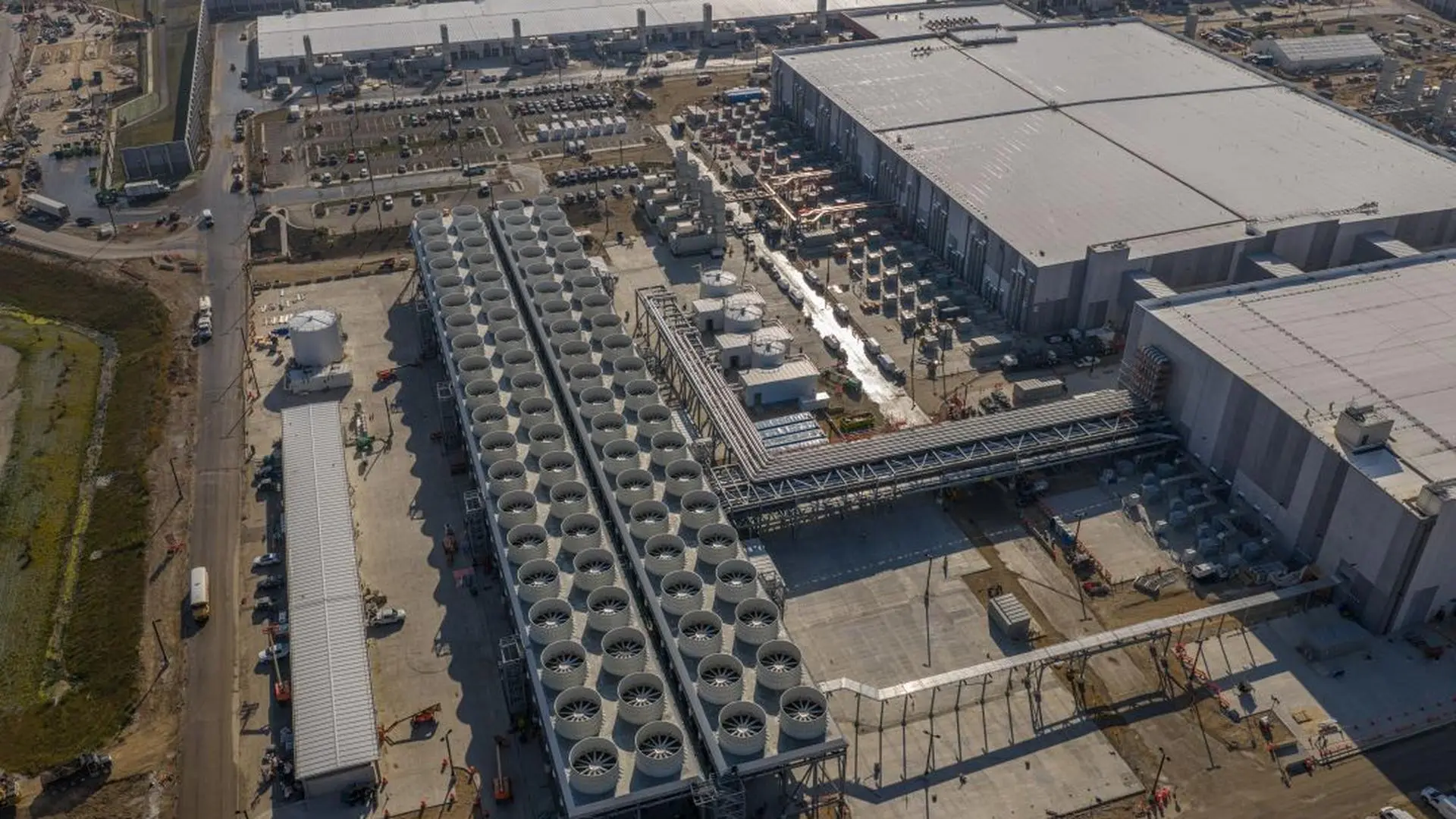
Microsoft launched a plan called "Community First AI Infrastructure" at the beginning of this year. The core idea is to change the way data centers are built, allowing the company to reap the benefits of infrastructure expansion while bearing more of the resulting costs. Microsoft proposed five commitments, including ensuring that data centers do not drive up electricity prices for local residents, replenishing more water resources than they consume, creating local jobs, expanding local public service revenue through taxes, and investing in AI training and local non-profit organizations.
Microsoft believes that AI infrastructure is becoming an important part of a new round of large-scale infrastructure construction in the United States, following canals, railways, power grids, telephones, highways and airports. But as in the past, large-scale infrastructure construction often triggers debates about who bears the costs and who reaps the benefits. Microsoft acknowledged that if the data center brings higher electricity bills, tighter water supply or other burdens to local residents, it will be difficult to obtain long-term community support even if the local area can obtain employment and tax revenue.
The most immediate issue is electricity. AI data centers consume a lot of power, and the United States itself is already facing problems such as aging power grids, growing power demand, and insufficient supply of power transmission equipment. The International Energy Agency predicts that U.S. data center electricity consumption will increase from about 200 terawatt hours today to more than 640 terawatt hours by 2035, more than tripling the current level. At the same time, a large amount of transmission infrastructure in the United States has been in operation for more than 40 years, and it often takes more than 7 to 10 years for new transmission lines to be planned and put into use.
Microsoft said that ordinary consumers cannot be asked to pay for the new power demand of the AI industry. The company is committed to working with power companies and state utility regulators to set electricity prices for data centers that are sufficient to cover the actual cost of electricity, which includes not only the power consumed, but also the cost of new transmission, power transformation and other infrastructure to serve the data center. Microsoft wants to avoid these costs from ultimately being passed on to ordinary residents.
Microsoft has already tried this model in some regions. In Wyoming, for example, Microsoft worked with Black Hills Energy to develop a new power supply plan, hoping to ensure that data center expansion would not place additional burdens on local residents. In the data center project in Wisconsin, Microsoft also supports the establishment of a new electricity price mechanism for "very large users" to allow the data center to bear the cost of providing power to them.
Microsoft also said that simply letting data centers pay their own electricity bills is not enough, because new data centers still require more power generation capacity, transmission lines and substations. The company therefore plans to intervene in local power grid planning earlier and work with power companies to increase power generation and transmission infrastructure.
In the MISO power market in the Midwestern United States, Microsoft has signed an agreement to connect an additional 7.9 gigawatts of power generation capacity to the grid, which is more than twice Microsoft's current electricity consumption. Microsoft said it hopes that in this way, the expansion of data centers will also improve the power supply capacity of the entire region.
Water resources are another issue of great concern. Data centers require large amounts of water to cool servers, so in areas with inherent water stress, such as Phoenix and Atlanta, as well as in areas with relatively abundant water, such as Wisconsin, local residents have begun to pay attention to the possible impact of data centers.
Microsoft promises to improve the unit water intensity of its data centers by 40% by 2030. The company is optimizing the cooling system to make more flexible adjustments between water cooling and air cooling according to local environmental conditions, while developing a new generation of AI data centers using a closed circulation cooling system to reduce the consumption of fresh water by continuously circulating coolant.
Microsoft cited its data center in Quincy, Washington, as an example. The area is an arid region and groundwater resources themselves are under pressure. Microsoft worked with the local government to build a Quincy water reuse facility to treat and recycle cooling water used in the data center, thereby reducing reliance on local drinking water and groundwater resources.
Microsoft also hopes to keep more job opportunities created by data center construction locally. With the rapid expansion of AI infrastructure, the demand for skilled workers in fields such as construction, electrical, machinery, and data center operation and maintenance has increased rapidly. However, if local residents lack relevant skills, the new positions may eventually be occupied by non-local labor.
Microsoft therefore announced that it will cooperate with the North American Federation of Construction Unions to strengthen apprenticeship training and vocational skills programs in data center construction locations and establish a local skilled worker supply system. At the same time, the company will also expand the Datacenter Academy data center academy program and cooperate with community colleges and vocational schools to provide students and adults with data center operation and related vocational training.
Microsoft is already working on a similar project at its data center campus in Boydton, Virginia. The local Datacenter Academy, in partnership with Southside Virginia Community College and the Southern Virginia Higher Education Center, has helped hundreds of students and adults earn industry certifications in information technology and critical facility operations.
In 2024, Microsoft opened the Critical Environment Training Lab in South Hill, Virginia, to provide students with practical training on electrical, mechanical and cooling systems. The training equipment comes in part from data center equipment that Microsoft has phased out. Some graduates then go on to work in data center operations and maintenance at Microsoft and other digital infrastructure companies.
Microsoft said it will also work with the government to expand relevant training systems. Citing LinkedIn data, the company said that global job openings related to data center occupations or requiring at least one core data center skill will increase by 23% year-on-year in 2025, and the U.S. market will increase by 13.5%. As data center construction speeds up and the age structure of technical workers ages, Microsoft believes that the United States needs to strengthen vocational training cooperation among enterprises, unions and governments.
In the data center area of Mount Pleasant, Wisconsin, Microsoft has partnered with Gateway Technical College to launch an AI training camp to provide relevant training to students and teachers. The company hopes to further provide free localized AI training to K-12 schools, community colleges and universities in the areas where the data centers are located, so that students can learn how to responsibly use, develop, manage and design AI technology.
Microsoft also plans to establish community AI learning centers in cooperation with local public libraries. The company will train library staff so that they can provide AI skills training to residents, while providing free AI training and certification to local residents, and providing AI tools and services on computer terminals in some public libraries.
For small businesses, Microsoft plans to provide AI training, tools and related information to local chambers of commerce through a new workforce transformation project, and provide flexible training subsidies to help local companies improve their employees' AI skills, adopt AI technology and adapt to changes in the economic structure. Microsoft believes that small businesses are an important part of the local economy, and their digital and AI transformation will directly affect local employment and economic vitality.
In addition to employment and training, Microsoft also plans to increase support for non-profit organizations where data centers are located. The company said it will deploy local Microsoft liaison personnel in major U.S. data center communities in the future to maintain long-term cooperation with local governments, community leaders and non-profit organizations. Microsoft believes that companies first need to listen to what local communities really need before deciding where to invest resources.
These measures by Microsoft come at a time when the expansion of AI data centers has caused increasing controversy. The company's latest infrastructure expansion plan shows that its data center size will continue to grow rapidly. Recent reports indicate that Microsoft plans to expand global data center capacity to approximately 38 gigawatts by 2032, more than three times the current scale, and a considerable part of the new capacity will be used to meet AI computing needs.
This means that Microsoft has not actually chosen to stop data center expansion amid environmental pressure and community opposition, but is trying to continue to advance construction in another way: the company will bear more power and infrastructure costs, reduce water consumption, replenish local water resources, and at the same time allow the area where the data center is located to obtain more real benefits through employment, taxation, vocational training, AI education, and community investment.
Microsoft still views this model as a long-term plan that continues to adjust. The company stated that resource conditions, economic structures and community needs are different in different regions, so specific measures will be continuously adjusted according to local conditions. As AI infrastructure continues to expand, whether this model of "building data centers while compensating the community and environment" can truly alleviate the concerns of local residents will also become a problem that large technology companies must face when promoting the construction of AI infrastructure in the future.
Comments