
Abstract:
Supporting the large-scale artificial intelligence construction in the United States requires a large number of staff to inspect every day, smell whether there is a burning smell, and check whether birds have damaged the equipment ASHBURN, Virginia - As a child, James Waddy dreamed of becoming a professional athlete. Today, he walks about 30,000 steps a day through a 1 million-square-foot data center in suburban Virginia.
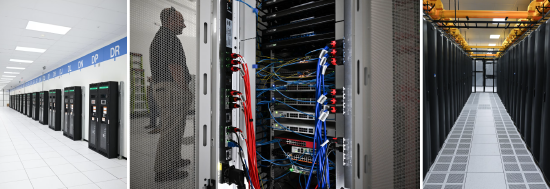
When the 33-year-old engineer makes daily inspections, he smells for the smell of burning equipment, which could mean the equipment is overheating. He also touches pipes to check for cracks and looks for lighting failures or damaged power transformers. As the data center's chief engineer, Vardy also oversees dozens of engineers doing similar work. He gave himself a nickname: "The General."
"I didn't hear anything unusual," he said. At that time, he was walking on a raised floor. Under the floor was a space that circulated air and dissipated heat for the servers. "I don't smell anything. Everything is running fine."
As Americans become increasingly wary of artificial intelligence and its potential risks, data centers are coming under increasing scrutiny. But beyond the often unassuming, box-shaped exterior of the building, the inside of a data center remains somewhat of a mystery to most people: What’s really inside? What are the staff doing?
The facility where Vardy works is owned by data center operator Digital Realty. It's filled with long, empty, echoing corridors, some so long that technicians ride on scooters. There are also rows of tall iron cages filled with various cables.
The data center is even equipped with folding beds and shower facilities so that when extreme weather strikes, technicians can stay directly on site to ensure that the servers continue to operate.
While there may be up to 120 people on site at any one time — the facility itself employs about 50 people, in addition to outsourced security personnel and staff stationed by clients — the building is so large that on a recent workday, many rooms inside remained empty.
Data center workers are a profession that is in high demand right now and are providing the infrastructure to support America’s massive investments in artificial intelligence.
The data center itself does not require a particularly large workforce. Depending on the size of the facility, a data center typically requires only a few dozen to a few hundred permanent employees to operate it. However, given the current scale of data center construction in the United States, this industry may eventually bring tens of thousands of jobs.
According to industry data provider Data Center Map, there are currently approximately 2,700 operating data center facilities in the United States.
Including the 9-year-old data center where Wadi works. It is located in a dense data center area about an hour's drive from Washington, D.C., known as the "Data Center Alley."
Data Center Map estimates that there are currently close to 400 data centers under construction in the United States, and at least another 1,500 are in the planning stage.
More than 1 million job seekers have searched for data center-related positions on the job site Indeed this year. In August this year, searches for such positions increased eightfold compared to the beginning of 2022.
Indeed's research found that for hourly workers responsible for equipment maintenance and installation, data center jobs pay about 42% more than similar jobs in other industries.
According to Indeed, the annual salary of a data center project manager is approximately $115,000.
Digital Realty said that the annual salary of junior engineers in its data center can reach approximately US$66,000, while the average annual salary of more experienced employees can exceed US$120,000.
Professionals with skills related to electrical systems, network engineering and cooling systems are currently in high demand, said Brandi Galvin Morandi, chief human resources officer at data center operator Equinix.
Large technology companies, including Meta Platforms, have also begun investing in training the skilled workers needed to build data centers.
In Virginia, where data centers are highly concentrated, Northern Virginia Community College, with the help of private companies, has launched a training program specifically for data center employment.
Cindy Fiedelman, chief human resources officer at Digital Realty, said:
“These are critical infrastructures that need to operate around the clock and cannot be interrupted, so staff must have specific technical training, awareness of safety regulations and practical experience. And relative to the current development speed of this industry, there is still a shortage of talents with these capabilities.”
Digital Realty currently operates more than 300 data centers across six continents.
In data centers like Ashburn, Digital Realty leases computer room space to large technology companies in need of computing power. Its customers include Oracle, Meta and IBM.
At the same time, Digital Realty is also facing growing public opposition to data center construction.
In Atlanta, the company plans to invest $500 million in a data center and is seeking an exemption from a local ban. The ban prohibits the construction of data centers near public transportation hubs.
Local residents have raised objections to the project, which remains in limbo.
A Digital Realty spokesperson said the project would create well-paying jobs and the company was "committed to advancing the project in the right way by working with the local community."
The data center in Ashburn has both white-collar and blue-collar workers.
These include security personnel, technicians responsible for maintaining customers' cabling facilities, supply chain managers responsible for purchasing materials, and engineers monitoring equipment for abnormalities.
The job composition of other data centers in the United States is roughly similar.
The most important task of these tasks is only one: ensuring that the data center does not shut down.
Digital Realty estimates that its data centers are currently able to remain up and running 99.999% of the time, but the company now hopes to further improve this to 99.9999%.
This difference may sound trivial, but it actually means that data center downtime will be reduced from approximately 6 minutes to 30 seconds per year.
Don Atkinson has been with Digital Realty for approximately 14 years. Prior to that, he served in the Army for 17 years, and after retiring, he also performed maintenance work on backup power systems.
Now, 53-year-old Atkinson has entered a management position and is mainly responsible for mentoring young engineers.
Like many who work in the data center industry, he is dealing with a sudden change in public attitudes toward the industry. For him, this was originally an industry that allowed him to gain stable career development.
Discussing public opposition to data centers, he said:
“We love America, we love this country, and we love this industry, so this situation is really strange.”
He also pointed out that he doesn’t actually use artificial intelligence very much.
“This industry is in a very strange period right now.”
Another employee, Malcolm Mosely, said his family sometimes talks about the political controversies involved in the data center, but he tries not to pay attention to them.
"I'm here to work."
On a recent Thursday, he was standing in a black cage surrounded by yellow cables. He was inspecting a "cross-connect" cable that connects one customer's equipment system to another customer's system.
Waddy has worked at the Ashburn data center for three years.
He has an associate's degree in business and previously worked in sales for an HVAC (Heating, Ventilation and Air Conditioning) company.
After entering the data center industry, he initially worked the night shift, maintaining equipment running for customers around the world. He has since risen through the ranks to his current position.
One of Wadi’s daily inspections is to check the air handling equipment area of the data center.
There is a giant air conditioning unit installed there, responsible for delivering cold air to other areas of the data center.
The data room upstairs looks a bit like a locker room: servers are stacked layer by layer in cabinets or iron cages, and companies can rent these cabinets or spaces.
However, you won't see any corporate logos or company names here, as competitors' servers may be deployed right next to each other.
Staff are often advised to wear earplugs when entering these areas because the roar of the equipment can be quite loud when close to the servers.
After arriving on the roof, Wadi also inspects hundreds of neatly arranged condensers. These devices are responsible for helping to dissipate heat throughout the data center.
He needs to look for equipment malfunctions and also check for damage caused by birds, some of which like to peck at the equipment.
Standing on the roof, you can also see a crane in the distance. A competitor's data center is being built there.
"It's nice here," Vardy said.
"I like this round of inspection the most."
Comments