
Abstract:
The European Commission plans to introduce new online protection legislation for minors to further restrict children and teenagers' use of social media and other digital services that may pose addiction risks. According to relevant reports, European Commission President Ursula von der Leyen plans to announce this new plan in the near future. The core goal is to establish unified rules covering the entire EU, rather than continuing to allow each member state to set different age limits and regulatory standards.
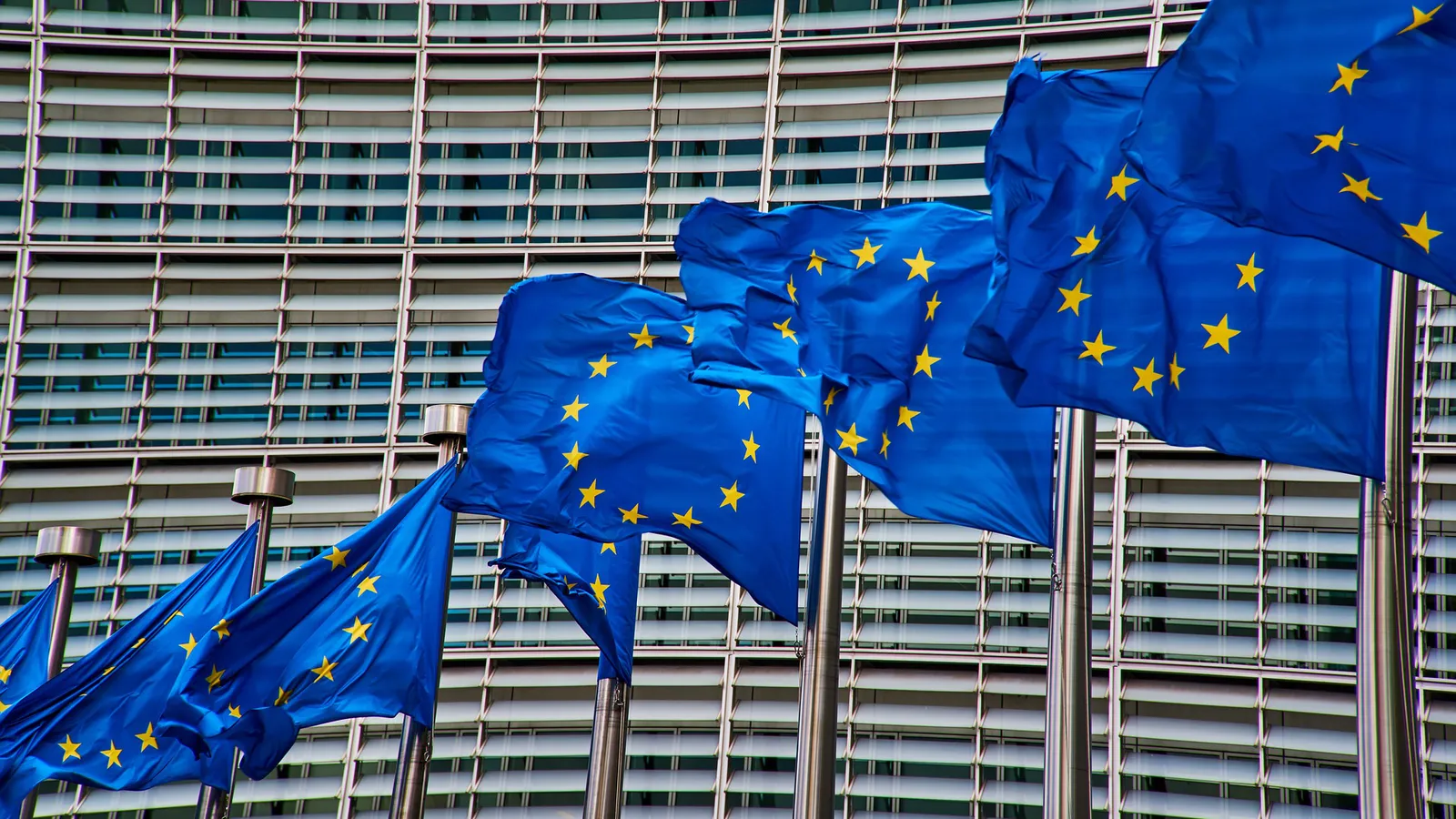
The plan comes at a time when European countries are increasingly concerned about the impact of social media on the mental health and safety of minors. French President Macron recently publicly called on the European Union to formulate unified regulations to prohibit children under the age of 15 from using social media. The Netherlands and Spain are also pushing for a unified minimum age standard at the EU level and advocating for the scope of regulation to be extended to video games, artificial intelligence chatbots and other digital services that may pose risks to minors.
However, the plan currently being considered by the European Commission may not be as stringent as France requires. According to the information disclosed so far, the EU is inclined to set 13 years old as the minimum age for social media use, while gradually relaxing restrictions for older teenagers, rather than directly stipulating that all children under 15 years old are not allowed to use social media.
This means that minors of different ages may have different levels of access to digital services. The younger you are, the more limited the content and functions you have access to; as you grow older, the services you can use gradually increase. Through this hierarchical model, the European Commission hopes to strike a balance between protecting children's safety and allowing teenagers to use the Internet normally.
Von der Leyen has previously established an expert group to study children's online safety. The group will submit its final report in July 2026, analyzing the risks faced by children using social media, games, instant messaging services and artificial intelligence tools, and proposing recommendations such as establishing unified age standards across the EU and adopting different protection measures based on children's age and risk level. The European Commission subsequently stated that it would develop further policy and legislative programs based on these recommendations.
An important reason why the EU hopes to adopt unified rules is that the differences in regulatory standards among member states are becoming increasingly obvious. As France, the Netherlands, Spain and other European countries discuss minimum age limits for social media, cross-border internet services could face a set of conflicting rules if each country introduces different rules. The European Commission hopes to avoid this fragmentation through unified legislation while holding large internet platforms to the same basic standards across the EU.
In addition to social media, video games may also become the focus of this legislation. The EU is particularly concerned about games and digital services with obvious "addictive designs", such as features that encourage users to continue using them for a long time through continuous rewards, infinite scrolling, auto-play, random mechanisms or other means. Regulators worry the designs could have a stronger impact on children whose self-control has not yet fully developed.
AI chatbots may also be included in the new minors protection framework. As children increasingly use AI assistants, chatbots, and companion artificial intelligence products, European regulatory authorities have begun to pay attention to the new risks that may arise when these systems interact with minors, including inappropriate content, emotional dependence, misinformation, and inappropriate responses when children are in a state of psychological crisis.
Age verification will be the key to whether the entire policy can be truly implemented. If the EU stipulates that minors are not allowed to use certain platforms, then the platform must be able to determine the user's age. But age verification itself involves privacy issues. The EU needs to find a balance between preventing children from bypassing age restrictions and avoiding large-scale collection of adults' identifiable information.
The EU has previously begun to promote age verification technology for digital services and explore ways to better protect privacy. Rather than requiring users to submit full ID or other highly sensitive personal information to every social media platform, policymakers hope to ultimately achieve "proof of age requirements."
At the same time, the EU is continuing to strengthen digital supervision of large technology companies. The previously implemented Digital Services Law already requires large online platforms to assess and reduce the risks faced by vulnerable users, including minors. The European Commission is currently investigating whether some large platforms have designed addictive products to induce long-term use of services by children and adolescents.
If the new minors legislation is finally proposed, it will mean that the EU's supervision of Internet platforms will further shift from "governing the platform after problems arise" to "requiring companies to consider children's safety from the product design stage." The platform may need to adjust recommendation algorithms, default settings, notification mechanisms, and other features that easily induce minors to continue using it.
This trend is not unique to the EU. Australia has adopted stricter social media restrictions for minors, and the UK, France and other countries are exploring similar options. Some parts of the United States have also begun to introduce regulations targeting children's Internet use and the addictive functions of social media. A series of new laws recently passed by the state of California in the United States prohibit social media platforms from providing some behaviorally addictive features, such as autoplay and infinite scrolling, to users under the age of 16. At the same time, they have also begun to establish a safety framework for the use of AI chatbots by children.
However, there are still clear differences within the EU on whether the minimum age should be set at 13, 15 or 16 years old. France wants to raise the limit to 15, while some countries such as Northern Europe prefer parents to decide when children can use social media. Some European countries worry that an overly strict uniform age ban may infringe on parents' right to decide on their children's digital lives, and may also cause children to switch to platforms with weaker supervision.
In addition, the EU also needs to face the issue of how to deal with communications privacy. There is a close link between child protection policy and combating child sexual abuse content, and the EU is currently advancing relevant legislation. In June 2026, the European Parliament and the Council of the European Union have reached a political agreement on updating the criminal legal rules for child sexual abuse and exploitation crimes. The new rules will expand the definition of relevant crimes, strengthen investigation and prosecution, and improve the protection and support for child victims.
Data released by the European Commission show that the number of online child sexual abuse-related reports has increased from about 1 million in 2010 to more than 23 million in 2025, involving tens of millions of pictures and video files. There has also been a significant increase in reports of online grooming targeting children over the past five years. The EU therefore believes that existing cybersecurity regulations alone are no longer sufficient to cope with changes in the digital environment.
However, the new regulatory plan may once again trigger controversy between technology companies and privacy protection organizations. Age verification, platform monitoring, and regulation of chat content and recommendation algorithms may all involve issues such as personal privacy, anonymous communication, and free speech. The EU needs to ensure that measures to protect children do not turn into excessive surveillance of all internet users.
On a political level, the legislation could also further test the already complex relationship between the European Union and the U.S. technology industry. Europe has continuously strengthened its supervision of large U.S. technology companies in recent years, while the U.S. government has repeatedly criticized the EU for taking too stringent digital regulatory measures against U.S. companies. The EU therefore needs to strike a balance between strengthening child protection and avoiding regulations that could be seen as targeting country-specific businesses.
If the European Commission finally proposes formal legislation, it will then need to be reviewed and negotiated by the European Parliament and the European Council. The final text is likely to have significant changes from the original plan. The minimum age, age verification methods, the definition of social media, and the extent to which video games and AI services are included will all become major points of contention in future negotiations.
No matter where the final age threshold is set, this policy shows that the EU's supervision of minors' digital lives is entering a new stage. In the past, Europe mainly relied on existing rules such as the Digital Services Act to require platforms to reduce risks. The next step may be to directly stipulate which digital services children can use at what age, and what protective measures platforms must take from the level of product design, algorithms and default settings. For social media, gaming platforms and artificial intelligence services with hundreds of millions of users, this will likely become a major upgrade in Europe’s digital regulatory system.
Comments