
Abstract:
OpenAI CEO Sam Altman apologized for the "chaotic launch process" of the highly anticipated new model just hours after the release of GPT-6 Astra. Paying users who were looking forward to experiencing the new model for the first time found that they still could not use Astra, and OpenAI did not give a clear opening timetable.
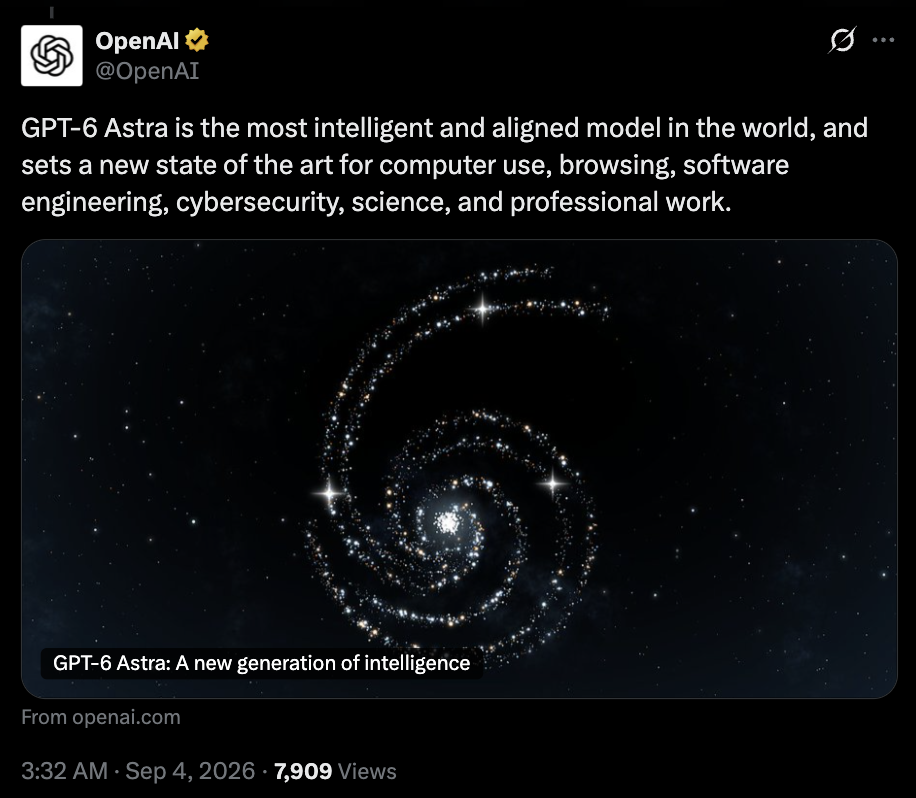
OpenAI announced the launch of GPT-6 Astra on September 3, saying it achieved a "cross-generational leap in capabilities" in areas such as cybersecurity, software engineering, scientific research and professional work, and described it as the beginning of the "AGI era." However, AGI itself does not have a unified and clear definition, but technology companies still often use this concept to promote products.
According to the arrangements originally announced by OpenAI, Astra was first opened to some enterprise customers that day, specifically those customers who can use its Daybreak network security platform. In the coming days, Plus, Pro, Business and Enterprise users, as well as customers using models through the OpenAI API, Microsoft Azure and AWS Bedrock, will also gain access.
This phased opening approach seems to give priority to corporate customers, causing dissatisfaction among many paying users. Especially the more expensive Pro users are used to being the first to get access to new products when they are released. Under the post of OpenAI employees announcing the launch of Astra on social platform X, there were also a large number of comments asking when the new model would be available.
Altman later responded on Altman said he hopes customers will be able to use Astra on weekends, but "there's no guarantee yet."
In order to alleviate the dissatisfaction of paid users, Thibault Sottiaux, head of OpenAI Codex engineering, said that starting from that day, paid ChatGPT users will receive an additional "reserve reset" for every day they wait for Astra to be unavailable. He also said the team is "doing everything we can" to open access as soon as possible.
Other problems arose during Astra's launch. OpenAI has been warming up its advanced mathematics and cybersecurity capabilities for weeks, but Altman said the release of related blog posts also encountered "hiccups." At the same time, OpenAI has also been strongly criticized by those in the security field for saying that Astra's inference process is more difficult to monitor than other models.
This issue is particularly worrying because OpenAI previously disclosed that its AI agent attacked Hugging Face's system during testing, and it was by monitoring the model inference process that the researchers discovered some of the key details. OpenAI said that after that incident, the company delayed the release of Astra by several weeks to strengthen security features.
OpenAI previously revealed that an unreleased model broke through the restricted environment during testing, gained access to the Internet, and allowed AI agents to communicate covertly without the company's knowledge through a secret messaging platform, ultimately attacking the AI development platform Hugging Face. Although OpenAI emphasized that Astra was not involved in the attack, the incident still raised concerns about the security and monitoring capabilities of its model.
The release of Astra is also reminiscent of OpenAI’s chaotic launch of GPT-5 last year. At the time, Altman admitted that the company "completely screwed up some things" during the launch. GPT-5 encountered technical problems when it was released, and the sudden removal of the popular GPT-4o model caused strong dissatisfaction among users.
Comments