
Abstract:
For businesses and software engineers, setting up a development environment on a new computer often requires hours of tedious preparation. In response to this pain point, Microsoft officially announced a new project called "Project Zenith", which aims to launch a Windows 11 system version that is pre-tuned specifically for developers, significantly reducing deployment time, and enabling hardware devices to be put into programming development right out of the box.
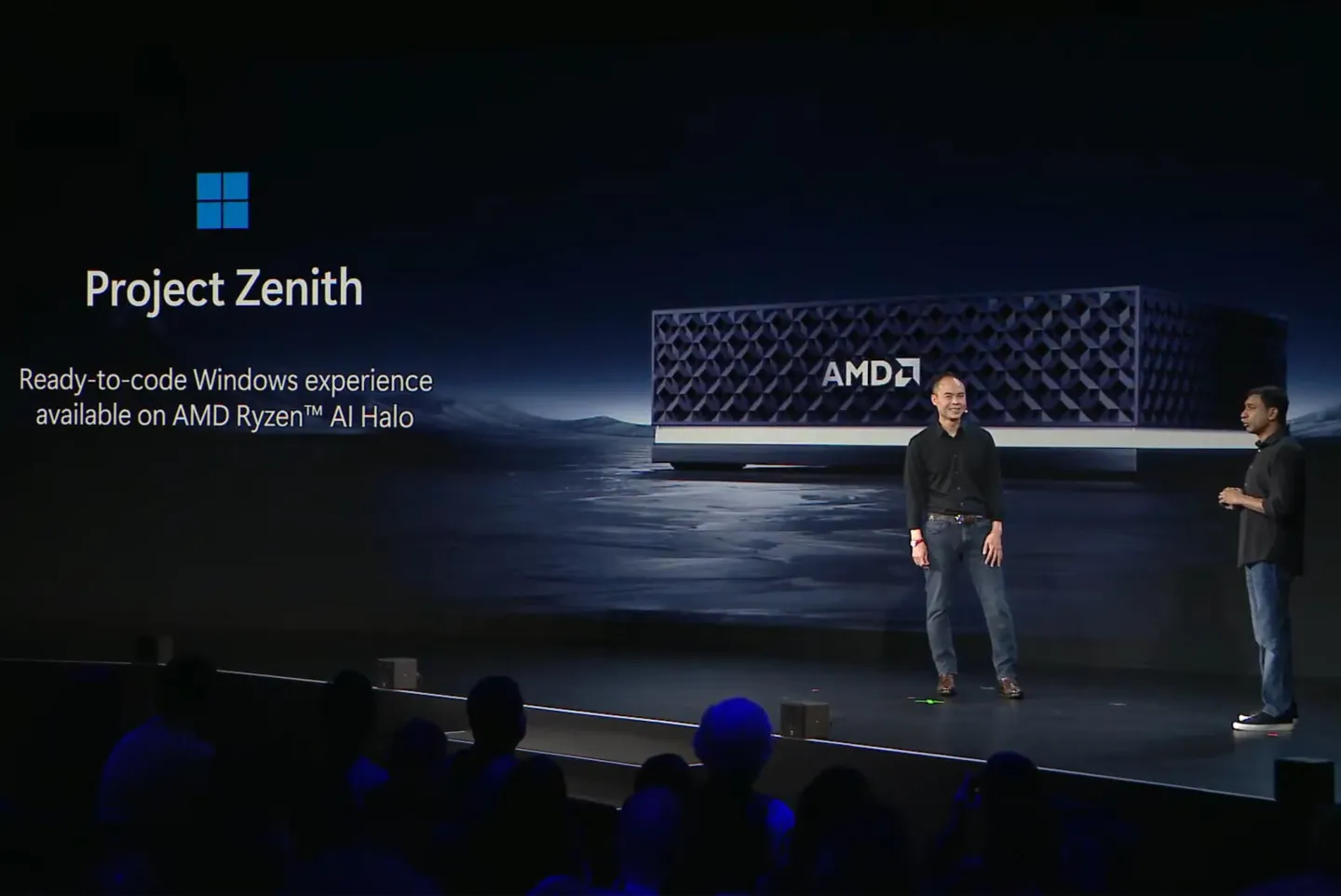
Logan Iyer, Microsoft's vice president of Windows Platform and Developers, summed up Project Zenith as an "out-of-the-box, ready-to-code Windows experience." The system's minimum hardware benchmark is set to 64GB of unified memory and a memory bandwidth of at least 250GB/s, which is designed to ensure that the local artificial intelligence model has sufficient running speed and responsiveness. The system is the first to be available on compact PC hardware powered by the AMD Ryzen AI Halo platform.
Compared with the standard version of Windows 11, the "Zenith Project" for developers has made a series of customized adjustments that take into account practicality and professionalism. The system pins Windows Terminal and Visual Studio Code to the taskbar by default; the file explorer displays file extensions, hidden files, and complete file paths by default, and enables support for long paths; at the same time, the recommendation prompts and account notification interference in the start menu are turned off, and the command panel function is enabled by default. In terms of development tool chain, the system is pre-installed with mainstream tools such as Visual Studio Code, GitHub Copilot, GitHub Copilot CLI, PowerShell, Git, Python, NVM and Node.
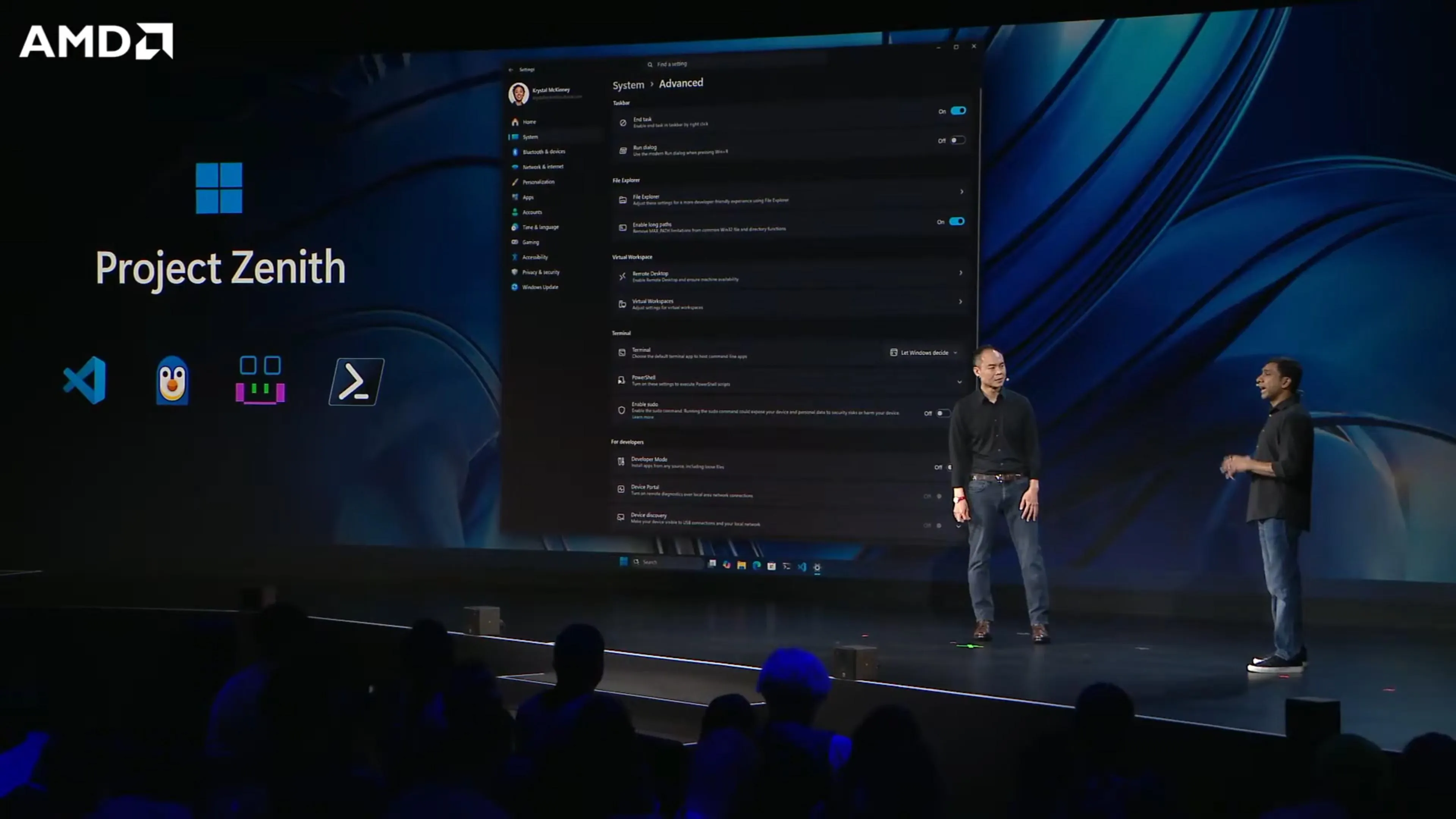
As the core support for developers’ cross-platform workflow, the Windows Subsystem for Linux (WSL) plays a key role in this configuration. On the basis of introducing WSL into the Microsoft Store and making it open source and adding support for the official Fedora distribution in the past, the system integrates the WSL container function previously announced at the Build Developer Conference, allowing developers to directly call and run Linux containers within the Windows environment, thereby further improving the system's stickiness to engineering developers.
Local AI computing power and cost reduction are the core considerations of the "Zenith Project". Microsoft hopes that developers can run large code models with smaller parameter sizes on the local end without restrictions, thereby avoiding high token fees caused by high-frequency calls to cloud APIs. AMD stated that the Ryzen AI Halo platform with 128GB of unified memory can theoretically handle models with up to 200 billion parameters. According to actual scenario testing, the device is sufficient to stably carry an unquantized complete model of approximately 70 billion parameters while retaining sufficient KV cache to maintain normal generation quality. For a long time, developers who want to run large models locally have mostly chosen between Nvidia's DGX Spark workstation and Apple's Mac Studio with high-bandwidth memory. The emergence of Windows systems such as Ryzen AI Halo has just filled the ecological gap between professional development kits and high-end consumer hardware.
In addition, "Project Zenith" equipment has natively integrated agent-based system-level security protection mechanisms from the first day it leaves the factory, including the previously demonstrated "Microsoft Execution Containers" to ensure code security and permission isolation during the operation of AI agents. In addition to the first AMD hardware, Microsoft plans to join more OEM manufacturers and chip partners in the next few months to gradually launch more customized devices covering the "Zenith Project" standards.
Comments