
Abstract:
JEDEC recently disclosed some design directions for the next-generation memory standard DDR6 in advance. In addition to performance improvements, the most eye-catching change is that the length of DDR6 memory modules may be approximately 44% shorter than existing DDR5 products, allowing more memory to be accommodated in the same motherboard space.
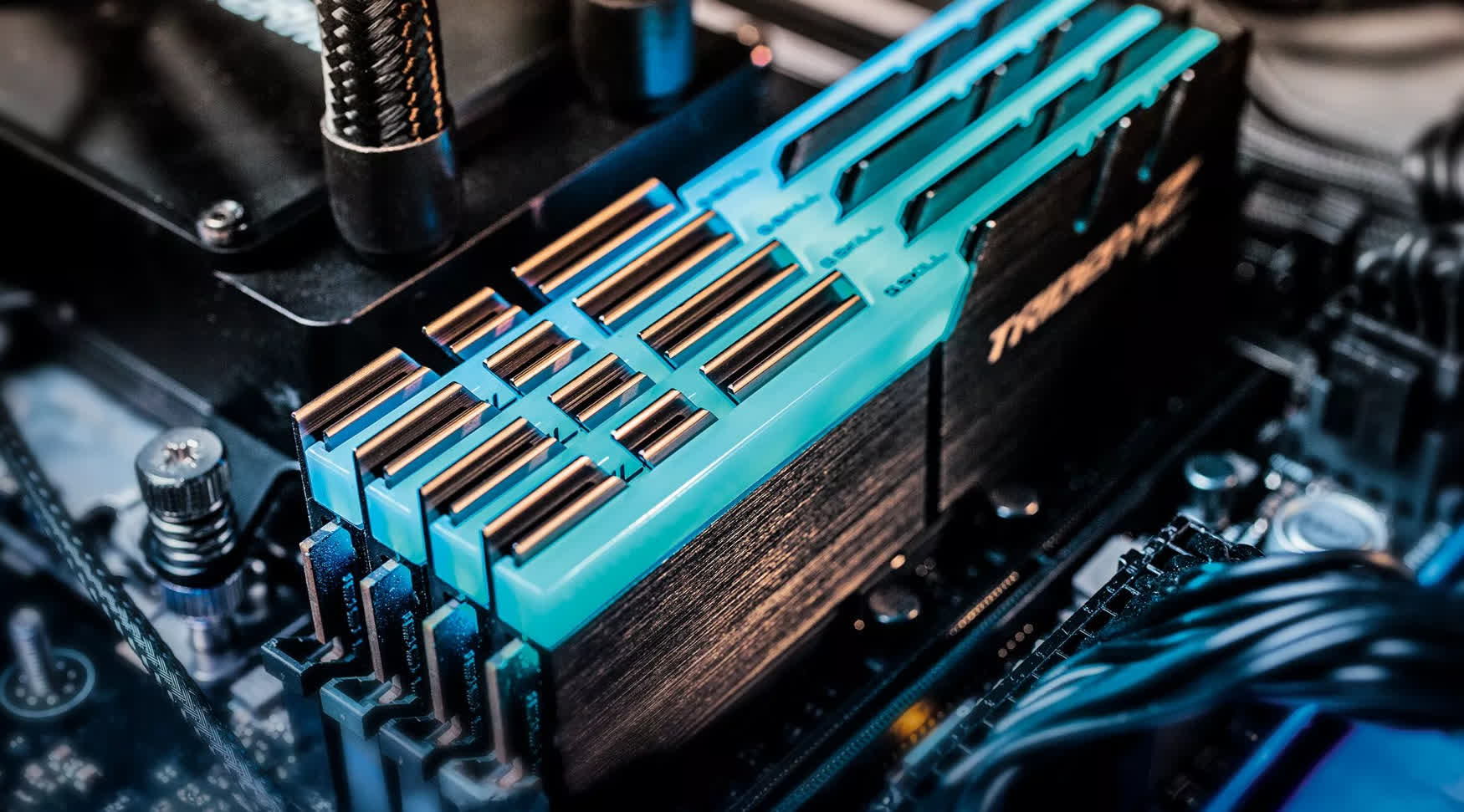
Currently, the total length of a full-size DDR5 memory stick is slightly more than 133 mm, while the DDR6 specification envisaged by JEDEC is 74 mm, which is almost the same as the SO-DIMM small memory stick used in laptops. This change is especially important for servers and AI computing platforms, because shorter memory sticks mean that more memory can be deployed closer to the CPU, thereby improving overall system performance.
JEDEC specifically pointed out that workloads such as AI inference and agent-based AI will become important application scenarios for DDR6. Such workloads often require large amounts of high-bandwidth, low-latency memory resources, and deploying more memory closer to the processor can help alleviate data transfer bottlenecks.
In terms of speed, DDR6 registered memory modules (RDIMM) are expected to start at 12,800 MT/s, which is significantly higher than the current upper limit of 9,200 MT/s for DDR5 RDIMM, and may reach 14,400 MT/s or even higher in the future. Looking at the starting rate alone, the transmission rate of DDR6 is about 39% higher than that of DDR5.
In addition to higher transfer rates, the data bus width of DDR6 will also be expanded from 64 bits to 96 bits. This means more data can be moved per transfer. After the two improvements are combined, JEDEC expects DDR6 to bring more than 50% bandwidth improvement in the early stages of release. In addition, the organization is developing specialized low-power modes for data centers to cope with the growing energy consumption pressure of large-scale AI infrastructure.
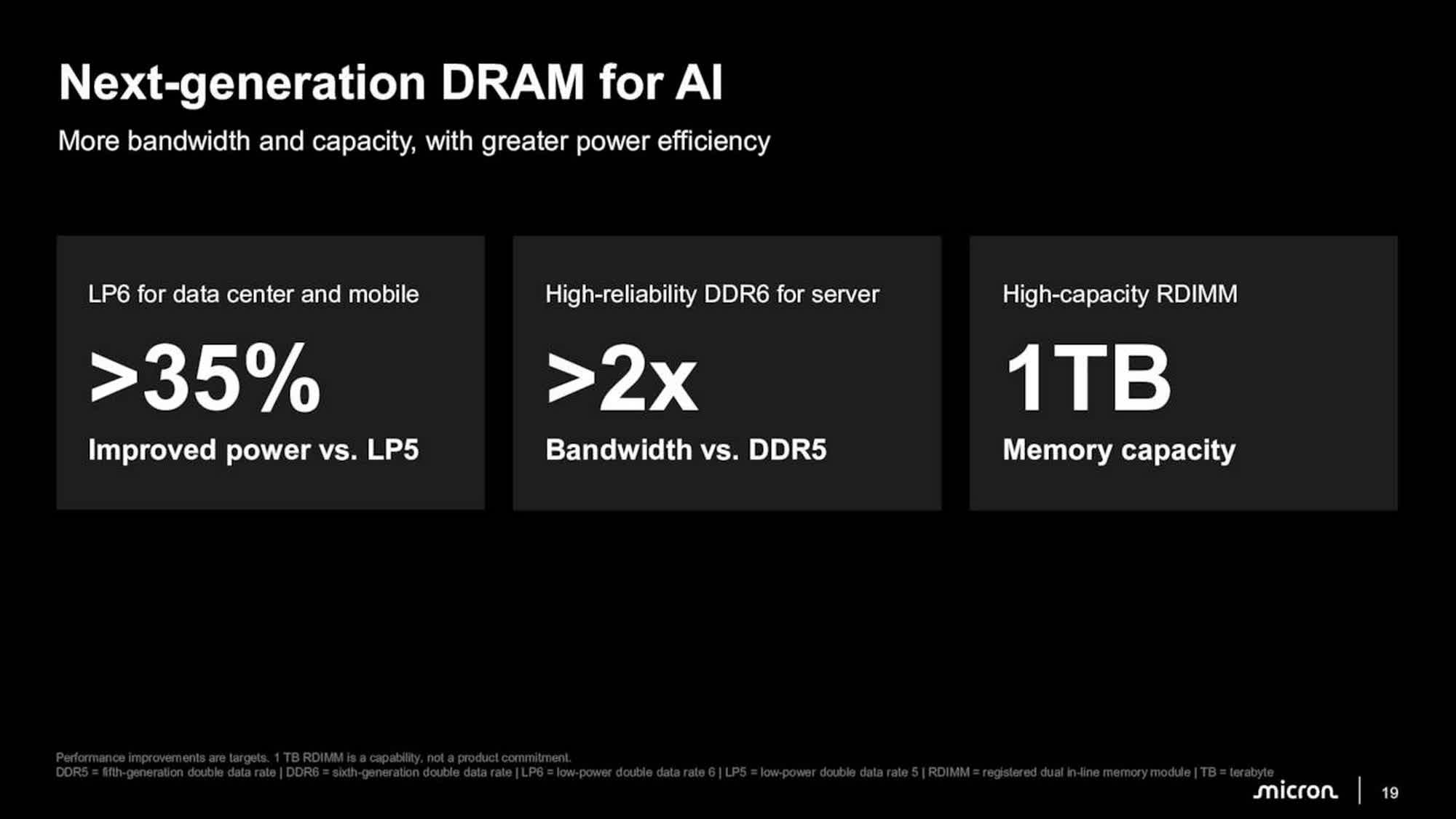
In terms of the capacity of a single memory, DDR6 is expected to support 128 Gbit memory particles, that is, a single particle can provide 16GB capacity. Manufacturers can also stack multiple pellets within the same package to achieve higher overall capacities. Micron has previously stated that it is planning server memory modules with a capacity of 1TB, which also shows the potential of DDR6 in the field of large-capacity memory.
However, ordinary consumers do not need to prepare for upgrading to DDR6 yet. JEDEC is still considering unbuffered DIMMs for desktop computers and low-profile CAMM designs, but has not yet announced a specific launch time.
Previously, it was reported that Samsung, SK Hynix and Micron have launched DDR6-related cooperation with substrate suppliers, and the first batch of commercial modules are not expected to appear until 2028 or 2029. It is still unknown whether a reasonably priced DDR6 memory package suitable for gaming computers will be launched by then. For ordinary users, DDR6 is still more of a technical reserve in the fields of servers, data centers and AI computing in the short term, while the popularization of desktop platforms may take longer.
Comments