
Abstract:
AMD表示仍致力于PC市场,但其最新财报显示,数据中心业务正迅速成为其主要业务。服务器处理器和AI加速器目前贡献了公司近三分之二的收入,而游戏芯片销售额正在下滑,PC芯片在总收入中所占份额也在不断缩小。
AMD reported a record quarterly revenue of $13.4 billion, a year-on-year increase of 45%. Its data center segment revenue reached $8.5 billion, almost double the same period last year, mainly due to EPYC server processors and Instinct AI accelerators.
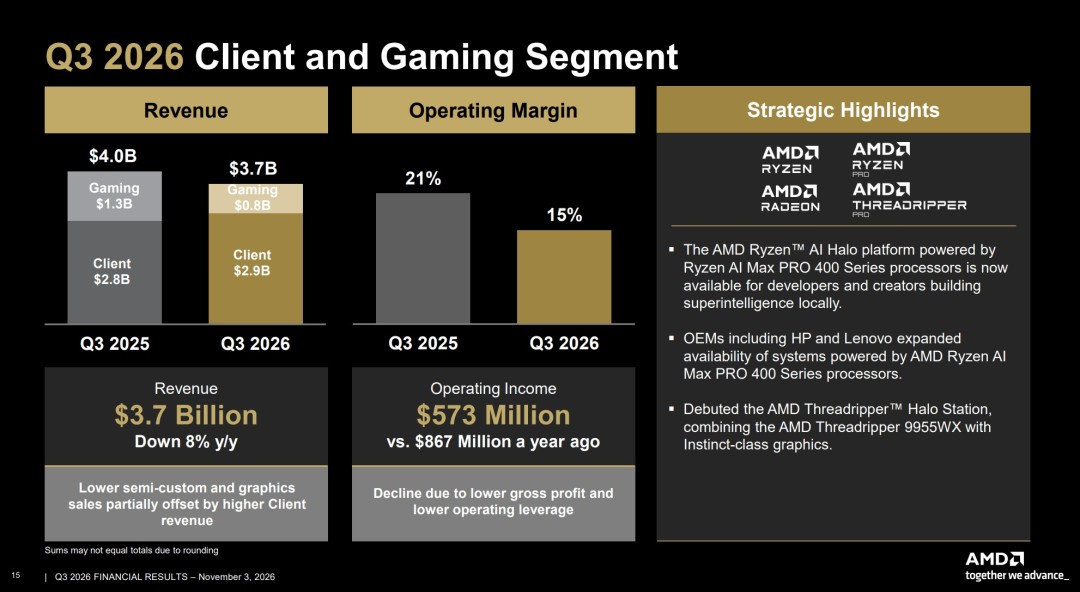
The situation in the gaming industry is completely different. Gaming industry revenue fell 40% year over year to $773 million as sales of both Radeon graphics cards and semi-custom chips used in game consoles fell.
涵盖台式机和笔记本电脑Ryzen处理器的客户端业务表现较好。营收同比增长7%至29亿美元,主要得益于移动锐龙处理器和基于Ryzen PRO的商用系统。然而,与上一季度相比,营收下降了4%。内存和组件价格上涨导致买家更加谨慎,而高端处理器的销售仅部分抵消了需求疲软的影响。
By analyzing the contribution of each business unit to AMD's overall revenue, the transformation trend of the data center business becomes clearer. Over the past five quarters, the share of the client business has declined from about 30% to 22%. But this does not mean that PC processor sales have declined significantly: the server business is growing much faster than PCs. AMD does not disclose the revenue of Ryzen processors separately, so the performance of the client business cannot directly reflect the sales of Ryzen processors. Even so, PC processors currently account for a small share of the company's revenue.
This gap is likely to widen further. AMD expects fourth-quarter data center business revenue to increase about 50% from the third quarter, while its client and gaming business combined revenue is expected to decline more than 20%. The company also expects global PC shipments to decline by double-digit percentages in 2027 as prices for memory and other components rise.
Nevertheless, CEO Lisa Su said the PC market remains critical to AMD. The company plans to focus on business systems, high-end consumer computers and desktop computers sold through retail channels - areas where AMD believes it can outperform the overall market. Su Zifeng also said that the flexibility of AMD's supply chain allows it to flexibly allocate production capacity between PC and server processors according to changes in demand.
Comments