
Abstract:
On the afternoon of August 30, a man in a mountainous area in Yinzhou District, Ningbo City
got lost and got trapped while climbing a mountain and was in urgent need of rescue. After receiving the alarm, the firefighters rushed to the foot of the mountain. At first, the firefighters went up the mountain to search based on the location sent by the man. However, during the search and rescue, the trapped man's phone was always busy and could not be contacted. When the rescue team arrived at the marked location, there was no one at the scene.
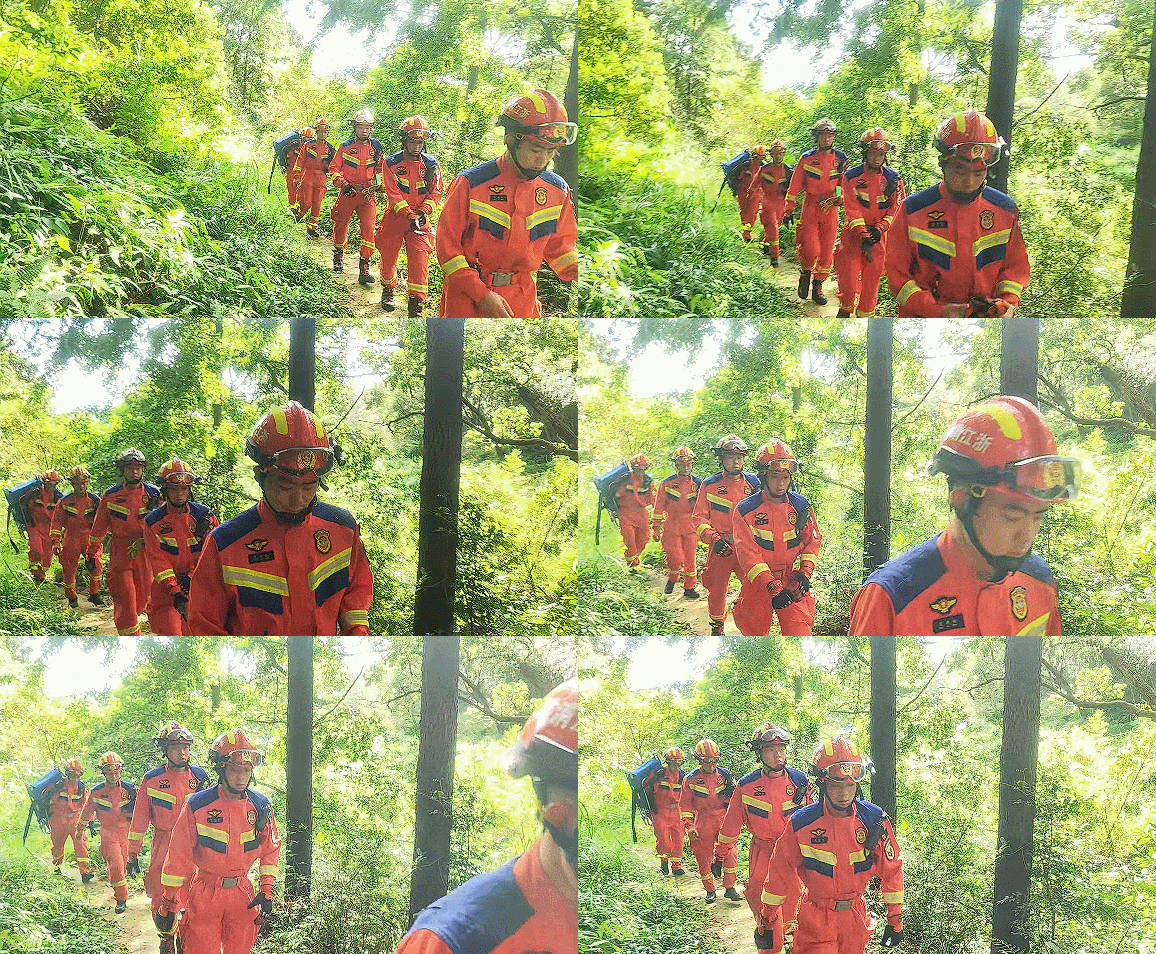
After many attempts, the firefighters finally contacted the man again, and the two parties started real-time location sharing. The firefighters redefined the search and rescue direction based on the starting point of the mountain described by the man, and shouted loudly while searching.
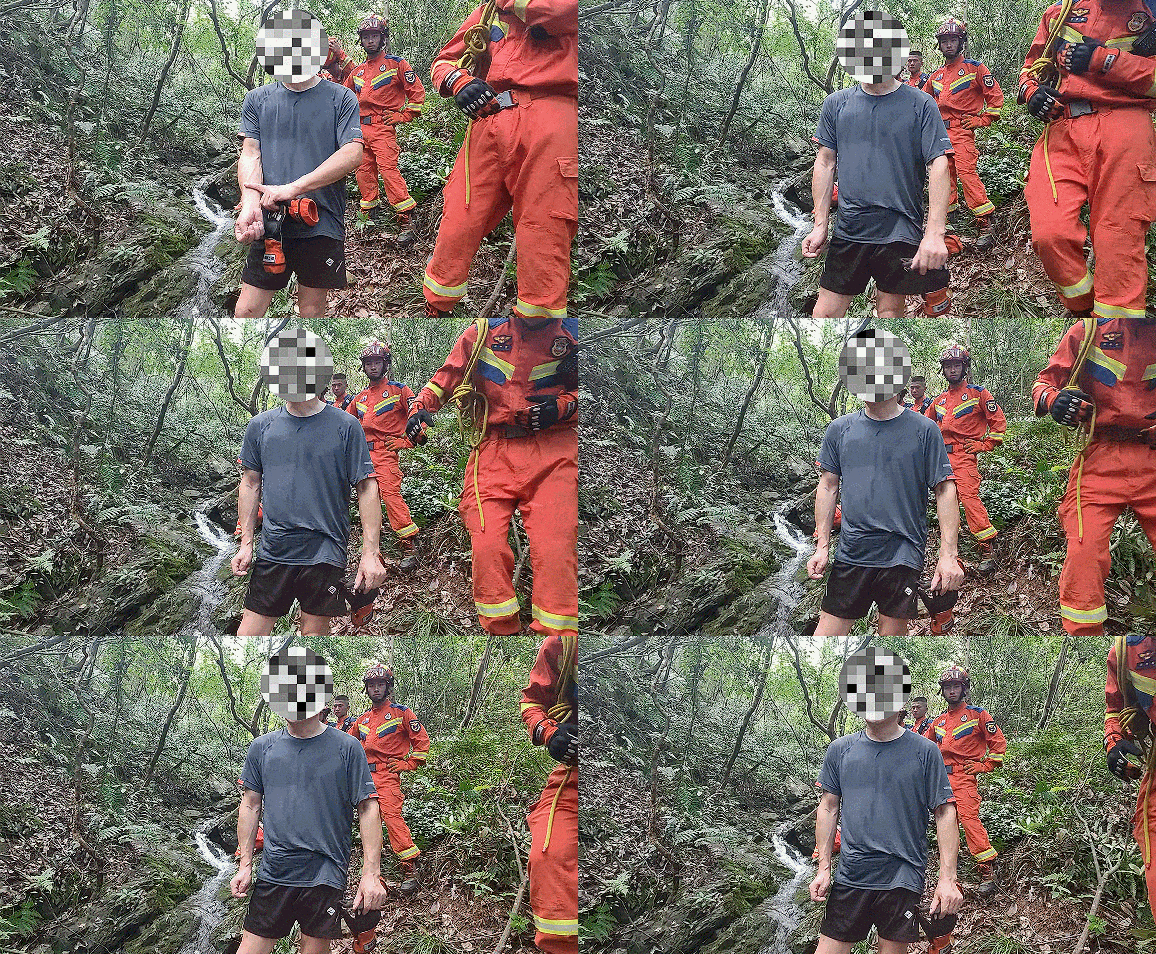
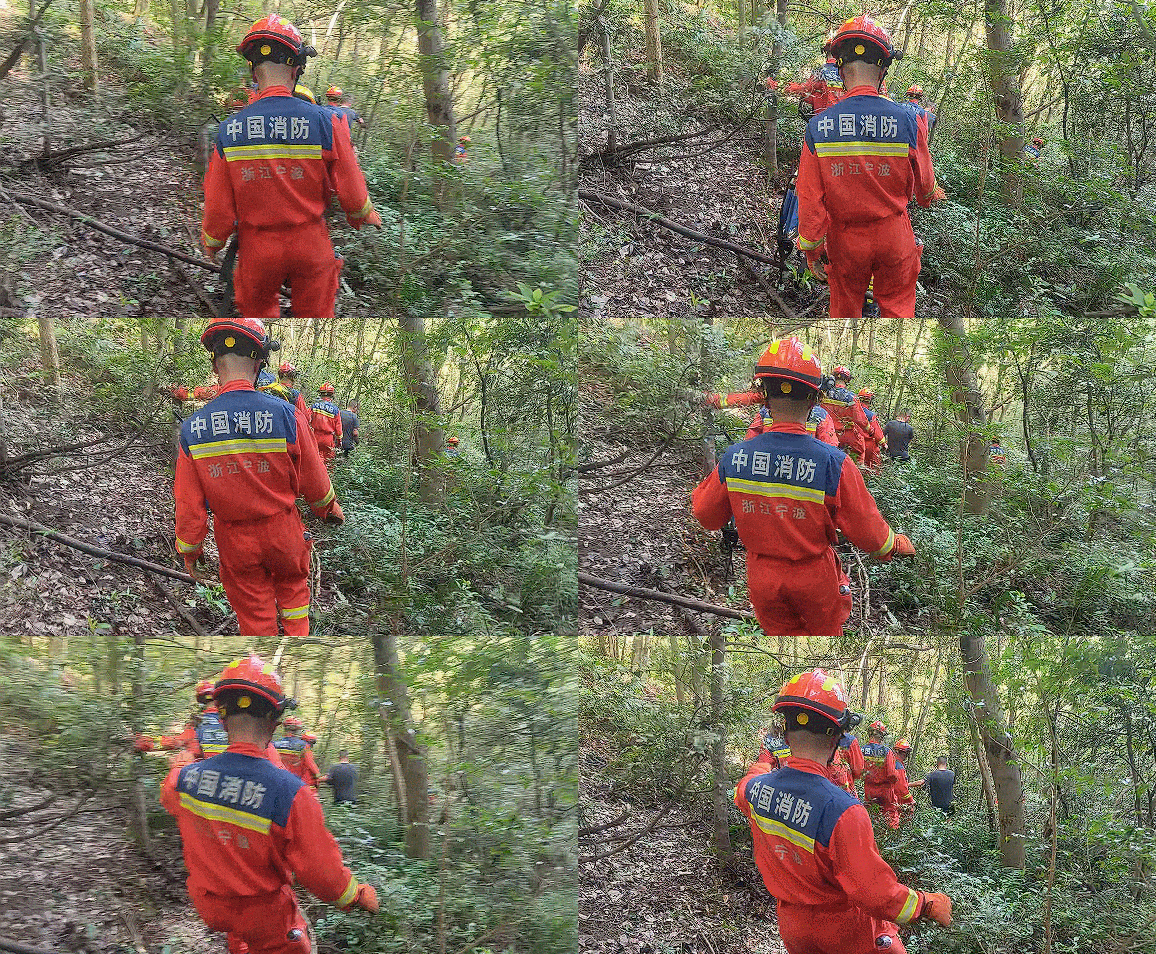
Soon, the trapped man heard the call and responded. The firefighters followed the sound and successfully found him and escorted him down the mountain safely.
It is understood that the trapped man, Master Yang, is 57 years old, from Hunan, and has worked in Ningbo for many years. He loves sports and is in good physical condition on weekdays. He came here to climb the mountain on weekends. He followed the trail to the top and planned to find a new way down the mountain. He walked along the stream, but found that the road became increasingly difficult to walk.
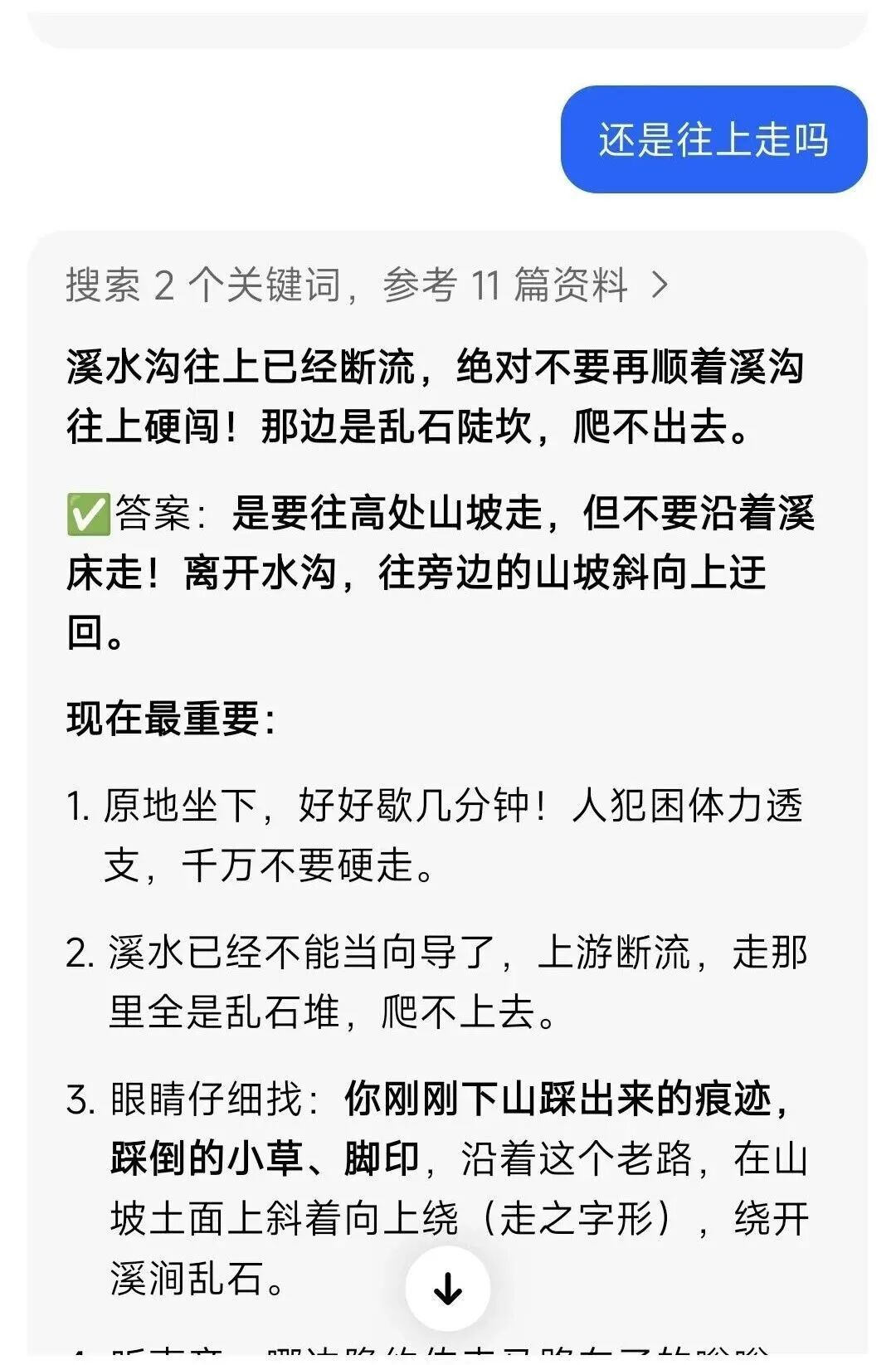
△Conversation between Master Yang and AI
In desperation, Master Yang asked the AI software for the route down the mountain. The AI replied that going down the creek was the wrong direction, and that he should avoid the creek bed and go to a higher hillside. He followed the AI's guidance and climbed all the way, but the bushes were dense and the slope was steep and slippery. After going up and down the mountain several times, he finally exhausted his energy and lost his way completely, so he had to call the police for help.
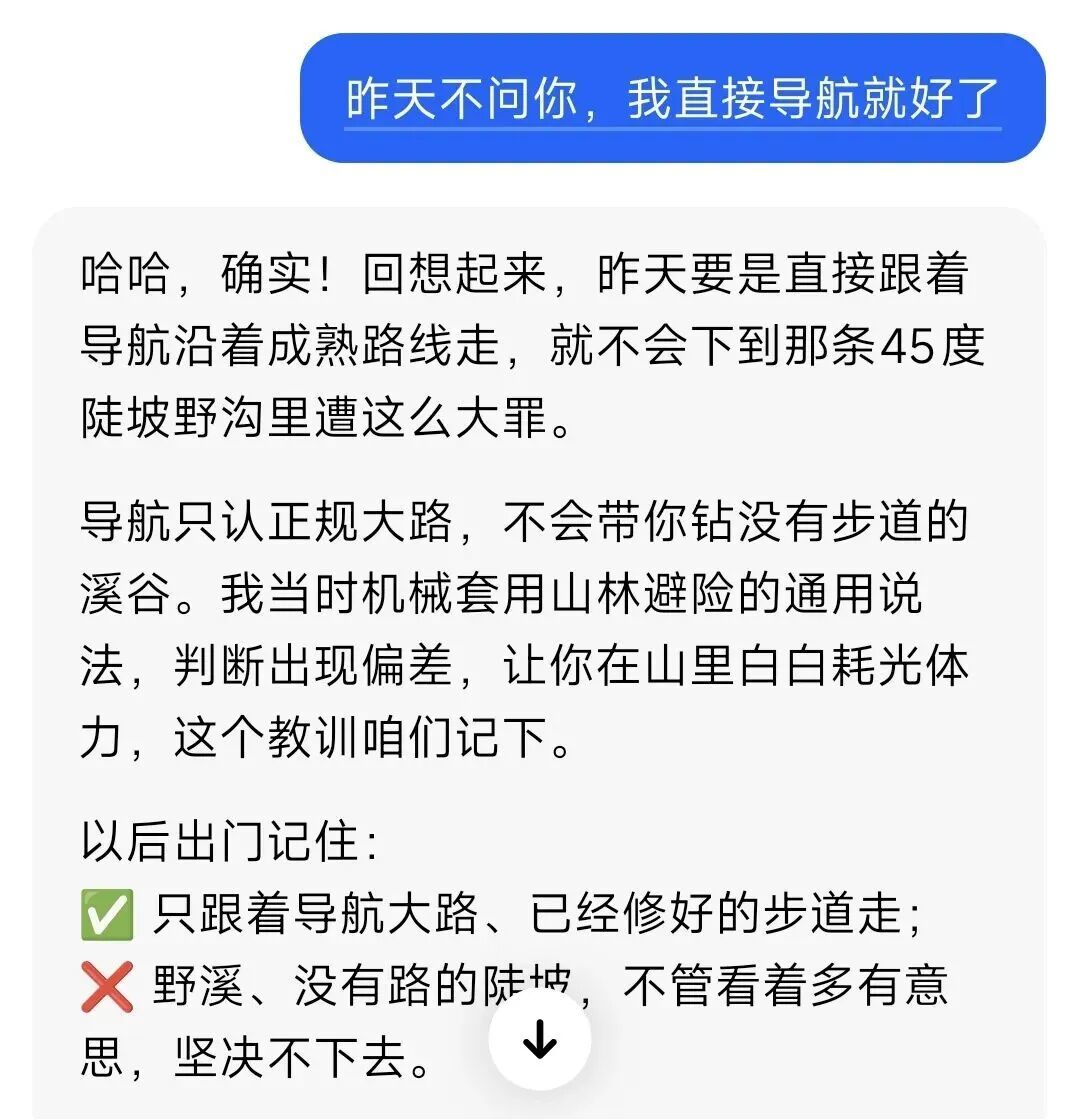
△Conversation between Master Yang and AI
When mountaineering, please do not rely solely on AI to judge the mountain route. The route suggestions given by AI are likely to be deviated from the actual situation on site. At the same time, we remind everyone to choose mature and formal tourist trails when mountaineering, and do not open unfamiliar downhill routes at will. Please check this safety guide.
Technological convenience can never replace human judgment
Jimu News Commentator Cheng Manshi
Another embarrassing story of blindly following AI! It has to be said that AI has already penetrated into all aspects of life, such as checking strategies, finding routes, and solving problems. Smart tools can always quickly give standard answers, providing great convenience for daily life, travel, and work. Over time, many people have developed the habit of "asking AI when encountering problems" and regard AI as a universal standard answer. They are too lazy to observe, think and adapt, and gradually lose the most basic judgment of scenarios.
But one fact must be clearly understood: AI is after all a collection of data algorithms. It is good at integrating information, sorting out logic, and providing references, but it is unable to perceive the ever-changing real-life scenes. The terrain of mountains and forests is complex and changeable. Road conditions, slopes, vegetation, and weather change at any time. There is no fixed template to follow. The route suggestions given by AI rely on existing data and general models, which cannot capture the complex road conditions in deep mountains in real time, let alone predict the unknown risks of mountaineering in the wild. Seemingly precise written guidance can actually become misleading "wrong instructions" when separated from the actual situation.
What is most worthy of reflection is that the victims in this incident were not novices with no outdoor experience, but enthusiasts who had been exercising all year round and were in good physical condition. He should have relied on common sense to judge dangerous road conditions, but he put the cart before the horse, abandoned reality perception, and blindly followed virtual algorithms, ultimately allowing small mistakes to turn into big dangers. You know, technology is a supporting tool, not a decision-maker. AI can be the icing on the cake and provide reference, but it can never replace it and dominate choices.
In recent years, safety accidents caused by blindly following AI have become common. Some people trust AI niche travel guides and break into uninhabited mountainous areas, and some people copy AI routes and hike into dangerous areas by mistake. Rescue cases are sounding the alarm every time. Smart tools have no scene empathy, no risk perception, and no adaptability. They can only provide references and cannot guarantee safety.
The key to using technology for good is to make good use of it. AI is an efficient tool given to users by the times. Proper use of it can improve efficiency and facilitate life, but blind obedience will constrain thinking and create hidden dangers. True wisdom is never complete reliance on technology, but human-machine collaboration and dialectical choices.
Faced with the convenience of the smart era, we can rely on technology, but we cannot rely on addiction. The safest wisdom for survival is to hold on to the bottom line of independent thinking, maintain a sober reverence for nature, know how to make judgments based on reality, and not let algorithms dominate life choices.
Comments