
Abstract:
The Foreign Affairs Committee of the U.S. House of Representatives released a document on Thursday stating that as of May 2026, the Bureau of Industry and Security, which is responsible for export control and law enforcement under the U.S. Department of Commerce, has approved the sale of more than 879,000 artificial intelligence chips to Chinese companies such as Alibaba and Tencent. The news was announced against the backdrop of continued scrutiny of U.S. chip export controls to China, triggering strong questions from both parties in Congress about the implementation of relevant policies.
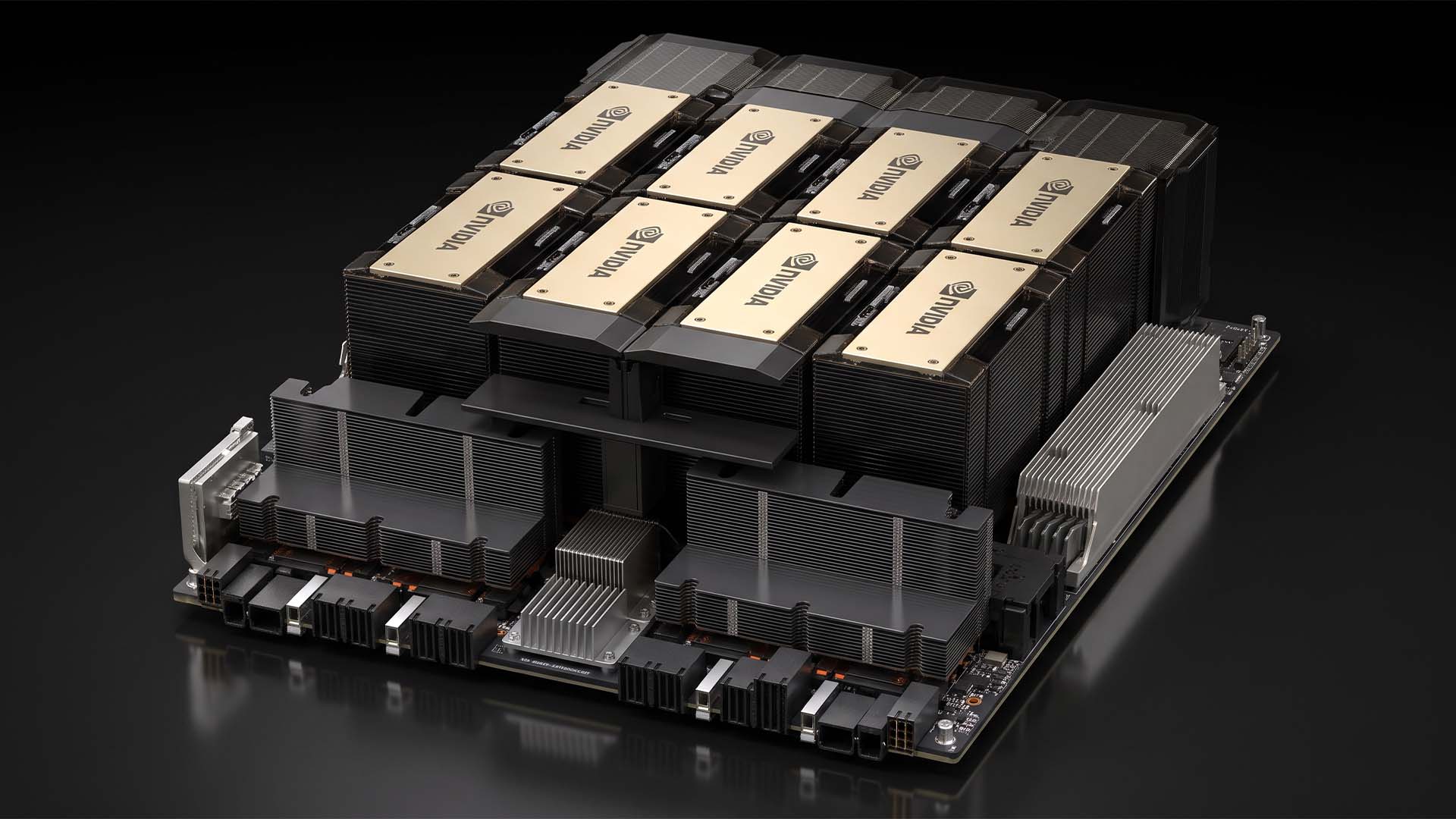
Documents show that from December last year to May this year, companies submitted a total of 3.4 million applications to sell U.S. artificial intelligence chips to China, involving companies such as Nvidia and Advanced Micro Devices (AMD). The 879,000 chips that have been approved account for about a quarter of the total number of applications. Some of the approved transaction targets also include companies classified as "Chinese military enterprises" by the U.S. Department of Defense.
New York Rep. Gregory Meeks, the top Democrat on the House Foreign Affairs Committee, said at a committee meeting that the government's handling of chip export controls over the past month has put the United States' national security and technological advantages at risk. He argued that the Bureau of Industry and Security failed to effectively enforce the rules and that Congress must provide strict oversight of the government's policies.
Both Nvidia and AMD stated that the companies comply with U.S. export control laws. Nvidia further explained that the company was acting in accordance with the regulations of the Ministry of Commerce in effect at the time. Nvidia spokesman John Rizzo said that the relevant review and licensing procedures lasted for more than half a year, and all approvals came with strict conditions and limited quantities; despite obtaining partial licenses, the company has since stopped shipping H200 chips to China.
A spokesperson for the Bureau of Industry and Security responded that the Bureau has provided information to Congress on the licensing approval and rejection of Nvidia H200 and similar chips, and emphasized that licensing decisions are the result of consultation and review by multiple U.S. government agencies.
Market analysts believe that the approved number of 879,000 chips is not huge. Bernstein senior analyst Stacey Rasgon said that this news is not surprising. The Department of Commerce does not approve all applications without screening; it approved about 879,000 out of 3.4 million applications, indicating that there is still a review process, and the approval rate is about a quarter.
Since the Biden administration began to implement a series of export restrictions on artificial intelligence chips to China in 2022, both Nvidia and AMD have redesigned some chips to comply with regulations and be legally sold to China. In December last year, U.S. President Trump said that if the United States could obtain a 25% share of sales, Nvidia could export the older generation Hopper architecture H200 chips to approved customers in China.
Subsequently, the United States issued sales licenses for Nvidia H200 chips to Chinese companies such as Alibaba, Tencent, and ByteDance. However, chip analyst Patrick Moorhead previously pointed out that because Beijing has not approved large-scale imports, the actual scale of sales is still limited. Nvidia also disclosed that in the quarter ending in July, H200 shipments to China accounted for less than 1% of its data center revenue. Rasgun said this number is almost negligible relative to the overall market size and actual shipments.
The license applications announced this time involve ByteDance, Tesla Shanghai Company, Baidu and many other large companies. The committee cited the Export Control Reform Act as the basis for releasing the data, saying the law allows it to declassify and disclose export data when it determines that confidential information is not in the national interest.
The release of the document comes as the controversy over the resignation of former Nvidia CEO Jensen Huang continues to rage. Earlier reports stated that Huang Renxun had an extramarital affair with a suspected Chinese spy, triggering concerns that Nvidia chips may be transferred to China. Since then, both Republican and Democratic members of Congress have called for legislation to impose stricter export controls on the sales of high-end artificial intelligence chips to China and other rival countries.
Meeks said that the licensing information disclosed this time will help the American public understand how the Bureau of Industry and Security handles export licenses for Nvidia H200 and equivalent AMD chips to China, and the public has the right to know how these decisions are made.
Republican Brian Mast of Florida, chairman of the House Foreign Affairs Committee, said that Maginfra and New Matrix were suspected of being "smuggling fronts" in Nvidia's licensing application submitted to the Bureau of Industry and Security. The New York Times previously reported that the two companies had vacant offices and had ties to companies subject to national security sanctions.
Master said at Thursday's meeting that both are fake companies and that if BIS approved the sale of chips to them, it would obviously be extremely worrying. He stressed that President Trump made it clear last year that any sale of artificial intelligence chips to China must come with very real national security conditions. Maginfra and New Matrix did not respond to requests for comment.
Affected by related news, AMD's stock price fell on Thursday. Previously, investment institution Hunterbrook Media released a report accusing AMD of "having a China problem of its own," saying that after the United States blacklisted Chinese server manufacturer IEIT Systems, the company continued to obtain updated AMD firmware, allowing AMD chips to run in servers. CNBC was unable to independently verify the claims.
The impact of Jen-Hsun Huang’s scandal on Congress has further intensified in the past week, with lawmakers questioning whether his relationship with suspected Chinese spies threatens national security and the United States’ leading position in the field of artificial intelligence. Jen-Hsun Huang is scheduled to receive closed-door transcript questioning by the House Foreign Affairs Committee and two other committees on December 1; Nvidia General Counsel Tim Tate is scheduled to attend a hearing on December 2.
Senate Banking Committee Chairman Tim Scott, Republican of South Carolina, announced on CNBC on Wednesday that Huang and Commerce Secretary Howard Lutnick had also agreed to testify. Lutnick has been criticized for his relationship with Huang and his failure to take action against Megaspeed. Megaspeed is a Singaporean company, and Alice Huang, who had an extramarital affair with Huang, served as an executive of the company until 2025. U.S. investigators suspect that Megaspeed transferred Nvidia chips to China.
Amid criticism, the Commerce Department on Monday issued an interim final rule aimed at closing a loophole. This vulnerability previously allowed Chinese companies to rent Nvidia's advanced computing power through data centers in third countries. The rule was written and directed by the Treasury Department and the White House National Security Council, BIS said in a news release.
Comments