
Abstract:
U.S. President Trump publicly praised the 737 MAX after a serious mid-air incident involving a Flydubai passenger plane, saying that the aircraft withstood gravity loads and structural stresses that "far exceeded design and expectations" during the incident, and praised Boeing
Boeing
and its CEO Kelly Ortberg.
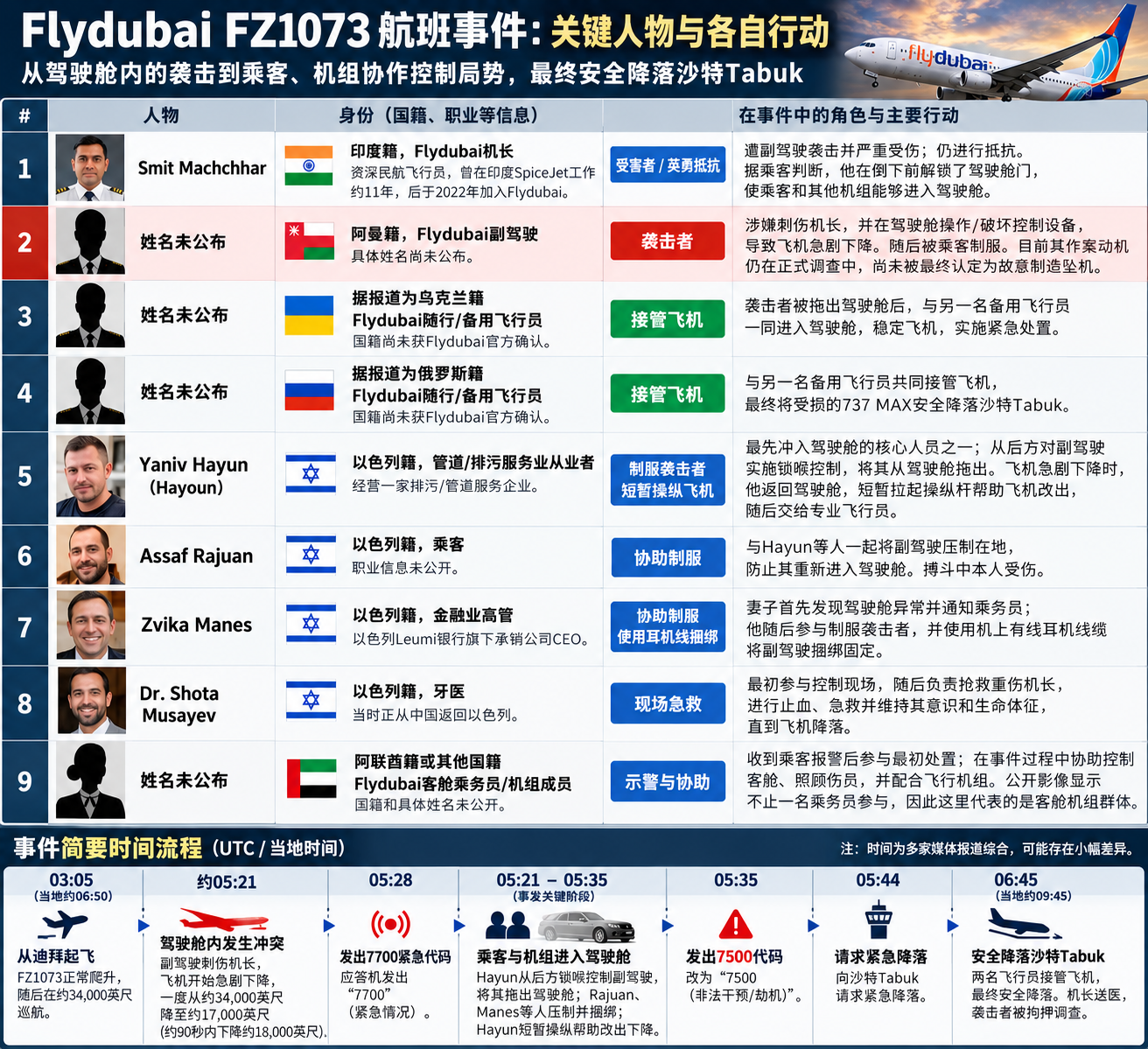
Trump did not directly mention the Flydubai flight in his statement, but the relevant remarks were released at a time when the incident attracted widespread attention. Reuters reported that on the Flydubai flight from Dubai to Tel Aviv, a co-pilot was suspected of stabbing the captain and trying to crash the plane. The plane once plunged nearly 14,000 feet in less than 30 seconds. Passengers and crew then subdued the co-pilot involved, and the other pilots on board took over the plane, which eventually landed safely in Tabuk, Saudi Arabia. The motive for the incident remains under investigation.
Trump emphasized the structural endurance of the 737 MAX
The focus of Trump’s statement this time is not to evaluate the incident itself, but to focus on the performance of the 737 MAX in extreme flight conditions.
He said that the aircraft can withstand G forces and structural stresses that are much higher than normal design conditions, and publicly praised Boeing and Ortberg.
Judging from this statement, Trump actually regarded this extreme flight incident as an unexpected verification of the strength and engineering design of the 737 MAX airframe: Although the aircraft experienced extremely drastic altitude changes and abnormal maneuvers, it was ultimately able to regain control and complete a safe landing.
However, the current public information does not disclose how much G force the aircraft endured during the incident, and no Boeing or aviation regulator has released a structural assessment of the incident. Therefore, Trump's statement that "far exceeded design expectations" belongs to his public evaluation, rather than the published technical investigation conclusion.
The plane plummeted to nearly 14,000 feet in less than 30 seconds
The incident occurred on Flydubai flight FZ1073 from Dubai to Tel Aviv.
Israel said that a co-pilot attacked the captain in the cockpit and tried to crash the plane. The plane then descended violently, descending nearly 14,000 feet in less than 30 seconds. The injured captain eventually opened the cockpit door, allowing passengers and other crew members to intervene and subdue those involved.
There were other Flydubai pilots on board who were qualified to fly. They then took over the plane and landed it safely at Tabuk Airport in Saudi Arabia. More than 170 passengers on board eventually escaped safely.
Flydubai has stated that related incidents are still under investigation and reminded the outside world not to draw conclusions about the motives of those involved before the investigation is completed.
737 MAX enters public view again
Since the 737 MAX has previously experienced a global grounding and large-scale rectification due to two fatal crashes in 2018 and 2019, any incident involving the flight control or flight safety of this aircraft type will receive special attention.
However, the information currently disclosed in the Flydubai incident points to human intervention in driving, rather than a system failure of the aircraft itself. The aircraft was able to regain control and land safely after an extreme descent, which is why Trump chose to emphasize the performance of the 737 MAX this time.
Therefore, the core of this statement is not that Trump made a new investigation conclusion on the Flydubai incident, but that he used this incident to publicly endorse the 737 MAX and Boeing, emphasizing the aircraft's structural and flight endurance under unusual and extreme conditions.
Comments