
Abstract:
The U.S. Defense Intelligence Agency (DIA) recently released the clearest photo yet of China’s mysterious aerospace aircraft, making this spacecraft that has long been shrouded in secrecy appear in public view in a more complete image for the first time. The photo was taken by a commercial remote sensing satellite on May 28, 2024, when the satellite was less than 90 kilometers away from the target.
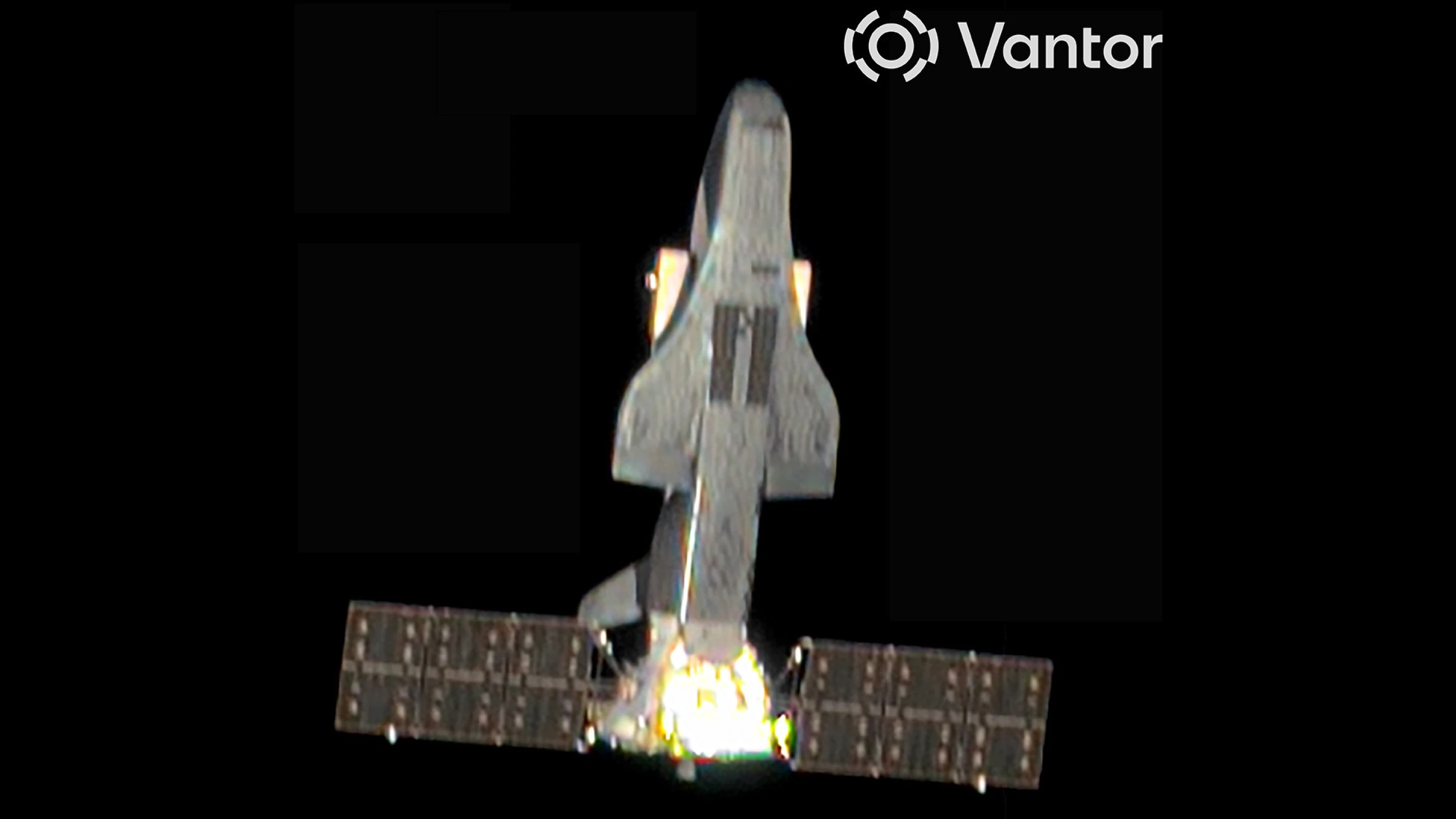
Since its first launch in September 2020, this Chinese reusable aerospace aircraft, widely believed to be named "Shenlong", has carried out four orbital missions. However, information about its size, design and specific performance has been extremely limited, and the outside world has long been able to speculate only through its orbital activities.
Early observers believe that the Shenlong aerospace plane is similar in general idea to the Boeing X-37B aerospace plane used by the U.S. Space Force, just as the Soviet Union imitated Western fighter aircraft designs during the Cold War, and the U.S. space shuttle triggered global research on similar technology routes. Except for the Chinese military and the China Aerospace Science and Technology Corporation, the research and development agency, the information that can be confirmed by the outside world is limited to the basic outline characteristics inferred from the flight trajectory.
The turning point will occur on May 28, 2024. At that time, a commercial satellite operated by Vantor (formerly Maxar Technologies) passed by the orbit of the Shenlong spacecraft from a close distance and acquired a high-resolution image showing the appearance of the aircraft in the unfolded state in orbit.
As you can see from the photos, this aerospace aircraft is very similar to the X-37B. It adopts a delta-wing lifting body structure and has aerodynamic characteristics suitable for hypersonic flight. The fuselage is about 9 meters long and has a wingspan of about 4.5 meters. It is launched into orbit via the Long March 2 F/T carrier rocket and can land and recover on the runway like an airplane.
In addition to confirming the basic configuration, the new photos also reveal an important detail that was previously controversial. The Shenlong space plane is equipped with a disposable service module equipped with deployable solar panels to provide power to the aircraft. This means that the solar system is not installed inside the payload bay door, but is deployed independently on the service module.
This design shows that the aircraft can obtain a more sufficient power supply and has the ability to perform long-term orbital missions. It also ends years of speculation surrounding its energy solution.
Analysts believe that the significance of this exposure is not only to reveal some of the technical secrets of the Shenlong spacecraft, but also to reflect the tremendous progress in commercial aerospace remote sensing capabilities in recent years. Today, commercial satellites are capable not only of photographing other spacecraft but also of tracking and monitoring military targets in Earth orbit. Until recently, such capabilities were viewed as the exclusive preserve of a handful of top intelligence agencies.
At the same time, the U.S. Defense Intelligence Agency also confirmed when releasing the photos that Shenlong has the ability to release small payloads, maneuver relative to release targets, and conduct close approaches and inspections. These characteristics highlight the "dual use" attributes of the aerospace aircraft.
On the one hand, this type of aircraft can perform peaceful missions such as technical verification, material testing, earth remote sensing monitoring, and rapid response to emergencies; on the other hand, they can also conduct orbital intersections with other spacecraft, conduct close observations of targets, collect relevant information, or monitor sensitive signals.
In more extreme application scenarios, similar platforms may even be used for electronic interference, or mechanical contact with other spacecraft, causing them to lose their functions or even be controlled and recovered.
Analysis believes that as countries continue to develop reusable aerospace aircraft technology, competition in space may become more complex in the future, and many plots that only appeared in science fiction works and spy novels in the past are gradually approaching reality.
Comments