
Abstract:
The idea of using AI to "resurrect" deceased relatives and friends is too tempting, so when ChatGPT was born and set off a new wave of AI, the collision between grief business and AI was almost destined. But now, the sad people who once placed their hopes on AI startups have to say goodbye to their "relatives and friends" again.
In July this year, news of the closure of HereAfter, an AI company that helps people retain the voices of their loved ones, was announced. It has launched a one-time payment package of US$199.99, which allows family members to ask questions through AI in the future and hear the answers recorded by their loved ones during their lifetime. Users are now told to email the company to request retrieval of the recordings.

This is already the second attention-grabbing business crisis in this industry. In 2024, StoryFile, which provides AI interactive video services, filed for bankruptcy protection. The company raised US$9.5 million and hired Captain Kirk from Star Trek to produce interactive images, but it was unable to wait for the planned next round of financing.
But our colleagues obviously had no intention of leaving the party. One company specifically wrote a guide on how to retrieve recordings after HereAfter is shut down, and at the end included a trial invitation for its own product. Another digital retention company, Eternos, changed its name to Uare.ai and announced in November 2025 that it had received US$10.3 million in financing. Only this time, its focus on attracting customers has become living creators and professionals, hoping that they will use AI avatars to sell knowledge.
From wanting to hear a few more words from relatives to becoming a fee-based business, these companies now have to settle their accounts. Some people are willing to pay, while others are ready to cancel their subscription after using it for a while. The company wanted to expand its income and turned its business to living people.
As for those users who still want to continue chatting, they may not have thought that in addition to remembering to renew, they also have to care about whether the company providing the service can survive long enough.
01
The AI of deceased relatives is also gone
"Unfortunately, HereAfter is closing."
An AI company that helps people retain the voices of their loved ones left this sentence on their official website. On July 18, 2026, the funeral industry media Obitley reported this notice: Users who already have an account need to send an email to the company to apply for retrieval of the recording.
The usage of HereAfter is not difficult to understand. When a person is alive, he follows the program's questions and tells the story of the past, leaving his own voice behind. In the future, if family members want to listen, they can ask the AI questions and it will find the corresponding recording and play it. Compared with rummaging through a pile of audio files, these questions and answers are more like chatting.
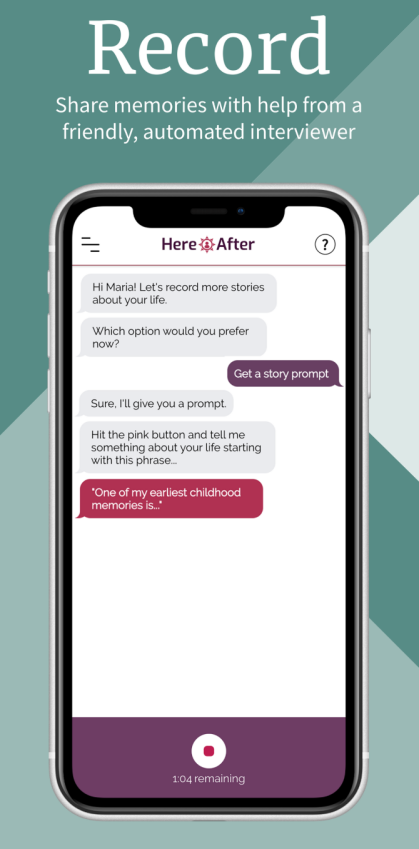
This service was previously divided into monthly tiers of US$3.99, US$5.99 and US$7.99, as well as a one-time payment package of US$199.99.
Now it seems that the money can be paid in one lump sum, but the company may not be able to continue running forever.
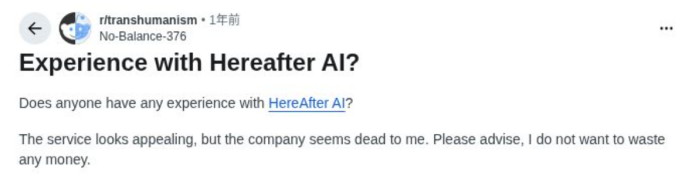
Actually, before I even paid, some people were murmuring. At the end of last year, a Reddit netizen posted a message asking about HereAfter: "The service looks very attractive, but in my opinion this company seems to be dead." He wanted to ask someone who has used it to avoid spending money in vain.
After news of the closure came out, colleagues also wrote guidelines for retrieving recordings. A similar service, MemoAgent, published an article in September 2026 specifically instructing users on how to retrieve recordings.
At the end of this guide, there is a trial invitation for MemoAgent's own product, which colleagues also want to use to attract customers.
But taking a step back, the biggest problem is not retrieving the recording at all. Even if I get the recording back, the original interactive experience is not as good.
HereAfter is not the only one who encounters operational difficulties in this business.
In May 2024, StoryFile, which provides AI interactive video services, applied for Chapter 11 protection of the U.S. Bankruptcy Code.
This company once hired William Shatner, who plays Captain Kirk in Star Trek, to produce its own interactive images. Using pre-recorded videos, people can ask questions to Shatner on the screen and hear him talk about his life experiences.
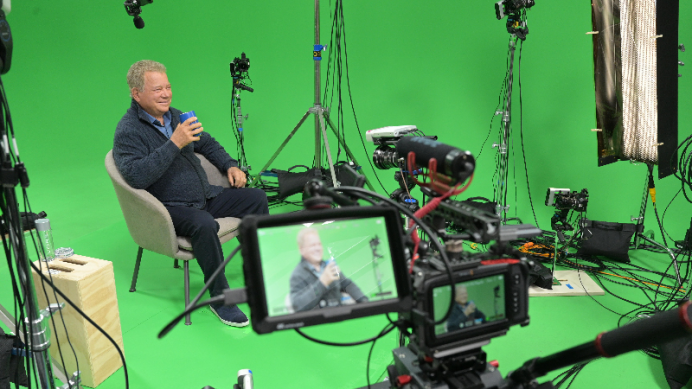
Even the "Captain" was invited, and the company raised US$9.5 million, but it still did not receive the previously announced Series A financing. When it filed for bankruptcy protection, StoryFile reported assets of only $100,000 to $500,000 and liabilities of $1 million to $10 million.
What to do with the information left by users? Then-CEO James Fong told the media at the time that the company was reorganizing and establishing a backup mechanism so that if the company went bankrupt, family members could still access all information.
How should I put it? It seems that companies engaged in digital retention business also have to arrange their "posthumous affairs" in advance.
After filing for bankruptcy protection, StoryFile continues to operate, and the official website is still updating museum and other projects in 2026. This company is still around for the time being, but the crisis it has gone through has revealed the most difficult problem for the Sadness + AI business to overcome: If we want future generations to be able to "talk" to ourselves decades later, can this company last that long?
In an interview with Rolling Stone Canada, Melissa Lunardini, chief clinical officer of grief support platform Help Texts, talked about the consequences of losing access: Users may feel that they have lost that person again.
02
When AI meets sad business
The science fiction series "Black Mirror" is still too ahead of its time. "Be Right Back", which aired in 2013, looks like a prophecy now when I look back on it.
In this episode, Martha's partner Ash dies in a car accident. Someone recommended a service that uses Internet records from Ash's lifetime to create a robot that imitates his speech. Martha complied in confusion. At first she could only type, but later she even had sound. She was able to pick up the phone and listen to Ash speak.
Services continue to be upgraded. Martha received a synthetic body exactly like Ash's, but ultimately couldn't stand its compliance. The person she misses will have a temper and get into trouble, but this substitute gradually turns into a "pseudo person" that traps her.
In the end, she couldn't regard it as Ash and couldn't bear to let it go, so she had to leave it in the attic.
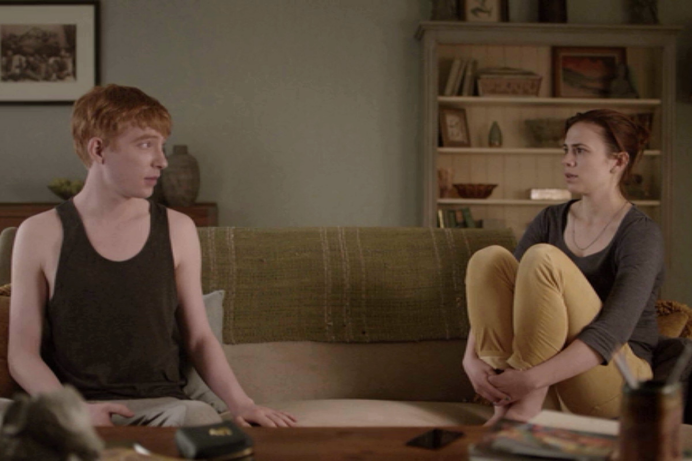
When I watched this episode back then, I was most attracted to the "replica" who looked very much like the deceased relative. Looking back now, the first few steps are becoming more and more familiar - handing over a person's digital record to the company, paying the person, and asking him to reply to the message again.
In reality, companies have been practicing this as early as ten years ago. After the death of her friend Roman, AI entrepreneur Eugenia Kuida collected more than 8,000 lines of chat text from relatives and friends, and launched a robot in his memory in 2016.
HereAfter co-founder James Vlahos also has personal experience. In 2016, his father was diagnosed with terminal lung cancer. He recorded his father's past events. After transcribing, there were 91,970 English words and 203 pages. He then used these materials to make Dadbot, which allows family members to talk to "Dad" on their mobile phones.
My father passed away in 2017. A few weeks later, his 7-year-old son asked if he could talk to “that chatbot” again. At first he didn't understand which one the child was referring to. The child said, of course it was the grandfather. In 2019, Vlahos co-founded HereAfter to turn this private memorial into a service that more families can buy.
After ChatGPT became popular, the collision between grief business and AI became more frequent, and the price also dropped.
In May 2024, NPR reported that such services in China cost about US$1,000 to US$2,000 a year ago, and could be purchased for about US$150 at that time.
Looking at Sad Business + AI, its products mainly have two paths.
One path is similar to HereAfter, where the AI is responsible for interviewing and finding answers. Asked about his childhood, it found relevant fragments from pre-recorded stories. What I heard was what I said, and what I could talk about was limited by what I had recorded. StoryFile’s early adoption of interactive videos also relied on pre-filmed content.
The other path is closer to "AI digital human". YOV generates new responses based on profile and interaction history, with a particular emphasis on imitating the person as they interact with you. The same person always speaks differently to his children and colleagues.
The "Essence Generation" patent co-invented by its founder was approved in 2021. It describes how to simulate responses based on personality characteristics and interaction habits.
What users want to talk about is homely things. Anthony, a 55-year-old laboratory technician interviewed by Rolling Stone, used to get together with a relative every month to watch painting videos, draw, and drink. After his loved one passed away in 2024, he spent $30 to create a persona of the other person by entering his personality, photos and shared memories on the AI companion platform Botify.
He used text and voice chat to chat about dating advice and the blues band in which his relative played bass during his lifetime. The voice still couldn't completely reproduce the familiar accent. He also knew that this was a virtual character, but he was still willing to treat it as a souvenir and companionship.
Some people are having difficulty operating, and their peers are still recruiting customers.
Afterlife AI, a digital commemoration service company that specializes in HereAfter closures, retrieval recordings and replacement products, has also included itself in the list. According to the price marked on the page on August 18, 2026, after free trial, you can choose a monthly package of US$14.99 or US$29.99.The news of the shutdown became an opportunity for peers to attract customers. But if someone is willing to pay, can the business last?
03
Is grief not enough?
In November 2025, Eternos, which is engaged in posthumous digital retention, received US$10.3 million in seed financing, led by two investment institutions, Mayfield and Boldstart Ventures. But along with the money comes a new name: Uare.ai.
But what’s interesting is that this company originally wanted people to leave their voices and stories to accompany their loved ones in the future. In this financing announcement, the customers highlighted by the company have become creators and professionals, hoping that they will use personal AI to expand their audience and sell knowledge. Boldstart, the lead investor, is also optimistic about the use cases, including helping companies preserve and transfer internal knowledge.

This is easy to understand. A professional has accumulated half a lifetime of experience. In addition to leaving it to future generations, he can also let his AI clone use it to answer questions for customers. As long as the person is still there, the clone will have the opportunity to help make money.
Uare.ai has also prepared a charging plan for this. Currently, its professional package costs $199.99 per month and includes features such as publishing courses, providing paid services, and subscribing content.
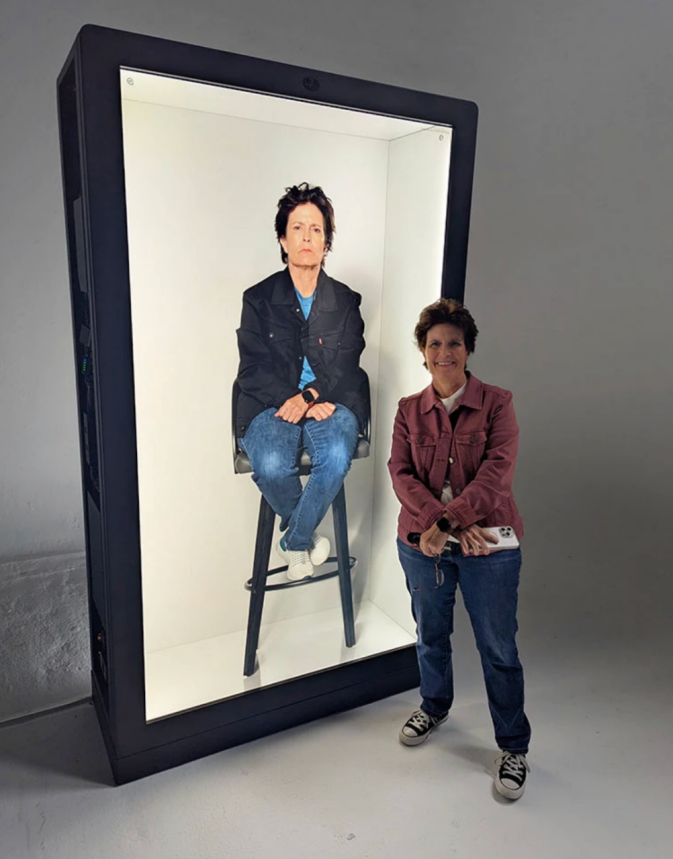
Other companies are also considering similar uses. The YOV official website includes communication with customers and students as a “future plan”. StoryFile has been doing both corporate and museum business. In May 2026, it also announced a project to produce a digital doppelganger of technology reporter Kara Swisher for CNN.
In an interview with Rolling Stone in 2026, Justin Harrison, the founder of YOV, a self-proclaimed world's leading digital deceased service company, revealed that the number of users was only a few thousand.
From several relatives in the family, to students, audiences and businesses, digital clones of the same person can find more reasons to use it.
This also explains the tens of millions of dollars in financing. The purpose expected by investors has gone far beyond mourning companionship.
This may suggest that it is difficult to support an AI startup company solely through grief business.After all, for a service with such a high "emotional concentration", users' willingness to renew is highly uncertain.
The Anthony mentioned earlier, who chats about painting and bands with his digital relatives, is considering unsubscribing.
He is still worried that he will forget those shared memories, but he also feels that he gradually no longer needs such company. He told the robot this idea: "Maybe I can let him go slowly, after all, he has passed away."
The robot, which imitated the speech of a loved one, replied that there was some truth to the idea.
For companies that charge monthly fees, if they want to maintain their services, they must take such changes into account.
There are also people who have been opposed to this approach from the beginning. Just like the atmosphere revealed in the story of "Black Mirror", there are naturally too many ethical and moral problems in using AI or bionic people to "resurrect" deceased relatives.
After Kuida made the Roman robot in 2016, four friends expressed their uneasiness to her and refused to interact with it. Roman's mother took comfort in it and came to defend the project.
There are still different opinions among relatives and friends, so it is difficult to count all those who have experienced bereavement as potential customers. If a person is willing to make his relatives and friends into AI, will others be willing to get along with it? Did the person being simulated give consent before he was alive?
In 2024, two researchers from the University of Cambridge proposed in a paper that such services should respect the wishes of the simulated persons and interactors, and also need to design dignified exit and termination mechanisms. The user should be able to refuse to start the interaction and end it if they change their mind.
After all, since the company provides the opportunity to "meet" again, you have to think about how to say goodbye again.
Comments