
Abstract:
Astronauts living on the moon may one day be able to breathe oxygen extracted from the lunar soil, a technology inspired by computer chip manufacturing. Researchers from Dublin City University and the European Space Agency have discovered that oxygen and oxygen-containing products can be extracted from materials that simulate lunar soil using plasma processing technology widely used in the semiconductor industry. The relevant results have been published in Scientific Reports.

Oxygen is one of the most valuable resources in future space exploration. Astronauts need oxygen to maintain breathing, and rocket propellant cannot do without oxygen. However, transporting large amounts of oxygen from the Earth to the moon is extremely expensive, so space agencies have been studying how to obtain oxygen on the moon.
The difficulty is that the oxygen on the moon is not a gas that can be taken directly, but is chemically combined in the lunar surface minerals. Although lunar soil contains a lot of oxygen by weight, to release the oxygen, strong chemical bonds within the minerals must be broken. Many potential extraction methods require large amounts of energy.
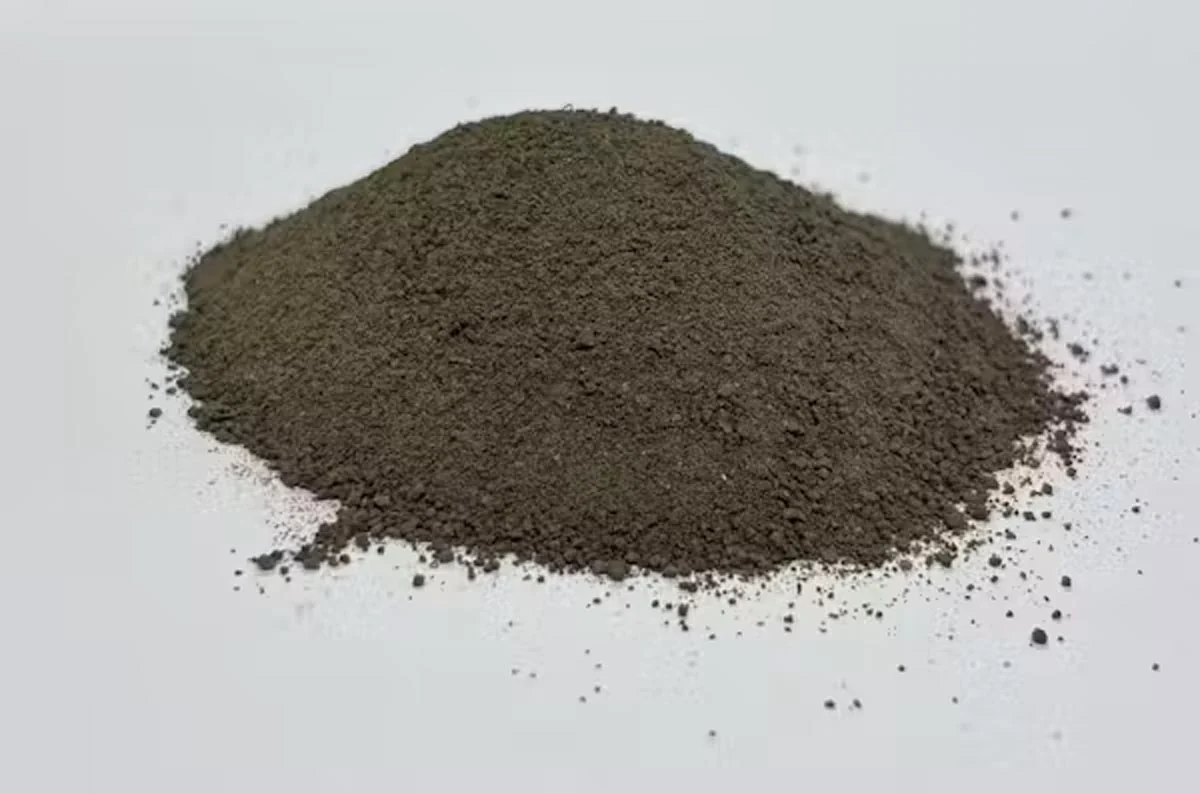
To this end, the research team explored a lower-temperature alternative based on the mature industrial technology "plasma processing." Plasma, often called the fourth state of matter, is a mixture of charged particles, electrons and highly reactive chemicals formed when a gas obtains sufficient energy. In semiconductor manufacturing, plasma reacts with silicon dioxide, a process that underpins the global production of billions of electronic devices every year.
The researchers raised a direct question: Since plasma can effectively react with oxygen-containing compounds in chip manufacturing, can a similar method be used for oxygen-containing compounds in lunar soil? They used gases commonly used in chip manufacturing to generate plasma and processed artificial simulated lunar soil.
The results are encouraging. During the processing of simulated lunar soil, the researchers detected the release of oxygen and oxygen-containing gas products. Further analysis confirmed that the plasma was chemically modifying oxygen-containing minerals in the material, and that different lunar minerals reacted to varying degrees. Understanding these mechanisms is important to improve process efficiency and improve future systems, but oxygen production still needs to be significantly improved before practical systems on the moon can be truly established.
One of the appeals of this approach is that it draws on decades of experience in the semiconductor industry. Space engineering often requires entirely new technologies, but there are clear advantages to adapting systems that already exist, are well understood, and have been optimized over time on Earth. The semiconductor industry has long studied how fluorine-containing plasmas interact with oxygen-containing materials, so future researchers don't have to start from scratch.
There are also benefits in terms of practical applications. Plasma treatment is a dry process, which can avoid the difficulties caused by transporting and handling liquid reagents in space, and its operating temperature may also be significantly lower than some traditional oxygen extraction methods.
The significance of this technology may go beyond life support for lunar bases. The lunar soil also contains useful elements such as silicon, aluminum and iron. The current research focuses on oxygen-containing reactions, and future research can explore whether plasma technology can serve the utilization of other lunar resources more broadly.
More work is needed to understand the chemistry, improve yields and determine whether the process can be economically scaled, the researchers said. But the plasma technology used to make billions of transistors may also help humans meet one of the biggest challenges in space exploration: learning to be self-sufficient on another world using local materials.
Comments