
Abstract:
Researchers are trying to borrow technology from semiconductor chip manufacturing to solve long-standing challenges in the manufacturing and performance of next-generation electric vehicle batteries. By applying precision processing methods originally used to manufacture microelectronic components to battery materials, scientists hope to create thinner, more uniform, and more structurally stable battery components, thereby further improving the endurance, charging speed and battery life of electric vehicles.
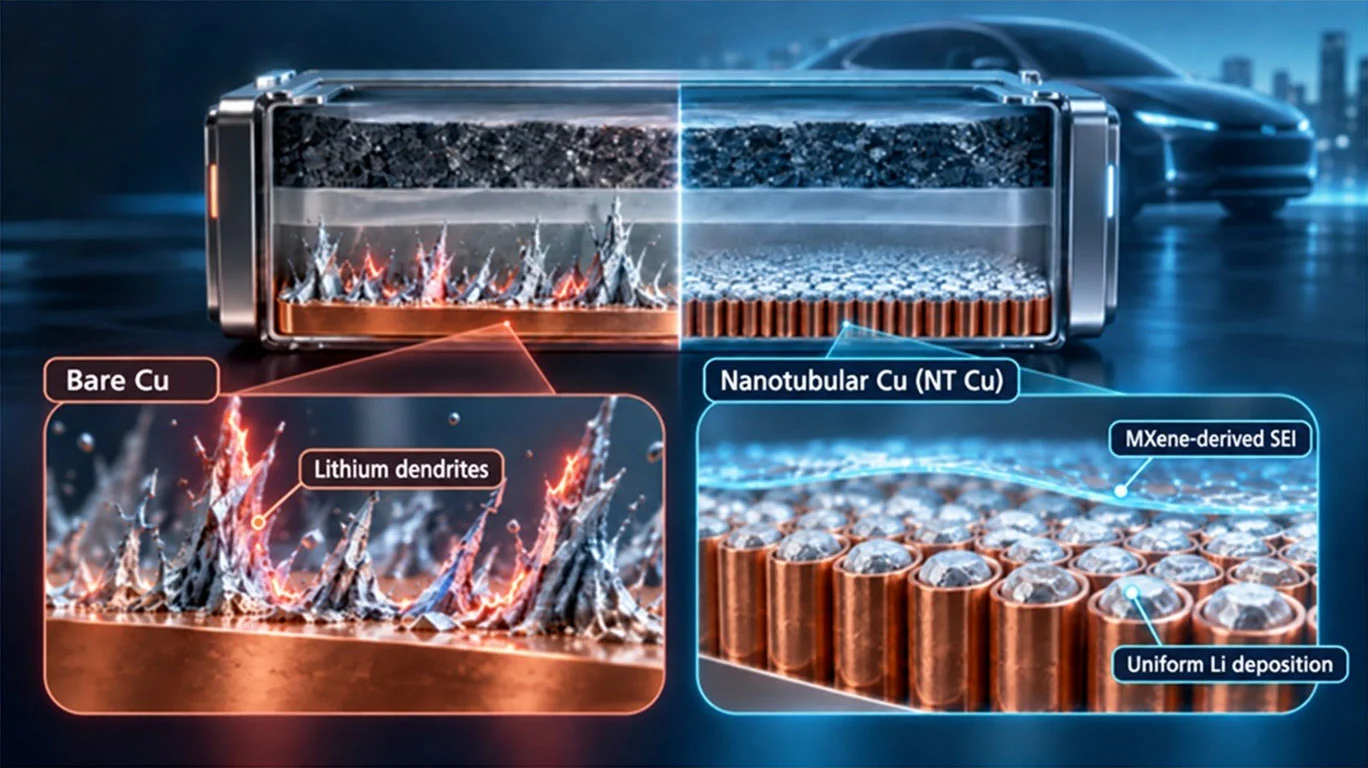
After decades of development, traditional lithium-ion batteries have made great progress in energy density, cost and reliability, but it is increasingly difficult to further improve performance. At the same time, the requirements for batteries in electric vehicles are also increasing. Automakers hope that batteries can store more energy, support faster charging, and must also have higher safety and longer service life.
Solid-state batteries are therefore considered to be one of the important directions for the next generation of battery technology. Unlike traditional lithium-ion batteries, which use liquid electrolytes, solid-state batteries use solid electrolytes, which are expected to increase energy density and reduce the risk of liquid electrolyte leakage and fire. Some designs can theoretically achieve energy densities of around 500 Wh/kg, while current lithium-ion batteries using liquid electrolytes are typically around 300 Wh/kg.
But solid-state batteries still face a very thorny problem when it comes to large-scale commercialization: the material is too brittle.
During the charging and discharging process of the battery, lithium ions will continue to move inside the electrode material, causing the electrode to expand and contract repeatedly. As the number of cycles increases, gaps, cracks and even deformations may occur between different materials, ultimately hindering the normal movement of lithium ions and causing the battery capacity and power performance to gradually decrease.
Researchers therefore began to look for ways to more precisely control the internal structure of batteries, and semiconductor manufacturing technology has provided a set of mature tools that can control material structure at the nanometer scale after decades of development.
One of the core advantages of the chip manufacturing industry is the ability to create highly regular structures on extremely small scales. Transistors and interconnect structures in advanced chips have become as small as nanometers, and the manufacturing process requires precise control of material deposition, etching, patterning, and interlayer structures. The researchers hope to apply similar ideas to battery manufacturing and reduce defects that are difficult to control in the traditional manufacturing process through more refined structural design of battery materials.
One of the key directions is to use methods similar to semiconductor wafer processing to create thin-layer structures in batteries. Unlike traditional battery manufacturing, which mainly relies on coating, pressing and drying, the chip manufacturing process can form a highly uniform nanoscale film on the surface of the material and can precisely control the interface between different materials.
This ability is especially important for solid-state batteries, because the interface between solid materials directly determines whether lithium ions can pass smoothly. If there are tiny cracks, voids or uneven material distribution at the interface, it may increase ion transmission resistance and reduce battery performance.
Researchers hope to use thin film deposition and micro-nano processing technology in the field of semiconductor manufacturing to build a more uniform electrode and electrolyte structure inside the battery, thereby reducing the mechanical stress generated during charging and discharging.
This idea is not to simply move a complete set of chip production lines to the battery factory, but to select processes and equipment suitable for battery manufacturing. Because there are huge differences in materials, size, and production scale between batteries and chips, the cost of producing batteries entirely using semiconductor manufacturing methods is likely to be unacceptably high.

The solution with real commercial significance is to use the micro-nano processing principles that have been proven by the chip industry and redesign the process so that it can adapt to the large-area, high-yield and low-cost manufacturing required by batteries.
This is one of the core challenges currently facing researchers. Chip wafers are usually only tens of centimeters or less, while the electrode area of a car battery may reach several square meters. Battery production also requires processing large amounts of active materials, so any new process must balance nanoscale precision with industrial-scale production efficiency.
Researchers believe that if this scale-up problem can be solved, the experience accumulated over decades in the semiconductor manufacturing industry may provide a new technical route for the battery industry.
At the same time, battery researchers are also trying to improve electrode structures using other advanced manufacturing technologies. For example, by precisely controlling the arrangement of electrode material particles, sufficient ion channels can be retained while increasing the proportion of active materials; by controlling the pore structure, the electrolyte can penetrate more evenly into the electrode.
For solid-state batteries, the control interface is especially critical. Traditional liquid electrolytes can fill the tiny gaps between electrodes, while solid electrolytes cannot flow into these areas on their own like liquids. Therefore, electrodes and electrolytes must be in very good contact during the manufacturing stage.
Thin film deposition, surface treatment and nanoscale patterning technologies in chip manufacturing technology can help researchers handle these interfaces more accurately.
Similar cross-field technology transfer has actually occurred in the battery industry. In the past, some battery companies have introduced equipment and processes from the semiconductor, display panel and precision thin film manufacturing industries, because these industries also need to create extremely uniform thin-layer structures on large-area substrates.
Researchers are also paying special attention to silicon material electrodes. Silicon can theoretically store much more lithium than graphite, so it is considered an important material for improving the energy density of lithium-ion batteries. However, silicon undergoes very significant volume changes during charging and discharging, which can easily cause the electrode structure to break.
If the silicon material can be more precisely structurally designed through micro-nano manufacturing technology, it can reserve space for material expansion to a certain extent and improve the transmission path of electrons and lithium ions.
This idea means that battery manufacturing in the future may become more and more like a highly sophisticated "materials engineering." Battery performance is no longer determined solely by chemical formulations, but also by the arrangement of materials at the nanoscale, interface structure and pore distribution.
The researchers hope to eventually achieve a more precise way of manufacturing batteries: controlling the thickness of each layer of material, the contact between each material, and the path of ion movement at the microscopic scale, while maintaining high enough production efficiency at the macroscopic scale.
If successful, this type of technology could improve multiple battery parameters simultaneously. A more uniform structure can reduce internal resistance and increase charging speed; a more stable interface can reduce cracks and material shedding during cycling, thereby extending battery life; a higher proportion of active materials has the opportunity to increase the energy stored per unit weight.
However, moving from laboratory technology to the automotive industry still requires a long period of verification. Not only do electric vehicle batteries need to be tested hundreds or even thousands of times in the laboratory, they must also be able to withstand high temperatures, low temperatures, vibrations, collisions, and the constant mechanical stress that occurs over years of use.
More importantly, any new manufacturing process must ultimately prove itself cost-competitive with established lithium-ion battery production lines. The output of automotive batteries is much higher than that of most high-end electronics, so even if a technology can achieve extremely high nanometer precision, it will be difficult to truly enter the automotive industry if the production speed is too slow or the equipment cost is too high.
So instead of trying to turn a battery into a giant chip, researchers are now drawing on what the semiconductor industry does best: controlling materials and interfaces with extremely high precision.
If these technologies can eventually be applied on a large scale, future electric vehicle batteries may gain nanoscale structural control capabilities similar to those of advanced chips during the manufacturing process. This may not only promote the further commercialization of solid-state batteries, but may also improve the performance of next-generation lithium-ion batteries, silicon anode batteries, and other new energy storage technologies.
For the electric vehicle industry, the next round of battery technology competition may no longer be about finding a "magic new material", but how to use more sophisticated manufacturing methods to combine existing materials into batteries with better performance. The micro-nano processing experience accumulated by the chip manufacturing industry for decades is becoming an important set of technical tools that battery researchers are trying to borrow.
Comments