
Abstract:
Valve officially announced the price and launch schedule of its new stand-alone VR headset, Steam Frame. This VR device, which has been exposed for a long time, finally starts at $1,059, with the highest-capacity 1TB version priced at $1,299 and equipped with a dedicated wireless controller. The biggest feature of Steam Frame is not simply used as a VR game device, but an attempt to integrate traditional PC games, VR games and wireless PC streaming into the same lightweight head display.
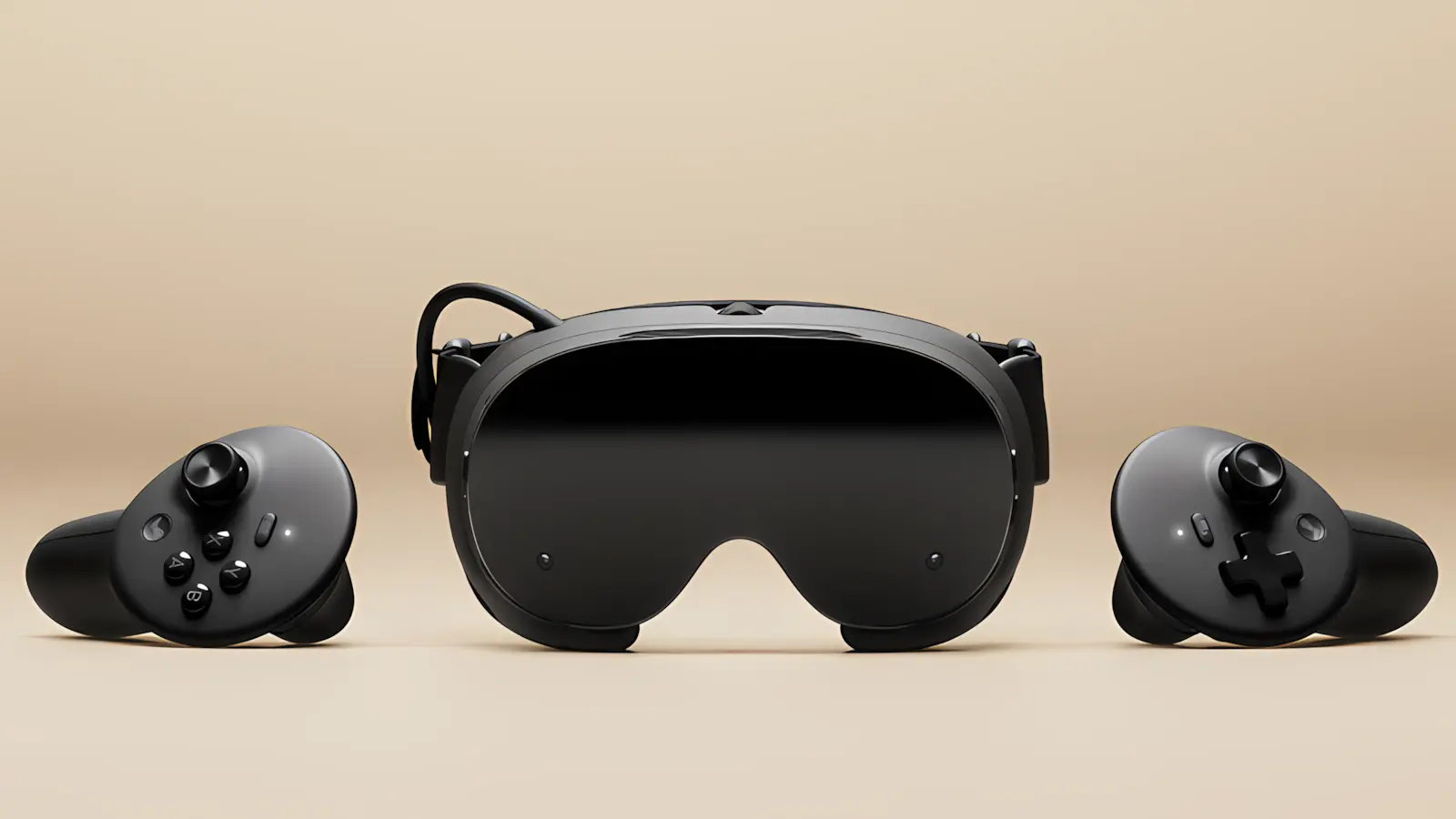
Steam Frame is available in 256GB and 1TB versions. The hardware configurations of the two are basically the same. The main difference is the storage capacity. The 256GB version is priced at $1,059, and the 1TB version is priced at $1,299. In the European market, the two products are priced at 1,049 euros and 1,279 euros respectively; in the British market, they are priced at 889 pounds and 1,089 pounds respectively.
Valve did not adopt the traditional "first come, first served" pre-order model this time, but adopted a random lottery reservation mechanism to reduce the possibility of scalpers snapping up a large number of products. Consumers can register the model they wish to purchase before September 17, and then Valve will randomly select users to send purchase notifications. The selected user needs to complete the order within the specified time. This approach is similar to how Valve has previously handled Steam Machine pre-orders, and means Valve expects the supply of the first batch of Steam Frames to be relatively limited.
The core hardware of Steam Frame is a Qualcomm Snapdragon 8 Gen 3 processor and is equipped with 16GB LPDDR5X unified memory. The device uses two 2160×2160 resolution LCD screens, one for each eye, and uses a multi-lens Pancake optical solution. The refresh rate covers 72Hz to 120Hz, while an experimental 144Hz mode is available.
The device is also equipped with an eye tracking system. This technology is not only used for interaction, but more importantly, supports foveation rendering. Steam Frame can improve the accuracy of picture rendering based on where the user is looking, and reduce the rendering load around the field of view, thereby maintaining the highest picture quality possible under limited mobile chip performance.
Valve particularly emphasized the importance of this technology for running large-scale VR games independently. Since the headset uses a mobile platform rather than the desktop-level CPU and GPU in traditional VR computers, the overall computing load must be reduced through technologies such as eye tracking and foveated rendering.
Steam Frame uses the SteamOS system. In addition to running VR games specially optimized for headsets, it can also run traditional flat Steam games. Valve hopes that after users put on the headset, they will not need to switch devices between VR games and ordinary PC games, but can directly use the same set of hardware to access their Steam game library.
Steam Frame can even run Windows games. Valve uses compatibility layer and translation technology to enable Windows games based on x86 architecture to run on Steam Frame using ARM processors. For users, this means that although the device uses ARM chips and Linux systems, it can obtain a game compatibility range that far exceeds that of traditional standalone VR headsets.
Of course, not all PC games can run perfectly directly on Steam Frame. For games that require higher GPU performance, Valve still recommends wireless streaming from your gaming PC to the headset. However, for games that have been optimized for Steam Frame, the device can run completely independently of the PC.
Steam Frame is equipped with Wi-Fi 7 wireless network, and Valve will also provide a dedicated 6GHz Wi-Fi 6E USB wireless adapter with the device. This adapter plugs into your gaming PC to create a dedicated point-to-point high-speed wireless connection between your computer and the Steam Frame, reducing interference in traditional home Wi-Fi networks.
This means that Steam Frame actually has two different ways to use it. One is to run the game completely independently, and the other is to use it as a wireless PC VR headset, letting the gaming PC take care of the main graphics calculation work. For users who already own a high-performance gaming computer, the latter may be the most attractive use case for Steam Frame.
Valve has also developed a new controller specifically for Steam Frame. These controllers feature a loopless design, are more compact than the Valve Index controllers, and have full 6 degrees of freedom tracking capabilities. The button layout of the controller also takes into account the use of traditional game controllers, and users can use them to operate ordinary non-VR games.
Each controller uses one AA battery and has a maximum battery life of approximately 40 hours. Valve does not use a non-removable built-in battery, which means that users do not have to worry about having to wait for the controller to be recharged after the controller is exhausted, and the battery can be replaced to continue using it.
The Steam Frame itself uses a 21.6Wh lithium-ion battery. The battery is located behind the headband to help balance the front and rear weight of the device. The entire headset weighs about 435 to 440 grams, of which the front core display module weighs about 190 grams, making it lighter than some traditional VR headsets.
There is no color see-through camera inside the device. Steam Frame mainly uses four external-facing grayscale cameras for spatial positioning and Inside-Out tracking, so it is not a product with mixed reality as its core selling point. The perspective of the environment that the user sees is mainly a monochrome picture.
However, Valve has reserved interfaces for future expansion and allows third parties to develop accessories such as color perspective cameras. Valve has partnered with Arcturus to launch the Vision Camera expansion device, which can add color perspective and spatial video recording capabilities to Steam Frame. This accessory costs $149.
Valve also offers a $49 Ergonomic Accessories Kit, which includes a top headband, additional nose pads, and a wrist strap similar to the Valve Index controller and a larger visor to improve comfort during long-term wear.
In the future, Valve also plans to launch expansion kits that are more geared toward audiophiles, including larger batteries and more advanced audio components. Due to the modular expansion design of the Steam Frame, Valve hopes to allow third parties to develop more accessories around the device in the future, such as depth sensors, facial tracking modules, full-body tracking systems, and other cameras.
However, the most surprising news when Steam Frame was released this time was not the hardware itself, but Valve finally confirmed that "Half-Life: Alyx" will get a true stand-alone version.
"Half-Life: Alyx" was originally a PC VR game that had to be run on a VR computer. After its release in 2020, it has been considered a benchmark work in the field of VR games. Valve has conducted software porting work for more than a year, transforming the game into an ARM64 version that can run natively on Steam Frame.
Valve said that Steam Frame’s 16GB of unified memory, as well as eye tracking and foveated rendering technology, are key to enabling “Half-Life: Alyx” to run on mobile-grade hardware. Because the device is able to focus more computing resources on where the player is actually looking, there is no need to drastically reduce the quality of the game's graphics.
More importantly, Valve didn't simply cut back on the game's content. A large number of high-quality assets in existing games are still retained, and Steam Workshop content previously created by players can also continue to be used. This means that users can not only run the original game, but also continue to experience new weapons, new enemies, new levels, and complete self-made campaigns created by the community.
However, the standalone version of "Half-Life: Alyx" will not be available immediately on the day Steam Frame is launched, but is planned to be launched shortly after it is launched. Valve has confirmed that users who purchase Steam Frame will get the game, and the specific launch time of the independent version still needs to be announced later.
Valve also said that in order to complete the port of "Half-Life: Alyx", they have made a lot of improvements to the Vulkan driver and SteamVR. This work is not just for this one game, so other Steam Frame games in the future can also directly benefit from these low-level optimizations.
From the perspective of product positioning, Steam Frame is obviously not competing with the Meta Quest series for the mass market. The starting price of US$1,059 is already much higher than mainstream independent VR headsets. This device is mainly targeted at serious Steam players, VR enthusiasts, PC gamers and loyal users of the Valve ecosystem.
However, it seems that Valve’s goal is not to simply build another VR game console, but to try to build a true “wearable Steam computer”. It can run VR games or ordinary PC games; it can run completely independently or wirelessly connect to a high-performance PC; it can use SteamOS native games and run Windows and Android platform content through the compatibility layer.
This design makes Steam Frame significantly different from traditional VR headsets. It's more like a Steam gaming computer worn on your head, except that the display, speakers, wireless network and controllers are all integrated.
Valve also hopes to further blur the lines between PC, game consoles and mobile devices through Steam Frame. While PC gaming used to mean sitting in front of a computer, Steam Deck has proven that your Steam game library can be transferred to portable devices. Steam Frame further advances this concept into the field of spatial computing, allowing players to directly access their Steam game library without a monitor.
Currently, the first batch of Steam Frame products will be sold through an appointment lottery. Consumers need to complete registration before September 17, and the first batch of purchase notifications are expected to be issued from September 18. Valve has previously delayed the launch of Steam Frame due to supply chain issues such as rising memory prices, so the official announcement of the price and release schedule this time also means that this product has finally entered the actual commercialization stage from a long-term development state.
From a price point of view, Steam Frame is obviously not a cheap VR device for the masses, but Valve is proving its technical route with a quite radical combination of software and hardware. In particular, "Half-Life: Alyx", which originally required a high-performance PC to run, can be run independently on a mobile processor. This in itself is the most symbolic technological display of Steam Frame.
If Valve can continue to optimize the ARM compatibility layer, expand the number of Steam Frame Verified games, and solve early compatibility and stability issues through software updates, then Steam Frame may become an important step for the Steam ecosystem to enter the spatial computing era. Its real value may not lie in whether sales can reach the scale of Meta Quest, but whether Valve can prove that a standalone device that does not require a traditional gaming PC can also become the entrance to a complete Steam game library.
Comments