In addition to vaccines, sprays or pills, scientists are also exploring new antiviral drugs to stop the spread of the highly contagious virus. What's their secret weapon? Chewing gum—but not just any gum. This gum is made from a rather amazing bean.
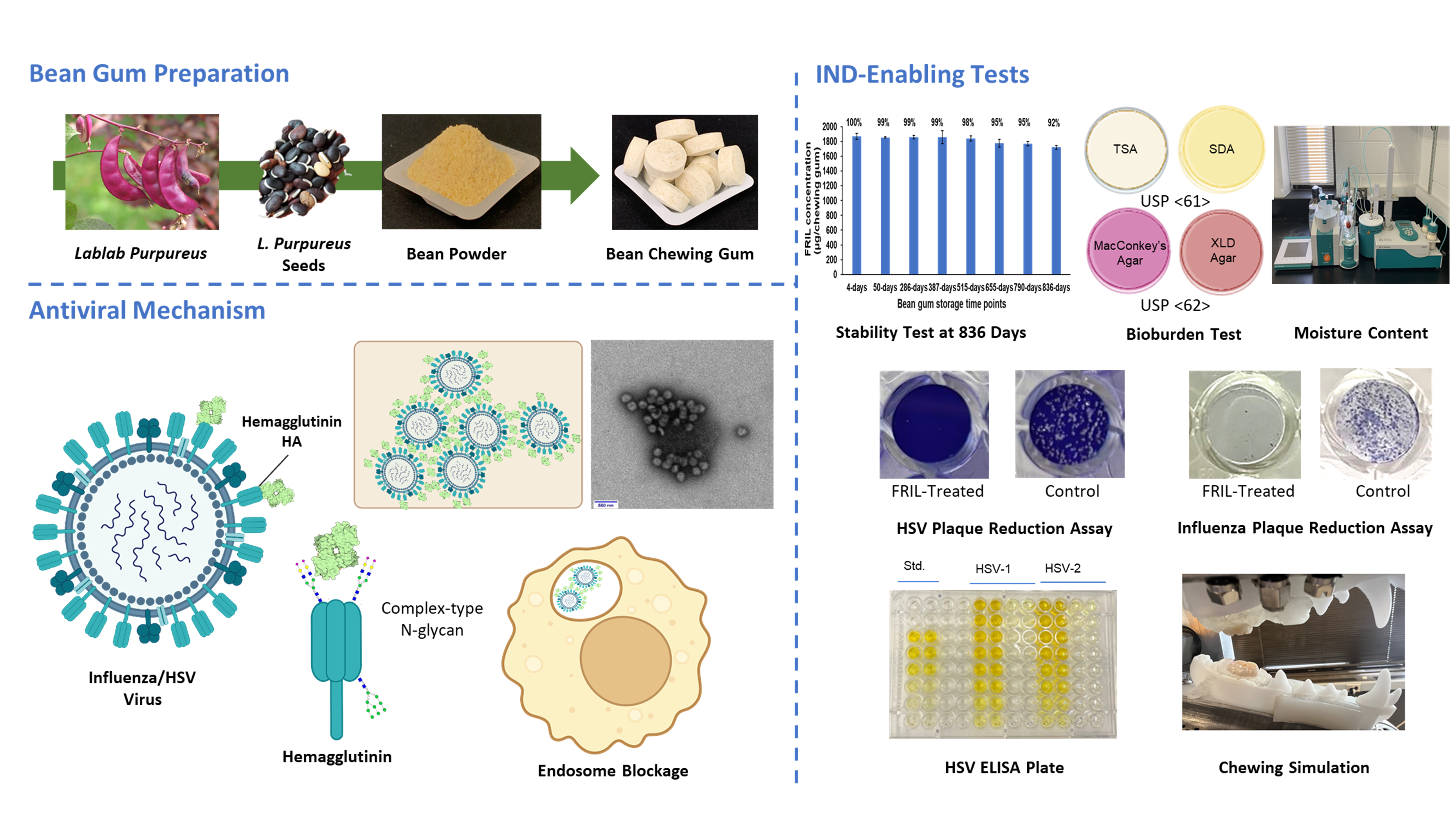
Researchers at the University of Pennsylvania School of Dental Medicine at the University of Pennsylvania have been studying this new mode of drug delivery with a focus on attacking viruses that like to hide in our throats and nasal cavities. The team investigated how herpes simplex viruses (HSV-1 and HSV-2) and influenza A strains (H1N1 and H3N2) could be neutralized by chewing gum from a clinically used lentil (Lablab purpureus).
The legume contains a protein that can "trap" and neutralize certain viruses, giving it antiviral properties. The protein, called FRIL, is also inherently stable when the legume is powdered and made into chewing gum.
While the gum has not yet been tested on humans, it was tested on an ART-5 chewing simulator. The simulator simulates the oral environment, including potential interactions with compounds that may degrade or inhibit FRIL. The scientists found that lentil gum released FRIL efficiently and sustainably—more than 50% of the protein was released within the first 15 minutes—without any signs of toxicity or adverse interactions.
Impressively, 40 mg of the active ingredient can reduce viral load by more than 95%. This was not surprising to the researchers, however, as it was very similar to the results of a previous study by the team on antiviral gum for COVID-19. The research is currently in the clinical trial phase.
"The lack of herpes simplex virus (HSV) vaccine, low influenza virus vaccination rates, reduced immunity, and post-vaccination viral transmission highlight the need to reduce viral load at the site of viral transmission," the team noted, explaining why they focused on the oral cavity rather than the nasal cavity, as is the case with other drug delivery routes. "Oral virus transmission is orders of magnitude higher than nasal transmission."
Will people be more receptive to chewing gum as an antiviral drug? Maybe, after all we’re used to putting things in our mouths and noses when we’re sick. However, in the case of herpes simplex virus (HSV), readily available chewing gum may go a long way in stopping its spread. These strains spread asymptomatically and affect 27% of U.S. adults. Furthermore, there is no cure for both strains of the herpes virus, and infection can lead to chronic illness. HSV-1 is primarily transmitted orally and is the leading cause of infectious blindness in Western countries.
In addition to conducting clinical trials of the new chewing gum, researchers are also studying how to deal with the avian influenza virus H5N1.
"Controlling the spread of the virus remains a major global challenge," said researcher Henry Daniel. "The natural food (soy flour) contains broad-spectrum antiviral protein (FRIL), which can neutralize not only human influenza viruses, but also avian influenza viruses. This is a timely innovation to prevent viral infection and spread."
He added: “These observations facilitate the evaluation of the role of soybean gum in human clinical studies to minimize viral infection/transmission.”
The study was published in the journal Molecular Therapeutics.