Center for Nanoscience, University of Jyväskylä, FinlandResearchers isolated a giant virus for the first time and named it Jyvaskylavirus. The finding suggests that giant viruses may be more widespread in the north than previously thought,and play a key role in the ecosystem.. It also highlights that much remains unknown about the structure, origin and function of many of these biological entities.
Viruses are everywhere in nature. While most naturally occurring viruses pose no threat to humans, they play a vital role in ecosystems. In recent years, scientists have discovered giant viruses, some the size of bacteria that can infect amoeba and other microorganisms. Most known giant viruses to date are found in Europe and South America, but their life cycles and distribution patterns remain unclear.
This study, initiated by the University of Jyväskylä, is the first time a giant virus has been isolated in Finland. The giant virus, called Jyväskylävirus, was discovered when environmental samples were mixed with cultures of the amoeba Acanthamoeba carinii. Viral particles are 200 nanometers in diameter, about twice the size of influenza viruses or coronaviruses.
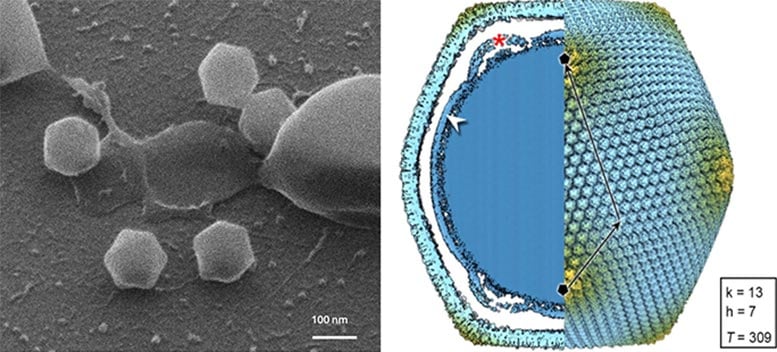
Jyväskylä virus pictures. The viral particles are about twice the size of influenza viruses or coronaviruses. Image source: University of Jyväskylä
"Through international collaboration, we elucidated the genome and structure of Jyväskylä virus and found that the virus is related to the Marseille virus previously isolated from France. Other new giant viruses were also detected in environmental samples," said delighted Professor Lotta-Rina Sandberg from the University of Jyväskylä.
The discovery suggests that giant viruses are more common in soil and water, even in northern environments, than thought.
"This discovery will help understand the interactions between microbes and the role of viruses in regulating all biological populations, and provide new insights into the structure of giant viruses," Sandberg said.
Compiled from /scitechdaily