European Central Bank research shows that European consumers are prepared to proactively reduce their purchases of U.S. products and services due to the trade war launched by U.S. President Trump. Respondents in a recent survey said they were "very willing" to look for non-U.S. alternatives when asked how they would respond to varying levels of tariffs and retaliatory measures from the European Union, the European Central Bank said in a blog post on Wednesday.
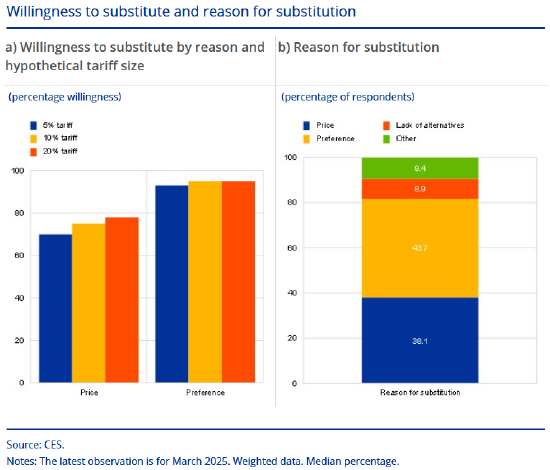
The researchers even found that these views were largely independent of price, which is often cited as the main factor driving changes in behavior under trade tariffs.
“Consumer reaction may be more than a temporary reaction to higher tariffs, but may signal a longer-term structural shift in consumer preferences away from American products and brands,” the blog noted. “It seems that the mere existence of tariffs will prompt a large number of consumers to reconsider their purchasing decisions.”
There was a strong global reaction to the tariff measures announced by the United States on April 2. In Canada, rising tensions with the Trump administration have not only kept Prime Minister Mark Carney in power but also sparked a national campaign to buy domestic.
In Europe, consumers exchange information online about the best alternatives to U.S. products. Tesla's sales in the region have fallen 43% in the first two months of this year, even as the overall electric vehicle market has grown by more than 30%.
The ECB pointed out that the results of similar surveys in the United States were very different, with consumers saying "they will stock up on goods that may increase in price due to potential tariffs."
Currently, most EU products face 10% tariffs in the United States during the 90-day window period, and Trump has given the window period for negotiations. The EU has not yet implemented counter-tariffs against the United States during the negotiations, but has prepared some measures in case the negotiations fail.