on Tuesday in AustinTeslaIn an interview at headquarters, Musk said Tesla plans to expand self-driving taxi services to Los Angeles and San Francisco following its debut in Austin. Musk said the self-driving taxi service in Austin will start with about 10 vehicles and will quickly expand to thousands if the initial operation goes smoothly and without accidents.
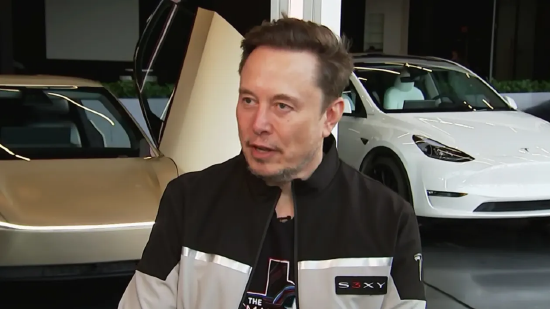
Tesla CEO Elon Musk
Since 2016, Musk has promised Tesla investors, customers and fans that the company is "about a year away" from launching a self-driving car that can safely transport passengers without human intervention (or a human behind the wheel). However, Tesla has yet to launch a safe vehicle that does not require human supervision.
"We are cautiously starting with a small number of vehicles and making sure everything goes well before scaling up," Musk said.
Tesla said the first batch of self-driving taxis will be based on the Model Y model, equipped with the upcoming FSD (Full Self-Driving) version "FSD Unsupervised" (Unsupervised Full Self-Driving).
Waymo, owned by Google parent company Alphabet, currently operates commercial driverless ride-hailing services in multiple markets in the United States. During its most recent earnings call, Alphabet revealed that Waymo has completed 250,000 paid rides per week.
Musk said that Austin's robot taxis will initially set up "geofence", which limits the driving area of the vehicle, but there will be no safety driver in the vehicle. Musk promised.
Tesla employees will monitor the fleet remotely, he said.
"We will watch the operation of the vehicle very carefully, and as confidence increases, the need for this monitoring will decrease," Musk said.
Musk has previously claimed that Tesla’s “universal” route for robotaxis is more ambitious than Waymo’s. Tesla relies primarily on camera-based systems and computer vision technology rather than using sophisticated sensors including lidar and radar in its vehicles.
Musk said the high cost of these sensors could hinder the mass production of robotaxis and the expansion of global fleets.
"What's really best for road systems is artificial intelligence, digital neural networks and cameras," Musk said Tuesday.
Farber pressed Musk on the political controversy surrounding his involvement in Donald Trump's administration, including opposition in German politics. Tesla's electric vehicle sales fell in the first quarter of 2025, and its automotive revenue fell 20%.
Musk attributed the sales slump to the company's need to revamp factories to produce updated versions of its most popular model, the Model Y.
"We were unable to produce cars while the factory was renovated, but demand has rebounded significantly," Musk said (without providing specific figures). “When you buy a product, how much do you care about the political views of the CEO, or even know their views?”
While continuing to lead Tesla and manage SpaceX and xAI, Musk became a key adviser to President Trump after spending nearly $300 million to help him return to the White House.
Musk created the Department of Government Effectiveness (DOGE) and brought sweeping changes to Washington through a "downsizing campaign" that slashed agencies and streamlined the federal workforce, which President Trump strongly supported.
Musk's holdings in Tesla and SpaceX make him the world's richest man, with a current estimated net worth of about $376 billion, according to the Billionaires Index.
Earlier on Tuesday, Musk said he was committed to leading Tesla for the next five years.
"Yeah, there's no question about that," Musk said.