If you were an animal trying to survive a mass extinction, your best option might be to carve out a truly unique way of life. A fascinating new study has revealed surprising truths about which species survived and which didn't after the asteroid impact that wiped out the dinosaurs. The findings challenge long-held views about how life recovers from catastrophic events.
Scientists from the University of Chicago, the Smithsonian Institution and the Natural History Museum in London analyzed thousands of clam and mussel fossils. By piecing together what the marine ecosystem looked like before and after the mass extinction 66 million years ago, they found that although nearly 75% of species disappeared, various ecological roles in the ocean remained active. Statistically speaking, this shouldn't happen - yet, it does.
"This is a very interesting and slightly disturbing finding," said David Jablonski, Distinguished Service Professor of Geophysical Sciences at the University of Chicago and co-author of a new study published in the journal Science Advances. "Given that we are currently facing a mass extinction, how ecosystems can recover from it is a major question currently facing the field."
"Statistically, extremely unlikely"
In Earth's history, we have recorded five mass extinctions—catastrophic events that wipe out most species due to global changes—and are currently on the verge of a sixth. Therefore, scientists are very interested in understanding how biodiversity and ecosystems recover from these large-scale events.
Jablonski, along with paleontologists Stuart Eddy of the Smithsonian Institution and Katie Collins of the Natural History Museum in London, decided to study the latest extinction event. This event, known as the End Cretaceous, wiped out more than three-quarters of all known species, including Tyrannosaurus rex and most dinosaurs.
The team focuses on clams, oysters, cockles and other marine molluscs. Their hard shells are abundant and easy to fossilize, which is crucial as the team hopes to document as complete a picture of the ecosystem as possible before and after the species went extinct.
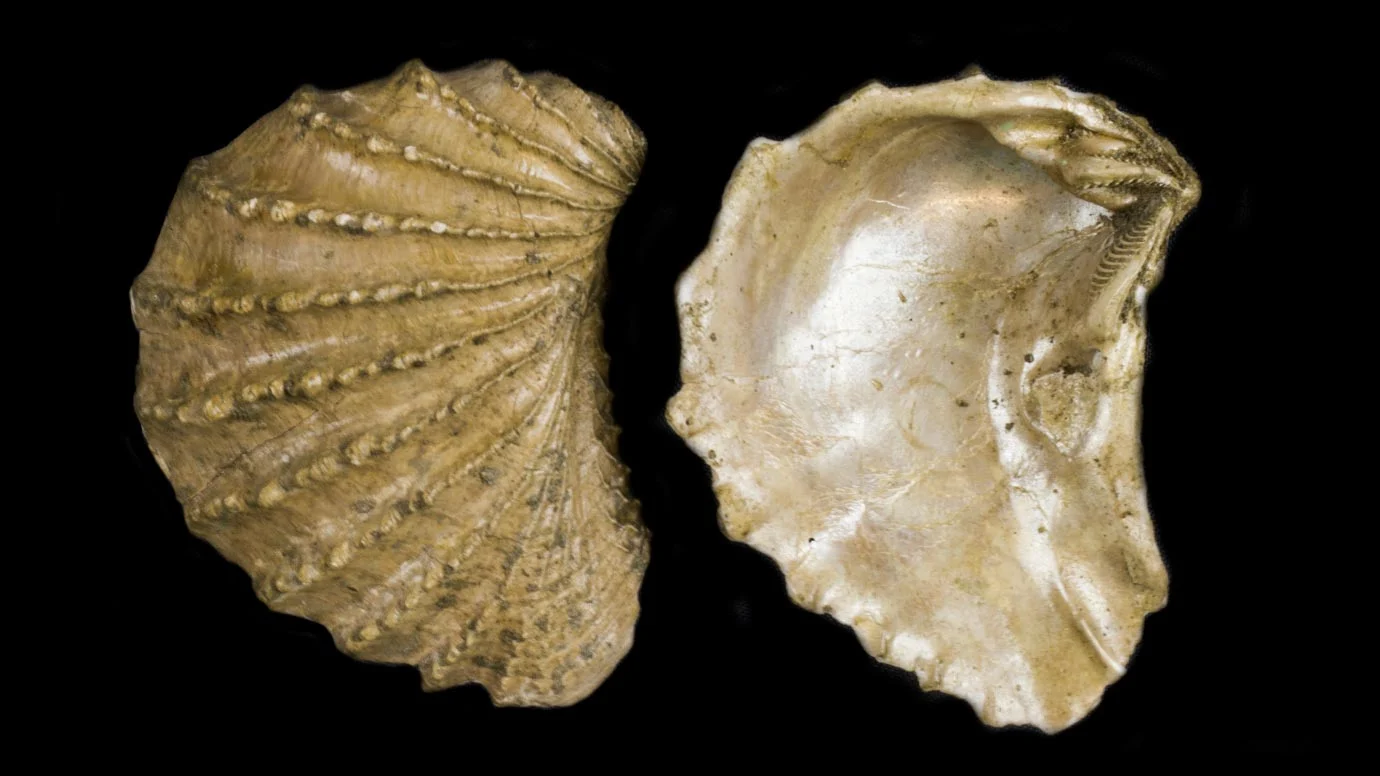
This lineage was widespread and abundant in the Late Cretaceous, but today only a few species remain along the Australian coast. Image source: Smithsonian National Museum of Natural History
"What we want to do is not just count species, but also count how they live," Eddie explains. "How do they survive? For example, some stick themselves to rocks; some burrow into sand or mud; some are even carnivorous."
Jablonski said the team painstakingly mapped the global ecological landscape on the eve of the extinction - "before the roof fell in" - and compared it with species discovered afterward. As a result, they got an unexpected surprise.
Although large numbers of species went extinct, almost no ecological niche was lost. "Statistically, this is extremely unlikely," said Collins, a co-author of the study. "If 75 per cent of species became extinct, you could expect at least some of the lifestyles to disappear completely - there are niches where only one or two species exist. But that's not what we observed."
The findings are inconsistent with any of the currently popular models of how biodiversity recovers from extinction, the authors say.
Decades ago, scientists believed that mass extinctions simply "accelerated the inevitable"—that is, the dinosaurs were destined to lose to mammals, and a meteorite hitting the Earth just accelerated its demise. Recently, the pendulum of thinking has swung back, with others proposing that mass extinctions were a defining biological event—that any organism that managed to survive in a new environment would evolve to fill a different ecological niche.
But neither model can fully explain this phenomenon. Jablonski described the discovery as "a wake-up call." "We don't understand how the loss of functional groups relates to the loss of biodiversity," he said.
chaotic effect
The team also found that species recovered in the opposite way than expected.
"We thought survival pools would lay the foundation for the modern world and everything would depend on those who survived extinction, but that wasn't the case," Eddy said. "It's disrupted. A genus whose species survives extinction doesn't necessarily end up at the top." A lifestyle full of survivors doesn't necessarily stay that way, Jablonski adds.
Jablonski explains that many scientists believe that if the playing field were fair, as in mass extinctions, survivors should all take their chances and diversify quickly.
"This may have happened in mammals, but in marine ecosystems, this is not the case," he said.
This is important information for conservation efforts in modern oceans, for example, which are threatened by acidification, pollution and overfishing.
"If we think about extinction and rebound in the modern ocean, and what to do about it, we really want to understand that," Jablonski said. "With billions of people relying on the ocean for food, we can see that protected areas and management policies need to consider the ecological structure of entire biomes, not just individual species."
Compiled from /ScitechDaily