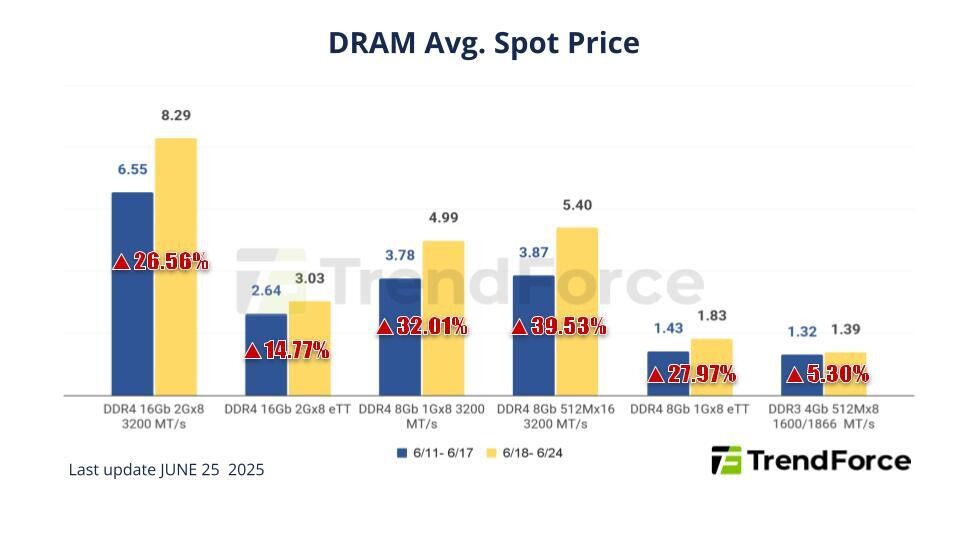
Usually as new technology is introduced, the price of the product will be much higher than the previous generation product. However, the opposite is true for DRAM. For the first time since the introduction of DDR5, buyers are paying more for DDR4 memory modules than the new standard. Tariff uncertainty and rapid depletion of DDR4 stocks are the main reasons for this.
Data from TrendForce shows that prices for some high-demand DDR4 kits have increased by as much as 40% in just a week, while DRAMeXchange reports that the average spot price for 16 Gb (1Gx16) 3200 MT/s DDR4 modules from Samsung and SK Hynix climbed to $12.50, with the highest offer reaching $24.
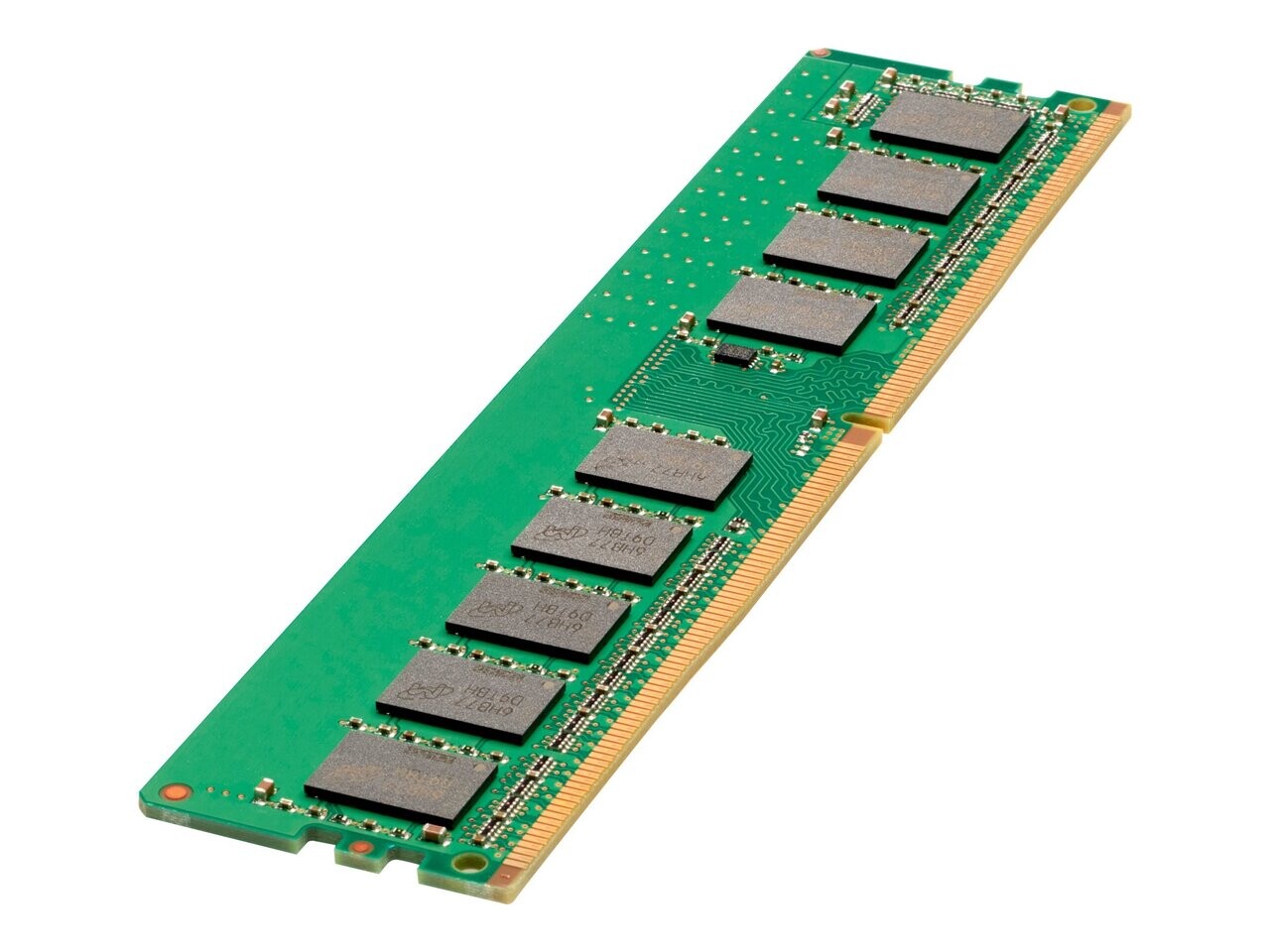
By comparison, the average price for a dual 8Gb DDR5 kit running between 4800 MT/s and 5600 MT/s stays around $6, rarely exceeding $9. Previously, Micron announced that it would phase out DDR4 production by the end of the year, which will accelerate the consumption of memory inventory in the next six to nine months.
Earlier this spring, Samsung also announced plans to retire its DDR4 production line and shift its focus to DDR5 and high-bandwidth memory. Although China's Changxin Memory has recently reached a peak in DDR4 production, it still confirmed that it will reduce production. Taiwan's Nanya Technology is one of the biggest beneficiaries of this volatile market. In the first quarter, the company held about NT$37.6 billion (US$1.2 billion) worth of DDR4 inventory. Nanya Technology even suspended public quotations to control high inventory.
Many in the technology industry worry that renewed trade tensions between China and the United States could trigger a new round of panic buying. If tariffs are imposed on China's remaining DDR4 supply, module costs could climb to more than three times the price of DDR5, continuing this rare price inversion into next quarter.